




"Cover crops (CC) and soil health and climate change adaptation in semi-arid woody crops"

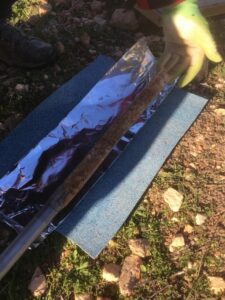 From the Polish perspective, the SANCHOsTHIRST project focuses exclusively on vineyards, which represent the most relevant woody crop system under Polish agronomic and climatic conditions. As vineyards are the only perennial woody crops widely cultivated in Poland, this choice ensures both scientific relevance and the potential for future knowledge transfer at the national scale. The Polish contribution deliberately relies on direct soil investigations, emphasizing detailed field sampling and laboratory analyses. Soil cores are collected to preserve the integrity of entire soil profiles, allowing carbon dynamics to be investigated as a function of depth, soil type, land use, and climate.
A central objective of the Polish contribution is to characterize the sources, turnover, and stability of soil organic carbon (SOC) under different management practices and pedoclimatic contexts. This is achieved through a combination of elemental analyses and stable and radiocarbon isotope measurements (δ¹³C, δ¹⁵N, and ¹⁴C), providing complementary information on organic matter origin, microbial processing, and residence times. The joint use of ¹³C and ¹⁴C enables the distinction between recent and older carbon pools and allows the assessment of long-term sequestration efficiency, including the identification of priming effects induced by changes in organic inputs. These isotopic data open the door to a comprehensive geochemical characterization of soils.
Beyond data acquisition, the Polish team plays a key role in the interpretation and modeling of carbon dynamics. Depth-resolved isotopic datasets are integrated into conceptual and numerical models to quantify the proportion of ancient carbon that derives from parent material, newly introduced carbon, the persistence of stabilized pools, and the potential loss of pre-existing soil carbon. This modeling approach explicitly accounts for soil heterogeneity and profile structure, which are critical factors often overlooked in surface-based assessments. By linking isotopic signatures to soil properties, land use, and climatic conditions, the Polish contribution provides mechanistic insights into the processes controlling carbon storage and vulnerability in vineyard soils.
Overall, the Polish perspective complements the broader project by providing a process-oriented, profile-based view of soil carbon dynamics that is highly complementary to surface-based and remote sensing approaches. Our approach strengthens the interpretation of ecosystem services associated with cover cropping and contributes to a more robust assessment of soil health and long-term carbon sequestration potential across contrasting European pedoclimatic contexts.