




"Cover crops (CC) and soil health and climate change adaptation in semi-arid woody crops"

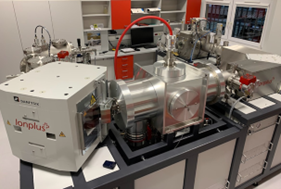
Compact accelerator mass spectrometer - MICADAS
The MICADAS in Gliwice is a compact accelerator mass spectrometer for high-precision radiocarbon (14C) analysis. Installed within the Radiocarbon and Mass Spectrometry Laboratory facility at the Silesian University of Technology, it supports both scientific and industrial research on carbon isotopes. This state-of-the-art AMS system enables 14C dating of small samples with excellent accuracy, covering ages from modern materials to 50 kyr, the upper limits of the radiocarbon method.
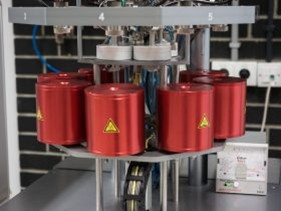
AGE (Automatic Graphitization Equipment) coupled with an Elemental Analyzer (EA)
AGE automates the conversion of solid organic samples into CO₂ and then to graphite for radiocarbon analysis. It combusts organic material, captures the resulting CO₂, and reduces it to graphite over an iron catalyst under hydrogen in a fully automated workflow. It is ideal for processing soil organic matter and other solid organics into graphite for radiocarbon dating with high reproducibility.
EA Cube
The EA Cube from Elementar is used for elemental analysis of soil organic matter, particularly carbon and nitrogen. Its relatively high detection thresholds require large amounts of soil to obtain reproducible measurements, especially for nitrogen, which tends to be less cooperative than carbon. With sufficient sample mass—and a bit of patience—the system delivers robust and reliable elemental data.
Isoprime IRMS
The Isoprime IRMS from Elementar, coupled to an EA Cube elemental analyzer, is used for stable isotope measurements of soil organic matter. This configuration enables precise carbon isotope analyses on very small amounts of material. While such small sample sizes may not always fully capture the heterogeneity of complex matrices like soils, careful preparation, replication, and a bit of scientific stubbornness ensure reliable results. With an EA that prefers large sample masses and an IRMS that only accepts very little material, performing both measurements on the same sample is… ambitious — but we manage.