HTIC 2026 | Day 1
Biomedical Engineering
From Research to Real-World Impact
Engineering innovation. Medical breakthroughs. Better lives.
26 October 2026
Silesian University of Technology | European HealthTech Innovation Center | Zabrze
Free attendance · Poster presentation subject to a fee
HTIC 2026 | Day 1
Engineering
for Life
Is technology redefining the boundaries of life?
Engineering innovation.
Medical breakthroughs.
Better lives.
26 October 2026
Silesian University of Technology | European HealthTech Innovation Center | Zabrze
Free attendance · Poster presentation subject to a fee
26 October 2026
free general admission
POSTER SESSION:
FEE APPLIES
registration required
Online transmision
Engineering the Future
of Healthcare
Tomorrow’s medicine is built through collaboration between science, technology and clinical practice.
Engineering for Life brings together researchers, clinicians, engineers and innovators to exchange knowledge, present breakthrough technologies and discuss the future of healthcare.
From medical robotics and artificial intelligence to biomaterials and digital health, discover solutions that are redefining diagnosis, treatment and patient outcomes.
Research
innovation
Clinical Practice
Who Is This Conference For?
ACADEMICS & RESEARCHERS
Researchers and scientists developing new technologies, methods and solutions in biomedical engineering and healthcare.
ENGINEERS & TECHNOLOGY EXPERTS
Biomedical engineers, technology specialists and professionals working at the intersection of engineering, medicine and life sciences.
CLINICIANS & HEALTHCARE PROFESSIONALS
Medical professionals interested in innovative technologies that support diagnosis, treatment and patient care.
INNOVATORS & MEDTECH INDUSTRY
Startups, technology companies and industry professionals developing and implementing next-generation healthcare solutions.
What will you gain?
DISCOVER EMERGING TECHNOLOGIES
Explore innovative technologies and research directions shaping the future of biomedical engineering and healthcare.
CONNECT RESEARCH WITH PRACTICE
See how scientific discoveries and engineering solutions can translate into real-world clinical applications.
GAIN INTERDISCIPLINARY PERSPECTIVES
Learn from researchers, engineers, clinicians and innovators working across different areas of healthcare and technology.
BUILD VALUABLE CONNECTIONS
Exchange ideas, share experiences and connect with professionals from academia, healthcare and the MedTech industry.
What will you gain?
DISCOVER EMERGING TECHNOLOGIES
Explore innovative technologies and research directions shaping the future of biomedical engineering and healthcare.
CONNECT RESEARCH WITH PRACTICE
See how scientific discoveries and engineering solutions can translate into real-world clinical applications.
GAIN INTERDISCIPLINARY PERSPECTIVES
Learn from researchers, engineers, clinicians and innovators working across different areas of healthcare and technology.
BUILD VALUABLE CONNECTIONS
Exchange ideas, share experiences and connect with professionals from academia, healthcare and the MedTech industry.
The Challenges Shaping
the Future of Healthcare
Healthcare is facing increasingly complex challenges — from ageing populations and the growing burden of chronic diseases to rising expectations for more precise, personalised and accessible care.
Advances in biomedical engineering, artificial intelligence, robotics, biomaterials and digital health are creating possibilities that were unimaginable just a few years ago.
But innovation alone is not enough. How can we turn scientific discoveries and technological breakthroughs into solutions that are safe, effective and meaningful for patients and healthcare professionals?
| AGEING POPULATIONS
| PERSONALISED MEDICINE
| FROM RESEARCH TO CLINICAL PRACTICE
| ACCESSIBLE & SUSTAINABLE HEALTHCARE
The Challenges Shaping
the Future of Healthcare
Healthcare is facing increasingly complex challenges — from ageing populations and the growing burden of chronic diseases to rising expectations for more precise, personalised and accessible care.
Advances in biomedical engineering, artificial intelligence, robotics, biomaterials and digital health are creating possibilities that were unimaginable just a few years ago.
But innovation alone is not enough. How can we turn scientific discoveries and technological breakthroughs into solutions that are safe, effective and meaningful for patients and healthcare professionals?
| AGEING POPULATIONS
| PERSONALISED MEDICINE
| FROM RESEARCH TO CLINICAL PRACTICE
| ACCESSIBLE & SUSTAINABLE HEALTHCARE
The future of healthcare will not be shaped by technology alone,
but by how effectively we turn innovation into better care.
Key Conference Topics
Explore the technologies, research directions and interdisciplinary solutions shaping the future of biomedical engineering and healthcare.
Robotic systems and intelligent technologies supporting surgery, rehabilitation, diagnosis and patient care.
AI-driven methods for medical data analysis, decision support, diagnostics and personalised healthcare.
Innovative materials and engineering approaches for regeneration, implants and next-generation medical applications.
Digital technologies, connected healthcare solutions and data-driven tools transforming the delivery of care.
Advanced sensing and measurement technologies for monitoring, diagnostics and biomedical applications.
Innovative imaging technologies and computational methods supporting diagnosis, visualisation and clinical decision-making.
Engineering approaches to understanding human movement, function and interaction with medical technologies.
3D modelling, simulation and additive manufacturing for personalised medical devices, implants and clinical solutions.
From scientific discovery to real-world healthcare solutions. Explore a programme that brings together biomedical engineering, emerging technologies and clinical perspectives.
8:00 - 9:00
Registration
Networking & welcome coffee
9:00 - 9:15
Opening of the Conference
Welcome address and official opening of Engineering for Life
9:15 - 10:00
Keynote Lecture
10:00 - 11:30
AI in Medicine
11:30 - 12:00
Coffee Break
12:00 - 13:30
3D printing & personalised medicine
13:30 - 14:15
Lunch Break
14:15 - 16:00
Biomedical Engineering Ecosystem
16:00 - 16:30
Coffee Break
16:30 - 18:30
E-poster Session & Meeting of the Deans (parallel sessions)
18:30
Awards Ceremony and Conference Closing
19:00
Gala Dinner (Diament Hotel Restaurant)
Present Your Research
E-Poster Session & Publication Opportunities
The E-Poster Session invites students, PhD candidates and early-career researchers to present their work to an interdisciplinary audience from science, healthcare and the MedTech industry.
Showcase your research, receive expert feedback and connect with professionals across disciplines.
Ready to present your research?
Register as an active participant first. After registration, you will receive detailed instructions for submitting your abstract and e-poster.
E-Poster Participation Details
Format: Scientific Abstract + E-Poster Presentation
Language: English
Active Participation Fee: 500 PLN
Reduced Fee for Undergraduate and PhD Students: 250 PLN
How to participate
1.
Register
as
an active participant
Deadline:
30 September 2026
2.
Submit
your scientific abstract
and e-poster
Deadline:
15 October 2026
3.
Present
your research during
the E-Poster Session
26 October 2026
Take Your Research Further
Present your work at HTIC 2026 and extend its impact beyond the conference.
PUBLISH
YOUR ABSTRACT
All accepted abstracts will be published in the official
HTIC 2026
Book of Abstracts.
COMPETE
FOR AN AWARD
The three highest-rated
e-posters will receive publication fee vouchers towards the publication of a full-length article in one of the partner scientific journals.
EXPLORE PUBLICATION OPPORTUNITIES
Authors will have the opportunity to submit full-length manuscripts for consideration for publication in selected scientific journals.
*All manuscripts are subject to the journals’ standard editorial and peer-review procedures
Partner Scientific Journals
Full-length manuscripts may be submitted for consideration for publication in selected partner journals.
Indexed in Scopus and Web of Science Core Collection (SCIE)
Acta of Bioengineering and Biomechanics is a platform allowing presentation of investigations results, exchange of ideas and experiences among researchers with technical and medical background.
Papers published in Acta of Bioengineering and Biomechanics may cover a range of topics in biomechanics, including, but not limited to:
- Tissue Biomechanics,
- Orthopedic Biomechanics,
- Biomaterials,
- Sport Biomechanics.
MNiSW points: 100
The quarterly journal “Problemy Kryminalistyki” (Problems in Forensic Science) is the only source of knowledge in Poland on theoretical and practical issues in forensic science and related fields (forensic sciences). It has been published continuously since 1955. The quarterly’s articles are unequivocally focused on investigative tactics and forensic techniques, with a definitive emphasis on advances in the detection, preservation and examination of evidence, and the methods for utilising this evidence in the practical pursuit of criminal offences. Each issue of the journal features regular thematic sections.
MNiSW points: 20
(Problems in Forensic Science)
3 E-Posters. 3 Awards.
3 Opportunities to Take Your Research Further.
Present Your Research
E-Poster Session & Publication Opportunities
The E-Poster Session invites students, PhD candidates and early-career researchers to present their work to an interdisciplinary audience from science, healthcare and the MedTech industry.
Showcase your research, receive expert feedback and connect with professionals across disciplines.
Ready to present your research?
Register as an active participant first. After registration, you will receive detailed instructions for submitting your abstract and e-poster.
E-Poster Participation Details
Format: Scientific Abstract + E-Poster Presentation
Language: English
Active Participation Fee: 500 PLN
Reduced Fee for Undergraduate and PhD Students: 250 PLN
How to participate
1. Register
as
an active participant
Deadline:
30 September 2026
2. Submit
your scientific abstract
and e-poster
Deadline:
15 October 2026
3. Present
your research during
the E-Poster Session
26 October 2026
Take Your Research Further
Present your work at HTIC 2026 and extend its impact beyond the conference.
PUBLISH
YOUR ABSTRACT
All accepted abstracts will be published in the official
HTIC 2026
Book of Abstracts.
COMPETE
FOR AN AWARD
The three highest-rated
e-posters will receive publication fee vouchers towards the publication of a full-length article in one of the partner scientific journals.
EXPLORE PUBLICATION OPPORTUNITIES
Authors will have the opportunity to submit full-length manuscripts for consideration for publication in selected scientific journals.
*All manuscripts are subject to the journals’ standard editorial and peer-review procedures
Partner Scientific Journals
Full-length manuscripts may be submitted for consideration for publication in selected partner journals.
Indexed in Scopus and Web of Science Core Collection (SCIE)
Acta of Bioengineering and Biomechanics is a platform allowing presentation of investigations results, exchange of ideas and experiences among researchers with technical and medical background.
Papers published in Acta of Bioengineering and Biomechanics may cover a range of topics in biomechanics, including, but not limited to:
- Tissue Biomechanics,
- Orthopedic Biomechanics,
- Biomaterials,
- Sport Biomechanics.
MNiSW points: 100
The quarterly journal “Problemy Kryminalistyki” (Problems in Forensic Science) is the only source of knowledge in Poland on theoretical and practical issues in forensic science and related fields (forensic sciences). It has been published continuously since 1955. The quarterly’s articles are unequivocally focused on investigative tactics and forensic techniques, with a definitive emphasis on advances in the detection, preservation and examination of evidence, and the methods for utilising this evidence in the practical pursuit of criminal offences. Each issue of the journal features regular thematic sections.
MNiSW points: 20
(Problems in Forensic Science)
3 E-Posters. 3 Awards.
3 Opportunities to Take Your Research Further.
HTIC 2026 in Numbers
350 +
Participants
40+
Speakers
20+
Institutions
2+
Scientific Journals
Meet the researchers, clinicians and innovators shaping the future of biomedical engineering and healthcare technology.
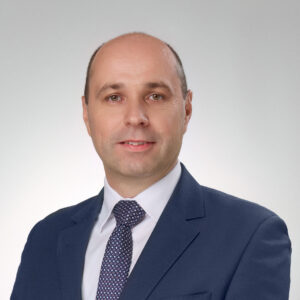
Prof. Filip Górski
Faculty of Mechanical Engineering
Poznań University of Technology
“Automated Design of 3D-Printed Lightweight Hand Orthoses from 3D and 4D Scanning Data”
INVITED SPEAKER
A researcher, educator, and innovation leader specializing in mechanical engineering, biomedical engineering, digital manufacturing, and medical technologies. His work focuses on the integration of advanced engineering methods – including 3D scanning, reverse engineering, CAD/CAM systems, additive manufacturing, extended reality (XR), digital twins, and artificial intelligence – into healthcare and customized product development. He has led and contributed to numerous interdisciplinary projects at the intersection of engineering and medicine, particularly in the development of patient-specific medical devices, surgical guides, prosthetic solutions, and digital clinical workflows. His research emphasizes engineering-to-order approaches, mass customization, and the digital transformation of healthcare processes.
As a professor and academic mentor, he is actively involved in international scientific collaboration, technology transfer, and the education of future engineers. He regularly delivers invited lectures and keynote presentations on topics related to Industry 4.0, additive manufacturing, XR technologies, and biomedical product development. His recent work includes the development of advanced digital platforms for personalized medicine, automated additive manufacturing workflows, and CAD-agnostic engineering environments that support flexible product configuration and design automation across multiple CAD systems. His broader mission is to bridge engineering innovation and clinical practice, enabling more efficient, personalized, and digitally integrated healthcare solutions.
Dr Wojciech Kajzer
Faculty of Biomedical Engineering
Silesian University of Technology
“Additive technologies in biomedical engineering”
INVITED SPEAKER
Assistant Professor in the Department of Biomaterials and Medical Device Engineering, Faculty of Biomedical Engineering, Silesian University of Technology, and Head of the Rapid Prototyping Laboratory at the European HealthTech Innovation Centre. His research interests focus on the application of reverse engineering and additive manufacturing technologies in biomedical engineering, with particular emphasis on the development of personalized medical devices for orthopaedics, surface modification, and physicochemical characterization using electrochemical and mechanical testing methods.