



Meet our Speakers
Meet the researchers, innovators and industry leaders shaping the future of biomedical engineering and modern forensics.
Explore the speakers by conference track below.
Meet our Speakers
Meet the researchers, innovators and industry leaders shaping the future of biomedical engineering and modern forensics.
Explore the speakers by conference track below.
Choose your conference track
Biomedical Engineering
26 October 2026
in English
MedTech – AI – biomechanics – biomaterials –
robotics – digital health
Modern Forensics
27 October 2026
in Polish
forensic science – crime scene investigation –
digital evidence – forensic technologies
Biomedical Engineering
26 October 2026
in English
MedTech – AI – biomechanics – biomaterials –
robotics – digital health
Modern Forensics
27 October 2026
in Polish
forensic science – crime scene investigation –
digital evidence – forensic technologies
Biomedical Engineering
26 October 2026
Meet the experts presenting the latest innovations in biomedical engineering, medical technologies and digital health.
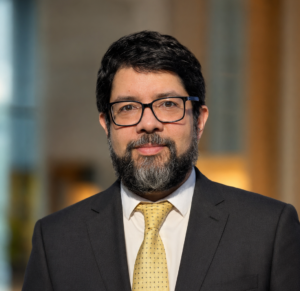
Prof. Ivan Olier
DSc., PhD., BEng.
Head, Artificial Intelligence and Digital Technologies Research Institute Head of Research, School of Computer Science and Mathematics Liverpool John Moores University
Towards AI-Based Digital Twins
for Personalised Healthcare
KEYNOTE SPEAKER
Professor Ivan Olier is Professor of Artificial Intelligence and Data Science at Liverpool John Moores University, where he is Head of the Artificial Intelligence and Digital Technologies Research Institute and Head of Research in the School of Computer Science and Mathematics. He received his PhD in Artificial Intelligence from the Technical University of Catalonia and subsequently held academic positions at the Autonomous University of Barcelona, the University of Manchester, and Keele University before joining Liverpool John Moores University.
He leads large-scale international research programmes focused on AI-based digital twins, causal AI, and trustworthy AI for personalised and preventive healthcare. His research spans fundamental methodological development, clinical translation, and real-world evaluation.
Professor Olier has extensive experience leading multidisciplinary collaborations across academia, healthcare, and industry, with applications including cardiovascular disease, stroke, critical care, and cancer. He also advises international research organisations and strategic bodies, including the Danish Data Science Academy and the University of Murcia.
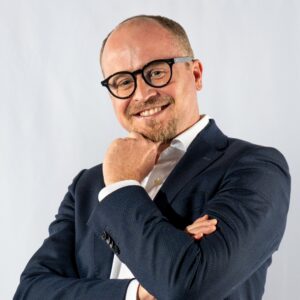
Prof. Wojciech Czakon
PhD, Dr h.c.
Institute of Economics, Finance and Management
Jagiellonian University in Kraków
The AI Arms Race in Medicine:
Winning the Quarter, Losing the Decade?
KEYNOTE SPEAKER
Professor Wojciech Czakon, PhD, Dr h.c., is a world-renowned researcher in the field of strategic management. He is Head of the Department of Strategic Management at Jagiellonian University in Krakow and a member of the Academia Europaea and the Council for Scientific Excellence. He has published over 250 academic papers, and his work is among the most frequently cited Polish research in the field of strategic management.
He focuses his research on how organisations build competitive advantage, make strategic decisions, and collaborate in an environment of growing uncertainty and rapid technological change. In recent years, the digital transformation of organisations and the strategic implications of artificial intelligence development have taken centre stage in his research. Professor Czakon not only examines the technological side of digitalisation, but also its organisational and behavioural dimensions. He explores why organisations often adopt new technologies more slowly than their potential suggests and what barriers — linked to people’s attitudes, perceptions of technology, and changes in operating models — influence the pace of transformation. His research and teaching activities also cover the applications of artificial intelligence in management and organisations, including the impact of AI on business processes and value creation and the consequences of using new technologies for decision-making, managerial work, and organisational functioning.
A key focus of his research is strategy in the context of cooperation between competitors. As one of the world’s leading coopetition researchers, he analyses how organisations can compete and cooperate simultaneously, thereby building resilience, improving access to resources, and gaining a strategic advantage. His latest research includes the development of organisational resilience through coopetition, among other things.
He is the author and co-author of over 250 academic publications and books, which have been published in renowned Polish and international journals. He has led research projects funded by the National Science Centre and European research programmes. He is also a visiting professor at several foreign universities, including the University of Johannesburg.
He has received numerous honours for his academic achievements, including an award from the Prime Minister and awards from the Minister of Education and Science. He has also been recognised by the Minister of Science and Higher Education for his teaching achievements. In 2023, he was awarded an honorary doctorate by Wrocław University of Economics. In 2025, he was honoured with the Karol Adamiecki Medal for his contributions to organisational and management science development.
He was previously affiliated with the University of Economics in Katowice, where he established the Department of Management Theory. He has been a lecturer on MBA programmes for many years. As a keynote speaker, he combines an academic perspective with management practice to demonstrate how strategies, organisations and managerial roles are changing in a world of digital transformation and artificial intelligence.
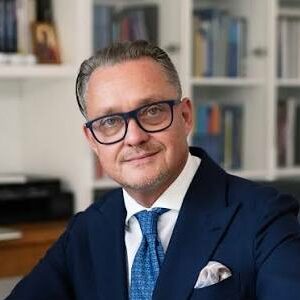
Prof. Krzysztof Dowgierd,
MD,
PhD.
National Consultant in Maxillofacial Surgery
University of Warmia and Mazury in Olsztyn
The use of 3D printing technology, virtual surgical planning and customised implants
in maxillofacial and reconstructive surgery
INVITED SPEAKER
Prof. UWM, dr hab n med, Krzysztof Dowgierd, is an oral and maxillofacial surgeon, National Consultant in Maxillofacial Surgery, and Professor at the University of Warmia and Mazury in Olsztyn, Poland. He is the founder and head of the Centre for Craniofacial Anomalies for Children and Adolescents at the Regional Specialist Children’s Hospital in Olsztyn, a member centre of the European Reference Network for Rare Craniofacial Anomalies (ERN CRANIO).
His clinical and academic work focuses on paediatric reconstructive and microsurgical techniques, the treatment of congenital craniofacial anomalies, orthognathic surgery, and the application of virtual surgical planning, 3D printing and patient-specific implants in maxillofacial surgery.
He is the author of numerous publications in Polish and international journals, serves on editorial boards and as a reviewer for international medical journals, and is a regularly invited speaker at European and international congresses in maxillofacial and craniofacial surgery. He is a strong advocate for multidisciplinary, team-based care of children with facial anomalies.

Prof. Piotr Buszman
MD, PhD., Prof. Assos.
Research and Development Centre
American Heart of Poland
When will AI assist doctors,
and when will it replace them?
INVITED SPEAKER
Invasive cardiologist. A graduate of the Medical University of Silesia in Katowice.
He completed internships in the field of internal medicine and cardiology in the USA and Europe, including an internship in the field of interventional cardiology and R&D at the Cardiovascular Research Foundation, New York, USA.
Graduate of the specialist training in cardiology at the Silesian Centre for Heart Diseases in Zabrze and the NextGen Ernst & Young and Columbia University program, New York. Author and co-author of internationally renowned technologies in the field of transcatheter endovascular therapies and local drug delivery in cardiovascular diseases (including DES stents, bioresorbable stents, balloons coated with a new generation drug).
Author and co-author of several works on the selection of the optimal method of revascularization in patients with advanced coronary artery disease. Head of research on the first Polish drug-coated balloon and a bioresorbable stent.
Co-author of the Program for the Comprehensive Coordinated Care After Myocardial Infarction (for the Polish Ministry of Health and the Agency for Health Technology Assessment and Tariff System). Author of over 70 full-text publications, reaching over 200 IF. Author and owner of several patents.
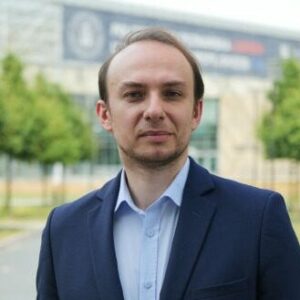
Prof. Filip Górski
DSc., PhD., BEng.
Faculty of Mechanical Engineering
Poznań University of Technology
Automated Design of 3D-Printed Lightweight
Hand Orthoses from 3D and 4D
Scanning Data
INVITED SPEAKER
A researcher, educator, and innovation leader specializing in mechanical engineering, biomedical engineering, digital manufacturing, and medical technologies. His work focuses on the integration of advanced engineering methods – including 3D scanning, reverse engineering, CAD/CAM systems, additive manufacturing, extended reality (XR), digital twins, and artificial intelligence – into healthcare and customized product development. He has led and contributed to numerous interdisciplinary projects at the intersection of engineering and medicine, particularly in the development of patient-specific medical devices, surgical guides, prosthetic solutions, and digital clinical workflows. His research emphasizes engineering-to-order approaches, mass customization, and the digital transformation of healthcare processes.
As a professor and academic mentor, he is actively involved in international scientific collaboration, technology transfer, and the education of future engineers. He regularly delivers invited lectures and keynote presentations on topics related to Industry 4.0, additive manufacturing, XR technologies, and biomedical product development. His recent work includes the development of advanced digital platforms for personalized medicine, automated additive manufacturing workflows, and CAD-agnostic engineering environments that support flexible product configuration and design automation across multiple CAD systems. His broader mission is to bridge engineering innovation and clinical practice, enabling more efficient, personalized, and digitally integrated healthcare solutions.
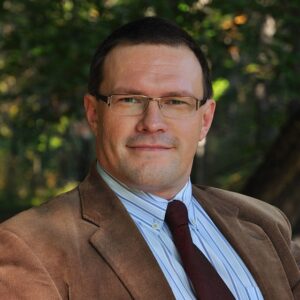
Prof. Sławomir Olko
PhD., DSc.
Faculty of Organisation and Management
Silesian University of Technology
Ecosystems for business models in the biomedical engineering sector in the Silesian Voivodeship
INVITED SPEAKER
Sławomir Olko, PhD, DSc. – asociate profesor at the Silesian University of Technology, Faculty of Organization and Management. Head of Management Department and Deputy Dean for Organization and Infrastructure at the Organization and Management Faculty. Expert in innovation management and innovation strategy, innovation network, interogranizational relationship management, knowledge management. Author of more than 100 scientific publications in the area of management. Trainer, expert and evaluator in international programs (Central Europe, Interreg). Project manager of two research and develpment projects on interogranizational management.

Prof. Wojciech Wolański,
PhD, BEng.
Faculty of Biomedical Engineering
Silesian University of Technology
CHAIRMAN
a renowned expert in biomechanics, biomechatronics, and computer modeling with over 20 years of experience in higher education and research. He serves as a Professor at the Silesian University of Technology, specifically within the Department of Biomechatronics at the Faculty of Biomedical Engineering in Zabrze.
His research focuses on engineering solutions for diagnosing and treating musculoskeletal disorders (particularly of the spine and skull) and designing biomechatronic devices for people with disabilities. Professor Wolański has been involved in over 40 R&D projects—including two recognized with the “Silesian Innovator” award—and currently leads a national project funded by the Polish Ministry of Science and Higher Education under the “Science for Society II” program.
Alongside his academic career, he brings valuable business experience as the President of the Management Board at the health-tech company Solvmed sp. z o.o. He is a Member of the Science Policy Committee at the Ministry of Science and Higher Education, an associate member of the Section of Biomechanics of the Polish Academy of Sciences (PAN), and a co-author of over 240 scientific publications. A dedicated educator, he has supervised 7 PhD candidates and nearly 100 thesis projects, several of which won awards from the State Fund for Rehabilitation of Disabled People (PFRON).
In recognition of his service, he was awarded the Silver Medal for Long Service by the President of Poland.

Prof. Paweł Badura
PhD, DSc.
Faculty of Biomedical Engineering
Silesian University of Technology
CHAIRMAN
Pawel Badura received the B.S. and M.S. degrees in electronics and telecommunications in 2004 and the Ph.D. (2007) and D.Sc. (2017) degrees in biomedical engineering, all from the Silesian University of Technology, Gliwice, Poland.
From 2007 to 2011, he was an Assistant Professor with the Faculty of Automatic Control, Electronics, and Computer Science. Since 2011, he has worked at the Faculty of Biomedical Engineering, Silesian University of Technology, Gliwice, Poland, as an assistant professor, an associate professor, and, since 2025, as a full-time professor. He took part in eleven research projects. He is the author of more than 90 articles. His research interests cover image analysis, signal processing, computer-aided diagnosis, artificial intelligence, including machine and deep learning methods in biomedical engineering.
Prof. Ivan Olier
Head, Artificial Intelligence and Digital Technologies Research Institute Head of Research, School of Computer Science and Mathematics Liverpool John Moores University
Towards AI-Based Digital Twins for Personalised Healthcare
INVITED SPEAKER
Professor Ivan Olier is Professor of Artificial Intelligence and Data Science at Liverpool John Moores University, where he is Head of the Artificial Intelligence and Digital Technologies Research Institute and Head of Research in the School of Computer Science and Mathematics. He received his PhD in Artificial Intelligence from the Technical University of Catalonia and subsequently held academic positions at the Autonomous University of Barcelona, the University of Manchester, and Keele University before joining Liverpool John Moores University.
He leads large-scale international research programmes focused on AI-based digital twins, causal AI, and trustworthy AI for personalised and preventive healthcare. His research spans fundamental methodological development, clinical translation, and real-world evaluation.
Professor Olier has extensive experience leading multidisciplinary collaborations across academia, healthcare, and industry, with applications including cardiovascular disease, stroke, critical care, and cancer. He also advises international research organisations and strategic bodies, including the Danish Data Science Academy and the University of Murcia.
Prof. Filip Górski
Faculty of Mechanical Engineering
Poznań University of Technology
Automated Design of 3D-Printed Lightweight Hand Orthoses from 3D and 4D Scanning Data
INVITED SPEAKER
A researcher, educator, and innovation leader specializing in mechanical engineering, biomedical engineering, digital manufacturing, and medical technologies. His work focuses on the integration of advanced engineering methods – including 3D scanning, reverse engineering, CAD/CAM systems, additive manufacturing, extended reality (XR), digital twins, and artificial intelligence – into healthcare and customized product development. He has led and contributed to numerous interdisciplinary projects at the intersection of engineering and medicine, particularly in the development of patient-specific medical devices, surgical guides, prosthetic solutions, and digital clinical workflows. His research emphasizes engineering-to-order approaches, mass customization, and the digital transformation of healthcare processes.
As a professor and academic mentor, he is actively involved in international scientific collaboration, technology transfer, and the education of future engineers. He regularly delivers invited lectures and keynote presentations on topics related to Industry 4.0, additive manufacturing, XR technologies, and biomedical product development. His recent work includes the development of advanced digital platforms for personalized medicine, automated additive manufacturing workflows, and CAD-agnostic engineering environments that support flexible product configuration and design automation across multiple CAD systems. His broader mission is to bridge engineering innovation and clinical practice, enabling more efficient, personalized, and digitally integrated healthcare solutions.
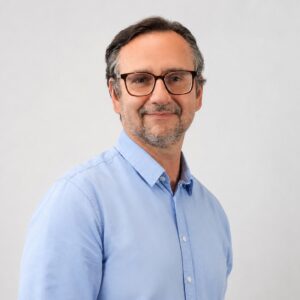
Dr Przemysław Czuma,
MD.
The Dr Janusz Daab Independent Public Provincial Hospital for Trauma Surgery in Piekary Śląskie
3D Printing Inside an Orthopedic Hospital:
From Idea to Clinical Value
INVITED SPEAKER
A man! A doctor and orthopaedic surgeon in private practice, with specialisation in joint replacement surgery using the latest advances in implantology, as well as surgical reconstruction of the complex mechanism of the human foot.
The founder and organiser of the Polish Association ‘Artificial Intelligence in Medicine’ is a platform for collaboration between various communities interested in the development of artificial intelligence in medicine (www.inteligencja.org.pl). This association brings together over 150 enthusiasts of the medical application of AI.
A lecturer on the postgraduate courses ‘Artificial Intelligence and Robotics in Medicine’ at the Medical University of Silesia and the Silesian University of Technology, and on ‘Implementation and Use of AI in Organisations’ at Kozminski University.
The organiser of IFIM – the Interdisciplinary Forum for Innovative Medicine. This is a meeting that brings together all those involved in the creation and implementation of innovative solutions to improve human health.
He established one of Poland’s first hospital-based Medical Modelling and 3D Printing Laboratories, which was designed to assist doctors in planning complex surgical procedures and visualising pathologies of the musculoskeletal system.
He holds an MBA in Healthcare from the Silesian University of Technology, which he obtained with a dissertation entitled ‘Barriers to the implementation of artificial intelligence as an innovation in the healthcare sector – identification and proposals for overcoming them’.
He is an active participant and speaker at numerous medical conferences and events concerning the implementation of new technologies. His particular focus is on the application of artificial intelligence and 3D printing in medicine and surgical fields, including orthopaedics.
A futurist. An admirer of Stanisław Lem’s prose and a moderate proponent of the simulation hypothesis. He has published on these topics in Filosofuj!, a nationwide philosophy magazine.
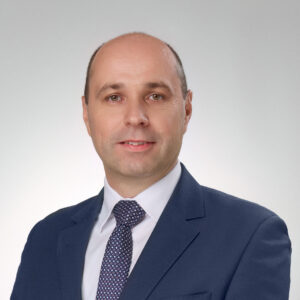
Dr Wojciech Kajzer
PhD., BEng.
Faculty of Biomedical Engineering
Silesian University of Technology
Additive technologies in biomedical engineering. Research potential and ongoing projects carried out at the Department of Biomaterials and Medical Device Engineering
INVITED SPEAKER
Assistant Professor in the Department of Biomaterials and Medical Device Engineering, Faculty of Biomedical Engineering, Silesian University of Technology, and Head of the Rapid Prototyping Laboratory at the European HealthTech Innovation Centre.
His research interests focus on the application of reverse engineering and additive manufacturing technologies in biomedical engineering, with particular emphasis on the development of personalized medical devices for orthopaedics, surface modification, and physicochemical characterization using electrochemical and mechanical testing methods.

Dr Aneta Aleksander
PhD, Eng.
Faculty of Organizatiob and Management
Silesian University of Technology
Future Competencies of a Biomedical Engineering Graduate
INVITED SPEAKER
An Assistant Professor at the Department of Management, Faculty of Organization and Management, Silesian University of Technology in Gliwice, Poland.
Advisor on sustainable development and internationalization for SMEs.
Certified auditor of innovation management and sustainable development, organizer, auditor and member of the Jury of the regional contest for innovative companies. Author and co-author of scientific publications in the field of management as well as advisory reports for SMEs.
Her research interests focus on strategic management, education and competences for MedTech sector, innovation management, sustainable development, marketing research and internationalization of SMEs.
As and academic teacher she provides lectures and classes in the following subjects: SME internationalizaction, marketing (incl. fundamentals of marketing, industrial marketing, marketing of logistics services, internal marketing), leadership in organization and corporate social responsibility.

Joanna Broy,
PhD
Head of Ecosystem Management
EIT Health
From fragmentation to collaboration: creating the ecosystems health innovation needs.
INVITED SPEAKER
An innovation manager, biotechnology expert, and leader of international healthcare projects. As the Ecosystem Lead for Poland and Ecosystem Manager East at EIT Health (a leading European health innovation network funded by the EU), she is responsible for implementing Education 4.0 strategies, managing regional acceleration programs across Central and Eastern Europe, and building strategic partnerships that bridge the gap between science and business.
She successfully supports health-tech startups and research teams in commercializing their projects and scaling them into international markets. Additionally, she serves as an official expert for the National Centre for Research and Development (NCBR) in Poland.
Previously, she spent over five years heading the Department of Acceleration Projects at the Medical University of Lodz, where she combined academic research and teaching with coordinating European educational programs.
She holds a Master’s degree in Biotechnology from the Medical University of Lodz, completed postgraduate studies in “Business in Biotechnology” at the Jagiellonian University, and is a certified Science Coach.
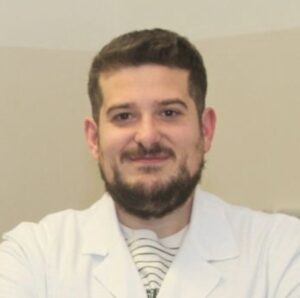
Dr Matteo Montesissa,
PhD., BEng.
SC Biomedical Sciences and NanoBiotechnologies Laboratory IRCCS Rizzoli Orthopaedic Institute
Nanostructured Coatings
for Biomedical Applications
INVITED SPEAKER
Health Researcher at the IRCCS Istituto Ortopedico Rizzoli in Bologna, Italy, where I have been working since 2024. I obtained my Bachelor’s Degree in Biomedical Engineering from Politecnico di Milano in 2017, followed by a Master’s Degree in Biomedical Engineering, specializing in Cell, Tissue and Biotechnology Engineering, in 2020. In 2025, I completed my PhD in Biomedical and Neuromotor Sciences at the University of Bologna.
My research focuses on the development and characterization of advanced biomaterials for orthopedic applications. In particular, I investigate nanostructured ceramic– and metal-based coatings designed to improve the antibacterial properties and osteointegration of orthopedic implants, contributing to the development of innovative medical devices with enhanced biological performance.
Another key area of my research is the chemical characterization of bone and cartilage tissues using Fourier Transform Infrared (FTIR) spectroscopy to better understand tissue composition and quality. I am the author and co-author of several peer-reviewed scientific publications in the fields of biomaterials, orthopedic implant surface engineering, and spectroscopic characterization of musculoskeletal tissues. Through my research, I aim to bridge materials science and biomedical engineering to develop solutions that can improve patient outcomes and support the advancement of orthopedic technologies
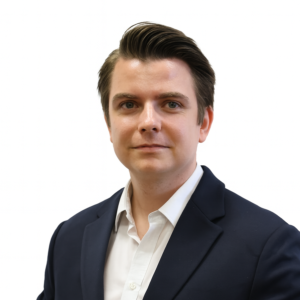
Dr Mariusz Kmiecik,
PhD., BEng.
Faculty of Organisation and Management
Silesian University of Technology
Coordinating the Flow: Contemporary Challenges in Medical Device Distribution Systems.
INVITED SPEAKER
An associate professor at the Logistics Department of the Faculty of Organisation and Management at the Silesian University of Technology, and a doctor of management and quality.
His research focuses on the use of machine learning, large language models and generative artificial intelligence in logistics, including demand forecasting, network coordination, warehouse management and carbon footprint management, particularly in the last mile of delivery.
He is the author of several dozen publications with an international reach.

Assoc. Prof. Marcin Kaczmarek,
PhD., BEng.
Faculty of Biomedical Engineering
Silesian University of Technology
CHAIRMAN
Assistant Professor in the Department of Medical Informatics and Artificial Intelligence, Faculty of Biomedical Engineering, Silesian University of Technology. His research focuses on the application of artificial intelligence in medicine, with particular emphasis on ophthalmology, neurology, and audiology. He develops data-driven methods for analyzing multimodal clinical data to support personalized diagnosis, prognosis, and treatment.
In recent years, he has been actively involved in interdisciplinary research on retinal diseases, particularly age-related macular degeneration (AMD). His work combines retinal imaging, clinical data, and real-world patient registries to develop AI-based decision-support tools that improve patient stratification, treatment optimization, and clinical outcomes. He also researches computer-aided assessment of cognitive and neurodevelopmental disorders, as well as the analysis of behavioral and physiological responses to auditory stimulation.
He has authored numerous scientific publications in biomedical engineering, artificial intelligence, ophthalmology, and neuroscience. Through close collaboration with clinicians, his research aims to translate advanced computational methods into practical tools for comprehensive patient assessment and personalized healthcare.
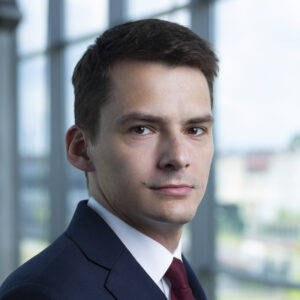
Dr Daniel Ledwoń,
PhD., BEng.
Faculty of Biomedical Engineering
Silesian University of Technology
Towards Personalized Treatment of Retinal Diseases through AI-Enabled Comprehensive Patient Assessment
INVITED SPEAKER
Assistant Professor in the Department of Medical Informatics and Artificial Intelligence, Faculty of Biomedical Engineering, Silesian University of Technology. His research focuses on the application of artificial intelligence in medicine, with particular emphasis on ophthalmology, neurology, and audiology. He develops data-driven methods for analyzing multimodal clinical data to support personalized diagnosis, prognosis, and treatment.
In recent years, he has been actively involved in interdisciplinary research on retinal diseases, particularly age-related macular degeneration (AMD). His work combines retinal imaging, clinical data, and real-world patient registries to develop AI-based decision-support tools that improve patient stratification, treatment optimization, and clinical outcomes. He also researches computer-aided assessment of cognitive and neurodevelopmental disorders, as well as the analysis of behavioral and physiological responses to auditory stimulation.
He has authored numerous scientific publications in biomedical engineering, artificial intelligence, ophthalmology, and neuroscience. Through close collaboration with clinicians, his research aims to translate advanced computational methods into practical tools for comprehensive patient assessment and personalized healthcare.
Wojciech Kajzer, PhD., BEng.
Faculty of Biomedical Engineering
Silesian University of Technology
Additive technologies in biomedical engineering. Research potential and ongoing projects carried out at the Department of Biomaterials and Medical Device Engineering
INVITED SPEAKER
Assistant Professor in the Department of Biomaterials and Medical Device Engineering, Faculty of Biomedical Engineering, Silesian University of Technology, and Head of the Rapid Prototyping Laboratory at the European HealthTech Innovation Centre.
His research interests focus on the application of reverse engineering and additive manufacturing technologies in biomedical engineering, with particular emphasis on the development of personalized medical devices for orthopaedics, surface modification, and physicochemical characterization using electrochemical and mechanical testing methods.
Daniel Ledwoń PhD., BEng.
Faculty of Biomedical Engineering
Silesian University of Technology
Towards Personalized Treatment of Retinal Diseases through AI-Enabled Comprehensive Patient Assessment
INVITED SPEAKER
Assistant Professor in the Department of Medical Informatics and Artificial Intelligence, Faculty of Biomedical Engineering, Silesian University of Technology. His research focuses on the application of artificial intelligence in medicine, with particular emphasis on ophthalmology, neurology, and audiology. He develops data-driven methods for analyzing multimodal clinical data to support personalized diagnosis, prognosis, and treatment.
In recent years, he has been actively involved in interdisciplinary research on retinal diseases, particularly age-related macular degeneration (AMD). His work combines retinal imaging, clinical data, and real-world patient registries to develop AI-based decision-support tools that improve patient stratification, treatment optimization, and clinical outcomes. He also researches computer-aided assessment of cognitive and neurodevelopmental disorders, as well as the analysis of behavioral and physiological responses to auditory stimulation.
He has authored numerous scientific publications in biomedical engineering, artificial intelligence, ophthalmology, and neuroscience. Through close collaboration with clinicians, his research aims to translate advanced computational methods into practical tools for comprehensive patient assessment and personalized healthcare.
Daniel Ledwoń PhD., BEng.
Faculty of Biomedical Engineering
Silesian University of Technology
“Towards Personalized Treatment of Retinal Diseases through AI-Enabled Comprehensive Patient Assessment”
INVITED SPEAKER
Assistant Professor in the Department of Medical Informatics and Artificial Intelligence, Faculty of Biomedical Engineering, Silesian University of Technology. His research focuses on the application of artificial intelligence in medicine, with particular emphasis on ophthalmology, neurology, and audiology. He develops data-driven methods for analyzing multimodal clinical data to support personalized diagnosis, prognosis, and treatment.
In recent years, he has been actively involved in interdisciplinary research on retinal diseases, particularly age-related macular degeneration (AMD). His work combines retinal imaging, clinical data, and real-world patient registries to develop AI-based decision-support tools that improve patient stratification, treatment optimization, and clinical outcomes. He also researches computer-aided assessment of cognitive and neurodevelopmental disorders, as well as the analysis of behavioral and physiological responses to auditory stimulation.
He has authored numerous scientific publications in biomedical engineering, artificial intelligence, ophthalmology, and neuroscience. Through close collaboration with clinicians, his research aims to translate advanced computational methods into practical tools for comprehensive patient assessment and personalized healthcare.
Modern Forensics Speakers
27 October 2026
Conference in Polish
Researchers, experts and practitioners who combine specialist knowledge with practical experience in the real-world application of forensic science.

Prof. dr hab. Marcin Kadej
Kierownik Pracowni Biologii i Entomologii Sądowej
Uniwersytet Wrocławski
Entomologia sądowa jako metoda stosowana w kryminalistyce
PRELEGENT
Profesor doktor habilitowany nauk biologicznych, inżynier zarządzania i marketingu, dziekan Wydziału Nauk Biologicznych Uniwersytetu Wrocławskiego w latach 2020–2024 oraz przewodniczący Rady Dyscypliny Nauki Biologiczne w tym samym okresie. Założyciel i kierownik Pracowni Biologii i Entomologii Sądowej UWr (od 2019 r.), mentor i certyfikowany tutor akademicki.
Specjalizuje się w biologii środowiskowej, biologii konserwatorskiej, ekologii, a przede wszystkim
w entomologii sądowej i archeoentomologii. Jego zainteresowania badawcze koncentrują się na zwierzętach bezkręgowych, ze szczególnym uwzględnieniem owadów – w tym gatunków saproksylicznych, nekrofagicznych oraz chronionych i zagrożonych. W ramach działalności Pracowni Biologii i Entomologii Sądowej prowadzi badania z zakresu „forensic science”, łącząc wiedzę biologiczną z praktycznym jej zastosowaniem w kryminalistyce.
Istotnym obszarem jego aktywności jest współpraca
z organami ścigania i wymiarem sprawiedliwości, obejmująca m.in. Policję, prokuraturę oraz sądy, a także zakłady medycyny sądowej. Uczestniczy w analizach materiału biologicznego istotnego dla postępowań karnych, przygotowuje opinie sądowo‑entomologiczne oraz wspiera ustalanie czasu i okoliczności zgonu na podstawie dowodów entomologicznych.
Jest autorem licznych publikacji naukowych
i popularnonaukowych. Łącznie opublikował blisko 400 prac, w tym niemal 100 w czasopismach z listy JCR. Opisał ponad 100 nowych dla nauki gatunków chrząszczy z rodziny Dermestidae oraz opracował lub zredeskrybował stadia młodociane (larwy) blisko 31 gatunków.
W ramach działalności naukowej odbył liczne wizyty zagraniczne (Czechy, Hiszpania, Niemcy, Szwajcaria, Włochy, Rosja, Ukraina) oraz długoterminowy staż naukowy w Royal Holloway, University of London.
Prowadzi wykłady i warsztaty z zakresu entomologii sądowej, gospodarowania bioróżnorodnością oraz ochrony przyrody. Jest przewodniczącym Regionalnej Rady Ochrony Przyrody przy RDOŚ we Wrocławiu (członek w kadencjach 2015–2020 i 2020–2025, przewodniczący w kadencji 2025–2030), członkiem Rady Naukowej Parku Narodowego Gór Stołowych (2015–2020, 2020–2025), przewodniczącym Prezydium Rady Naukowo‑Społecznej Leśnego Kompleksu Promocyjnego „Sudety Zachodnie” (2023–2027) oraz członkiem innych gremiów eksperckich, w tym Polskiego Komitetu Krajowego IUCN (od 2017 r.).
W latach 2017–2026, jako ekspert w zakresie biologii środowiska, biologii konserwatorskiej, zoologii (entomologii) oraz nadzoru przyrodniczego, wykonał ponad 230 opinii, ekspertyz, inwentaryzacji i monitoringów, w tym opracowania o charakterze sądowym i procesowym.
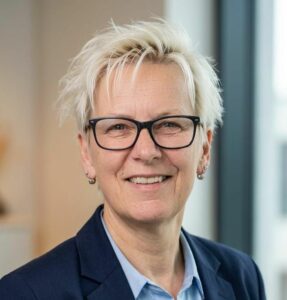
Mł. insp. w st. sp. Ewa Tuszyńska
Naczelnik Laboratorium Kryminalistycznego
Komendy Wojewódzkiej Policji we Wrocławiu
Perspektywy rozwoju współczesnej kryminalistyki – dokąd zmierzamy?
PRELEGENT
Ekspertka kryminalistyki z 25-letnim doświadczeniem
w strukturach Policji.
Przez lata związana z garnizonem dolnośląskim, gdzie pełniła m. in. funkcję Naczelnika Laboratorium Kryminalistycznego Komendy Wojewódzkiej Policji we Wrocławiu.
W pracy zawodowej odpowiadała za wdrażanie nowoczesnych standardów i systemów jakości oraz koordynację działań z zakresu techniki kryminalistycznej. Specjalizuje się w badaniach traseologicznych oraz analizie mechanizmu powstawania plam krwawych. Jest autorką publikacji naukowych poświęconych metodyce ujawniania i zabezpieczania śladów oraz badaniom eksperymentalnym. Doświadczona prelegentka na konferencjach krajowych i międzynarodowych.
Obecnie łączy wieloletnią praktykę z działalnością akademicką jako wykładowczyni na kierunku Technologie Inżynierskie w Kryminalistyce na Politechnice Śląskiej.

Dr inż. Karol Jędrasiak
Zastępca Dyrektora Centrum Transferu Technologii
Akademia WSB
Gdy obraz przestaje być dowodem. Od sztucznej inteligencji do inżynierii zaufania
PRELEGENT
Pracownik naukowo-dydaktyczny Akademii WSB oraz Zastępca Dyrektora Centrum Transferu Technologii. Ekspert w zakresie sztucznej inteligencji, wizji komputerowej, VR/AR, detekcji deepfake oraz inżynierii zaufania w medycynie, edukacji i bezpieczeństwie.
Autor ponad 100 publikacji (h-index 20) i współautor 6 patentów. Kierował 8 projektami B+R finansowanymi przez NCBiR. Od lat łączy naukę z biznesem – kieruje spółkami technologicznymi i pełni funkcję NATO DEEP eAcademy VR Coordinator. Odznaczony Medalem KEN oraz wyróżniony certyfikatem uznania NATO.
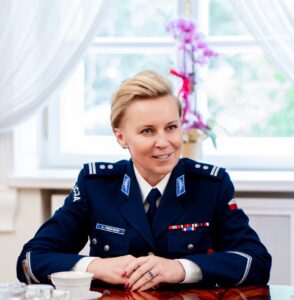
Mł. insp. dr Anna Przewor
Centralne Laboratorium Kryminalistyczne Policji
Innowacyjna metoda w kryminalistycznej analizie rękopisów
PRELEGENT
Pełni służbę w Policji od 2000 roku, specjalizując się
w kryminalistycznych badaniach dokumentów. Od lat związana z Centralnym Laboratorium Kryminalistycznym Policji, gdzie kierowała Zakładem Badań Dokumentów
i Technik Audiowizualnych.
Jest autorką i współautorką publikacji naukowych, laureatką nagrody im. Tadeusza Hanauska oraz osobą wyróżnioną przez Europol za opracowanie jednej z najbardziej innowacyjnych metod badawczych w obszarze badań kryminalistycznych dokumentów.
Dr inż. Karol Jędrasiak
Zastępca Dyrektora Centrum
Transferu Technologii
Akademia WSB
“Gdy obraz przestaje być dowodem. Od sztucznej inteligencji do inżynierii zaufania”
PRELEGENT
Dr inż. Karol Jędrasiak jest pracownikiem naukowo-dydaktycznym Akademii WSB, Zastępcą Dyrektora Centrum Transferu Technologii oraz ekspertem w zakresie sztucznej inteligencji, wizji komputerowej, rzeczywistości wirtualnej, rozszerzonej i mieszanej, systemów sensorycznych oraz analizy danych obrazowych. Specjalizuje się w projektowaniu i wdrażaniu technologii wspomagających analizę obrazu, ocenę wiarygodności danych cyfrowych, detekcję manipulacji wizualnych, deepfake oraz odpowiedzialne wykorzystanie sztucznej inteligencji w medycynie, edukacji, bezpieczeństwie i kryminalistyce. Jest autorem ponad 100 publikacji naukowych, w tym trzech monografii, cytowanych łącznie ponad 750 razy, a jego indeks Hirscha według Google Scholar wynosi 20. Uczestniczył w 30 projektach badawczo-rozwojowych, w tym 24 finansowanych przez Narodowe Centrum Badań i Rozwoju, z czego ośmioma kierował samodzielnie. Dorobek wdrożeniowy obejmuje 32 zastrzeżenia własności intelektualnej, w tym 6 przyznanych patentów. Za działalność naukową, dydaktyczną, wdrożeniową i organizacyjną otrzymał ponad 10 nagród oraz wyróżnień krajowych i międzynarodowych. W 2024 roku został odznaczony Medalem Komisji Edukacji Narodowej oraz wyróżniony certyfikatem uznania NATO za wyjątkowy wkład w realizację programu certyfikacji e-instruktorów. Od wielu lat łączy działalność naukową z praktyką zarządczą i technologiczną. Kierował spółkami rozwijającymi technologie VR i AR, obecnie pełni funkcję prezesa spółki projektującej narzędzia do automatycznej analizy ran oraz jest opiekunem naukowym Studenckiego Koła Naukowego „AI w medycynie”. Od 2022 roku pełni funkcję NATO DEEP eAcademy VR Coordinator i instruktora NATO DEEP eAcademy. W 2023 roku, jako jedyny przedstawiciel z Polski, prowadził szkolenie z zakresu wykorzystania VR, AR i sztucznej inteligencji w edukacji dla 115 rektorów komendantów wyższych szkół wojskowych z 70 krajów podczas NATO Conference of Commandants. Od 2025 roku uczestniczy w pracach nad wytycznymi NATO dotyczącymi wykorzystania sztucznej inteligencji jako narzędzia siły militarnej oraz przygotowania instruktorów do jej odpowiedzialnego stosowania. W 2026 prowadził szkolenie z etycznego i odpowiedzialnego wykorzystania AI dla Naczelnej Izby Pielęgniarek i Położnych. Obecne zainteresowania dr. inż. Karola Jędrasiaka koncentrują się na inżynierii zaufania, wiarygodności obrazu, bezpieczeństwie systemów sztucznej inteligencji, analizie danych multimodalnych oraz praktycznym transferze innowacji do medycyny, kryminalistyki, edukacji i obszaru bezpieczeństwa.
Prof. dr hab. Marcin Kadej
Kierownik Pracowni Biologii
i Entomologii Sądowej
Uniwersytet Wrocławski
„Entomologia sądowa jako metoda stosowana w kryminalistyce”
PRELEGENT
Profesor doktor habilitowany nauk biologicznych, inżynier zarządzania i marketingu, dziekan Wydziału Nauk Biologicznych Uniwersytetu Wrocławskiego w latach 2020–2024 oraz przewodniczący Rady Dyscypliny Nauki Biologiczne w tym samym okresie. Założyciel i kierownik Pracowni Biologii i Entomologii Sądowej UWr (od 2019 r.), mentor i certyfikowany tutor akademicki.
Specjalizuje się w biologii środowiskowej, biologii konserwatorskiej, ekologii, a przede wszystkim w entomologii sądowej i archeoentomologii. Jego zainteresowania badawcze koncentrują się na zwierzętach bezkręgowych, ze szczególnym uwzględnieniem owadów – w tym gatunków saproksylicznych, nekrofagicznych oraz chronionych i zagrożonych. W ramach działalności Pracowni Biologii i Entomologii Sądowej prowadzi badania z zakresu „forensic science”, łącząc wiedzę biologiczną z praktycznym jej zastosowaniem w kryminalistyce.
Istotnym obszarem jego aktywności jest współpraca z organami ścigania i wymiarem sprawiedliwości, obejmująca m.in. Policję, prokuraturę oraz sądy, a także zakłady medycyny sądowej. Uczestniczy w analizach materiału biologicznego istotnego dla postępowań karnych, przygotowuje opinie sądowo‑entomologiczne oraz wspiera ustalanie czasu i okoliczności zgonu na podstawie dowodów entomologicznych.
Jest autorem licznych publikacji naukowych i popularnonaukowych. Łącznie opublikował blisko 400 prac, w tym niemal 100 w czasopismach z listy JCR. Opisał ponad 100 nowych dla nauki gatunków chrząszczy z rodziny Dermestidae oraz opracował lub zredeskrybował stadia młodociane (larwy) blisko 31 gatunków.
W ramach działalności naukowej odbył liczne wizyty zagraniczne (Czechy, Hiszpania, Niemcy, Szwajcaria, Włochy, Rosja, Ukraina) oraz długoterminowy staż naukowy w Royal Holloway, University of London.
Prowadzi wykłady i warsztaty z zakresu entomologii sądowej, gospodarowania bioróżnorodnością oraz ochrony przyrody. Jest przewodniczącym Regionalnej Rady Ochrony Przyrody przy RDOŚ we Wrocławiu (członek w kadencjach 2015–2020 i 2020–2025, przewodniczący w kadencji 2025–2030), członkiem Rady Naukowej Parku Narodowego Gór Stołowych (2015–2020, 2020–2025), przewodniczącym Prezydium Rady Naukowo‑Społecznej Leśnego Kompleksu Promocyjnego „Sudety Zachodnie” (2023–2027) oraz członkiem innych gremiów eksperckich, w tym Polskiego Komitetu Krajowego IUCN (od 2017 r.).
W latach 2017–2026, jako ekspert w zakresie biologii środowiska, biologii konserwatorskiej, zoologii (entomologii) oraz nadzoru przyrodniczego, wykonał ponad 230 opinii, ekspertyz, inwentaryzacji i monitoringów, w tym opracowania o charakterze sądowym i procesowym.

Prof. dr hab.
Jadwiga Stawnicka
Akademii Wychowania Fizycznego im. Jerzego Kukuczki
w Katowicach
Innowacyjność metod lingwokryminalistyki. Badania kryminalistycznego śladu językowego.
PRELEGENT
Kierownik Centrum Badań i Ekspertyz Kryminalistyki Lingwistycznej Akademii Wychowania Fizycznego im. Jerzego Kukuczki w Katowicach.
Autorka ponad 200 publikacji, w tym 25 monografii naukowych. Zakres zainteresowań obejmuje między innymi bezpieczeństwo, komunikację w zarządzaniu, humanistyczne aspekty zarządzania, strategie komunikacji wewnętrznej i zewnętrznej przedsiębiorstwa, komunikację w sytuacjach kryzysowych, politykę bezpieczeństwa.
Szczególny obszar zainteresowań zajmują badania w ramach lingwokryminalistyki i językowego profilowania sprawcy.
Od wielu lat przeprowadza jako biegła dla potrzeb wymiaru sprawiedliwości ekspertyzy z zakresu ustalania autorstwa wypowiedzi na podstawie treści mówionej lub pisanej (np. wpisów na blogach, listów z pogróżkami, żądań okupu, listów pożegnalnych,) oraz oceny autentyczności tekstów, ustalania cech językowych stalkerów i cyberstalkerów, które mogą zidentyfikować autora.
Autorka m. in. monografii: Kłamstwo jako zagrożenie dla prawidłowego przebiegu procesu wykrywczego i dowodowego. (Wydawnictwo AWF Katowice 2026) oraz Innowacyjność metod wykrywania sprawców przestępstw na podstawie kryminalistycznego śladu językowego. (Wydawnictwo AWF Katowice 2022).
Dr hab. n. med. i n. o zdr.
Marcin Tomsia
Śląski Uniwersytet Medyczny w Katowicach
Genetyka sądowa w praktyce – przykłady zastosowań
PRELEGENT
Adiunkt badawczo-dydaktyczny w Katedrze i Zakładzie Medycyny Sądowej i Toksykologii Sądowo-Lekarskiej Śląskiego Uniwersytetu Medycznego w Katowicach. Pełni funkcję wiceprzewodniczącego Oddziału Polskiego Towarzystwa Medycyny Sądowej i Kryminologii w Katowicach oraz sekretarza polskojęzycznej grupy Międzynarodowego Towarzystwa Genetyki Sądowej (ISFG-POL).
Jest biotechnologiem oraz diagnostą laboratoryjnym – specjalistą laboratoryjnej genetyki sądowej z bogatym doświadczeniem naukowym i dydaktycznym. Ukończył również studia podyplomowe na kierunku biologia sądowa. W trakcie zagranicznych staży naukowych rozwijał swoje kompetencje w zakresie genetyki sądowej, pracując zarówno w zespole zajmującym się przewidywaniem cech fenotypowych na podstawie DNA człowieka, jak i w grupie specjalizującej się w analizie DNA zwierzęcego i roślinnego.
Dr hab. Marcin Tomsia jest kierownikiem i wykonawcą projektów badawczych finansowanych ze źródeł zewnętrznych, a także beneficjentem programów Erasmus+ realizowanych m.in. w Czechach, Hiszpanii i Rumunii. Jest również członkiem oraz stypendystą Międzynarodowego Towarzystwa Genetyki Sądowej (ISFG – International Society for Forensic Genetics).
Jego dorobek naukowy obejmuje liczne publikacje z zakresu biologii molekularnej, toksykologii oraz genetyki sądowej. Aktywnie angażuje się również w działalność popularyzującą naukę.

mł. insp. w st. spocz.
mgr Władysław Wojtyczka, MBA
Uczelnia Nauk Społecznych
Daktyloskopia w praktyce kryminalistycznej – studium przypadków
PRELEGENT
Wykładowca akademicki w Uczelni Nauk Społecznych w Łodzi i Akademii Górniczo-Hutniczej w Krakowie, biegły Sądu Okręgowego w Krakowie z zakresu techniki kryminalistycznej i daktyloskopii.
Oficer Policji, ekspert kryminalistyki, autor licznych publikacji o motywach działania sprawców przestępstw, kryminalistycznym badaniu miejsca zdarzenia i identyfikacji osobniczej człowieka.

kom. dr Anna Madej
Laboratorium Kryminalistyczne
Komendy Wojewódzkiej Policji we Wrocławiu
Genetyka kryminalistyczna – od śladu do sprawcy
PRELEGENT
Absolwentka biotechnologii Uniwersytetu Przyrodniczego we Wrocławiu. W 2014 roku obroniła rozprawę doktorską, rozpoczynając tym samym kolejny etap swojej kariery naukowej i zawodowej.
W 2015 roku wstąpiła do Policji, a od 2017 roku związana jest z pracą w laboratorium kryminalistycznym. W 2020 roku uzyskała uprawnienia policyjnego biegłego z zakresu genetyki sądowej.
Jej wieloletnie doświadczenie oraz wiedza specjalistyczna znajdują odzwierciedlenie w liczbie i różnorodności realizowanych ekspertyz. Do tej pory wydała ponad 700 opinii z zakresu genetyki sądowej, przyczyniając się swoją pracą do wyjaśniania spraw wymagających specjalistycznej wiedzy z zakresu badań DNA.

Prof.dr.hab.inż.
Piotr Augustyniak
Akademia Górniczo-Hutnicza w Krakowie
Ocena śledzenia ruchów gałek ocznych jako metody wykrywania kłamstwa w porównaniu z poligrafem stosowanym w praktyce
PRELEGENT
W 1989 roku ukończył studia na kierunku elektronika (medyczna) na Wydziale EAiE AGH.
Od 2016 roku jest zatrudniony w AGH na stanowisku profesora. W latach 1998-2008 był konstruktorem w Aspel S.A. W latach 2005-12 był kierownikiem Międzywydziałowej Szkoły Inżynierii Biomedycznej AGH.
Od 2018 roku jest kierownikiem Katedry Biocybernetyki i Inżynierii Biomedycznej AGH. Autor ok. 310 publikacji, w tym 9 książek i 120 artykułów (JCR), Przewodniczący Zespołu II Rady Doskonałości Naukowej (2020-27).
podinsp. w st. spocz.
Sławomir Zubański
Krajowa Administracja Skarbowa
Technika Kryminalistyczna w Służbie Celno-Skarbowej. Obecne wyzwania.
PRELEGENT
Dr nauk prawnych, kryminalistyk z wieloletnim stażem, obecnie główny ekspert skarbowy ds. techniki kryminalistycznej w Referacie-Centrum Kompetencyjnym Technik Kryminalistycznych Warmińsko-Mazurskiego Urzędu Celno-Skarbowego w Olsztynie, adiunkt w Katedrze Kryminologii i Kryminalistyki Wydziału Prawa i Administracji Uniwersytetu Warmińsko-Mazurskiego w Olsztynie, wykładowca Krajowej Szkoły Sądownictwa i Prokuratury.
Autor i współautor wielu publikacji poświęconych zagadnieniom techniki kryminalistycznej, w szczególności: identyfikacji daktyloskopijnej, ujawnianiu śladów linii papilarnych metodami chemicznymi, nowoczesnych technologii stosowanych w wizualizacji śladów linii papilarnych oraz wykorzystaniu czynności pozaprocesowych w daktyloskopii.
Uczestnik wielu konferencji naukowych, sympozjów oraz seminariów krajowych i zagranicznych poświęconych o tematyce kryminalistycznej. Kierownik zadań badawczych realizowanych w ramach DST ze środków MNiSzW oraz projektów badawczo-rozwojowych z obszaru bezpieczeństwa państwa i obronności finansowanych przez Narodowe Centrum Badań i Rozwoju. Wieloletni biegły sądowy Sądu Okręgowego w Olsztynie z zakresu badań daktyloskopijnych.

por. Urszula Więckiewicz
Biuro Badań Kryminalistycznych
Agencji Bezpieczeństwa Wewnętrznego
Daktyloskopia w kryminalistyce – ewolucja metod i znaczenie badań od przeszłości
do współczesności
PRELEGENT
Ekspert z zakresu badań daktyloskopijnych w Biurze Badań Kryminalistycznych Agencji Bezpieczeństwa Wewnętrznego.
Od ponad 25 lat związana z działalnością z obszaru badań kryminalistycznych. Przez 14 lat związana była z Centralnym Laboratorium Kryminalistycznym Policji, gdzie zdobywała wiedzę i doświadczenie zawodowe w zakresie badań daktyloskopijnych.
Współautorka opracowań naukowych z obszaru daktyloskopii. Członek zespołów badawczych realizujących projekty naukowe i prace rozwojowe z dziedziny obronności i bezpieczeństwa państwa, finansowanych przez Narodowe Centrum Badań i Rozwoju. Należy do międzynarodowej grupy roboczej ds. badań daktyloskopijnych Fingerprint Working Group ENFSI (European Network of Forensic Science Institutes).
Posiada wieloletnie doświadczenie w zakresie oceny procesów akredytacji oraz nadzoru nad spełnieniem wymagań normy ISO/IEC 17025 przez kryminalistyczne laboratoria badawcze z obszaru dziedziny nauk sądowych. Pełni funkcję audytora technicznego w obszarze normy ISO/IEC 17025 przy Polskim Centrum Akredytacji.

podinsp. Dariusz Kozioł
Centralne Biuro Zwalczania Cyberprzestępczości
Wydział Wywiadu Kryminalnego Zarządu w Katowicach
AI we współczesnej analizie kryminalnej –
nowe możliwości i nieoczywiste wyzwania.
PRELEGENT
Zastępca Naczelnika Wydziału Wywiadu Kryminalnego Zarządu w Katowicach Centralnego Biura Zwalczania Cyberprzestępczości.
Ekspert w zakresie wywiadu kryminalnego, analizy kryminalnej i zwalczania cyberprzestępczości, posiadający wieloletnie doświadczenie w wykorzystaniu informacji i metod analitycznych w procesie wykrywczym.
Wcześniej analityk kryminalny Komendy Wojewódzkiej Policji w Katowicach, gdzie pełnił funkcję koordynatora zespołu analizy kryminalnej.
Wykładowca stowarzyszony Akademii Policji w Szczytnie oraz biegły sądowy (ad hoc). Aktywnie uczestniczy w debatach i przedsięwzięciach eksperckich poświęconych cyberbezpieczeństwu, profilaktyce zagrożeń cyfrowych oraz budowaniu świadomości bezpieczeństwa.
W swojej działalności łączy doświadczenie praktyki policyjnej z wiedzą ekspercką i dydaktyczną. Koncentruje się na rozwoju oraz praktycznym zastosowaniu nowoczesnych metod pozyskiwania, analizy i interpretacji informacji w rozpoznawaniu współczesnych zagrożeń dla bezpieczeństwa wewnętrznego.
Biomedical Engineering
26 October 2026
Meet the experts presenting the latest innovations in biomedical engineering, medical technologies and digital health.
Prof. Ivan Olier,
DSc., PhD., BEng.
Liverpool John Moores University
Towards AI-Based Digital Twins
for Personalised Healthcare
INVITED SPEAKER
Professor Ivan Olier is Professor of Artificial Intelligence and Data Science at Liverpool John Moores University, where he is Head of the Artificial Intelligence and Digital Technologies Research Institute and Head of Research in the School of Computer Science and Mathematics. He received his PhD in Artificial Intelligence from the Technical University of Catalonia and subsequently held academic positions at the Autonomous University of Barcelona, the University of Manchester, and Keele University before joining Liverpool John Moores University.
He leads large-scale international research programmes focused on AI-based digital twins, causal AI, and trustworthy AI for personalised and preventive healthcare. His research spans fundamental methodological development, clinical translation, and real-world evaluation.
Professor Olier has extensive experience leading multidisciplinary collaborations across academia, healthcare, and industry, with applications including cardiovascular disease, stroke, critical care, and cancer. He also advises international research organisations and strategic bodies, including the Danish Data Science Academy and the University of Murcia.
Prof. Wojciech Czakon,
PhD, Dr h.c.
Jagiellonian University in Kraków
The AI Arms Race in Medicine:
Winning the Quarter,
Losing the Decade?
INVITED SPEAKER
Professor Wojciech Czakon, PhD, Dr h.c., is a world-renowned researcher in the field of strategic management. He is Head of the Department of Strategic Management at Jagiellonian University in Krakow and a member of the Academia Europaea and the Council for Scientific Excellence. He has published over 250 academic papers, and his work is among the most frequently cited Polish research in the field of strategic management.
He focuses his research on how organisations build competitive advantage, make strategic decisions, and collaborate in an environment of growing uncertainty and rapid technological change. In recent years, the digital transformation of organisations and the strategic implications of artificial intelligence development have taken centre stage in his research. Professor Czakon not only examines the technological side of digitalisation, but also its organisational and behavioural dimensions. He explores why organisations often adopt new technologies more slowly than their potential suggests and what barriers — linked to people’s attitudes, perceptions of technology, and changes in operating models — influence the pace of transformation. His research and teaching activities also cover the applications of artificial intelligence in management and organisations, including the impact of AI on business processes and value creation and the consequences of using new technologies for decision-making, managerial work, and organisational functioning.
A key focus of his research is strategy in the context of cooperation between competitors. As one of the world’s leading coopetition researchers, he analyses how organisations can compete and cooperate simultaneously, thereby building resilience, improving access to resources, and gaining a strategic advantage. His latest research includes the development of organisational resilience through coopetition, among other things.
He is the author and co-author of over 250 academic publications and books, which have been published in renowned Polish and international journals. He has led research projects funded by the National Science Centre and European research programmes. He is also a visiting professor at several foreign universities, including the University of Johannesburg.
He has received numerous honours for his academic achievements, including an award from the Prime Minister and awards from the Minister of Education and Science. He has also been recognised by the Minister of Science and Higher Education for his teaching achievements. In 2023, he was awarded an honorary doctorate by Wrocław University of Economics. In 2025, he was honoured with the Karol Adamiecki Medal for his contributions to organisational and management science development.
He was previously affiliated with the University of Economics in Katowice, where he established the Department of Management Theory. He has been a lecturer on MBA programmes for many years. As a keynote speaker, he combines an academic perspective with management practice to demonstrate how strategies, organisations and managerial roles are changing in a world of digital transformation and artificial intelligence.
Prof. Filip Górski, DSc., PhD., BEng.
Faculty of Mechanical Engineering
Poznań University of Technology
Automated Design of 3D-Printed Lightweight
Hand Orthoses from 3D and 4D Scanning Data
INVITED SPEAKER
A researcher, educator, and innovation leader specializing in mechanical engineering, biomedical engineering, digital manufacturing, and medical technologies. His work focuses on the integration of advanced engineering methods – including 3D scanning, reverse engineering, CAD/CAM systems, additive manufacturing, extended reality (XR), digital twins, and artificial intelligence – into healthcare and customized product development. He has led and contributed to numerous interdisciplinary projects at the intersection of engineering and medicine, particularly in the development of patient-specific medical devices, surgical guides, prosthetic solutions, and digital clinical workflows. His research emphasizes engineering-to-order approaches, mass customization, and the digital transformation of healthcare processes.
As a professor and academic mentor, he is actively involved in international scientific collaboration, technology transfer, and the education of future engineers. He regularly delivers invited lectures and keynote presentations on topics related to Industry 4.0, additive manufacturing, XR technologies, and biomedical product development. His recent work includes the development of advanced digital platforms for personalized medicine, automated additive manufacturing workflows, and CAD-agnostic engineering environments that support flexible product configuration and design automation across multiple CAD systems. His broader mission is to bridge engineering innovation and clinical practice, enabling more efficient, personalized, and digitally integrated healthcare solutions.
Dr Wojciech Kajzer, PhD., BEng.
Faculty of Biomedical Engineering
Silesian University of Technology
Additive technologies in biomedical engineering. Research potential and ongoing projects carried out at the Department of Biomaterials and Medical Device Engineering
INVITED SPEAKER
Assistant Professor in the Department of Biomaterials and Medical Device Engineering, Faculty of Biomedical Engineering, Silesian University of Technology, and Head of the Rapid Prototyping Laboratory at the European HealthTech Innovation Centre.
His research interests focus on the application of reverse engineering and additive manufacturing technologies in biomedical engineering, with particular emphasis on the development of personalized medical devices for orthopaedics, surface modification, and physicochemical characterization using electrochemical and mechanical testing methods.
Dr Wojciech Kajzer,
PhD., BEng.
Silesian University of Technology
Additive technologies in biomedical engineering. Research potential and ongoing projects carried out at the Department of Biomaterials and Medical Device Engineering
INVITED SPEAKER
Assistant Professor in the Department of Biomaterials and Medical Device Engineering, Faculty of Biomedical Engineering, Silesian University of Technology, and Head of the Rapid Prototyping Laboratory at the European HealthTech Innovation Centre.
His research interests focus on the application of reverse engineering and additive manufacturing technologies in biomedical engineering, with particular emphasis on the development of personalized medical devices for orthopaedics, surface modification, and physicochemical characterization using electrochemical and mechanical testing methods.
Prof. Filip Górski,
PhD, BEng.
Poznań University of Technology
Automated Design of 3D-Printed Lightweight Hand Orthoses from 3D and 4D Scanning Data
INVITED SPEAKER
A researcher, educator, and innovation leader specializing in mechanical engineering, biomedical engineering, digital manufacturing, and medical technologies. His work focuses on the integration of advanced engineering methods – including 3D scanning, reverse engineering, CAD/CAM systems, additive manufacturing, extended reality (XR), digital twins, and artificial intelligence – into healthcare and customized product development. He has led and contributed to numerous interdisciplinary projects at the intersection of engineering and medicine, particularly in the development of patient-specific medical devices, surgical guides, prosthetic solutions, and digital clinical workflows. His research emphasizes engineering-to-order approaches, mass customization, and the digital transformation of healthcare processes.
As a professor and academic mentor, he is actively involved in international scientific collaboration, technology transfer, and the education of future engineers. He regularly delivers invited lectures and keynote presentations on topics related to Industry 4.0, additive manufacturing, XR technologies, and biomedical product development. His recent work includes the development of advanced digital platforms for personalized medicine, automated additive manufacturing workflows, and CAD-agnostic engineering environments that support flexible product configuration and design automation across multiple CAD systems. His broader mission is to bridge engineering innovation and clinical practice, enabling more efficient, personalized, and digitally integrated healthcare solutions.
Dr Daniel Ledwoń, PhD., BEng.
Faculty of Biomedical Engineering
Silesian University of Technology
Towards Personalized Treatment of Retinal Diseases through AI-Enabled Comprehensive Patient Assessment
INVITED SPEAKER
Assistant Professor in the Department of Medical Informatics and Artificial Intelligence, Faculty of Biomedical Engineering, Silesian University of Technology. His research focuses on the application of artificial intelligence in medicine, with particular emphasis on ophthalmology, neurology, and audiology. He develops data-driven methods for analyzing multimodal clinical data to support personalized diagnosis, prognosis, and treatment.
In recent years, he has been actively involved in interdisciplinary research on retinal diseases, particularly age-related macular degeneration (AMD). His work combines retinal imaging, clinical data, and real-world patient registries to develop AI-based decision-support tools that improve patient stratification, treatment optimization, and clinical outcomes. He also researches computer-aided assessment of cognitive and neurodevelopmental disorders, as well as the analysis of behavioral and physiological responses to auditory stimulation.
He has authored numerous scientific publications in biomedical engineering, artificial intelligence, ophthalmology, and neuroscience. Through close collaboration with clinicians, his research aims to translate advanced computational methods into practical tools for comprehensive patient assessment and personalized healthcare.
Dr Matteo Montesissa, PhD., BEng.
SC Biomedical Sciences and NanoBiotechnologies Laboratory IRCCS Rizzoli Orthopaedic Institute
Nanostructured Coatings
for Biomedical Applications
INVITED SPEAKER
Health Researcher at the IRCCS Istituto Ortopedico Rizzoli in Bologna, Italy, where I have been working since 2024. I obtained my Bachelor’s Degree in Biomedical Engineering from Politecnico di Milano in 2017, followed by a Master’s Degree in Biomedical Engineering, specializing in Cell, Tissue and Biotechnology Engineering, in 2020. In 2025, I completed my PhD in Biomedical and Neuromotor Sciences at the University of Bologna.
My research focuses on the development and characterization of advanced biomaterials for orthopedic applications. In particular, I investigate nanostructured ceramic– and metal-based coatings designed to improve the antibacterial properties and osteointegration of orthopedic implants, contributing to the development of innovative medical devices with enhanced biological performance.
Another key area of my research is the chemical characterization of bone and cartilage tissues using Fourier Transform Infrared (FTIR) spectroscopy to better understand tissue composition and quality. I am the author and co-author of several peer-reviewed scientific publications in the fields of biomaterials, orthopedic implant surface engineering, and spectroscopic characterization of musculoskeletal tissues. Through my research, I aim to bridge materials science and biomedical engineering to develop solutions that can improve patient outcomes and support the advancement of orthopedic technologies
Dr Daniel Ledwoń,
PhD., BEng.
Silesian University of Technology
Towards Personalized Treatment of Retinal Diseases through AI-Enabled Comprehensive Patient Assessment
INVITED SPEAKER
Assistant Professor in the Department of Medical Informatics and Artificial Intelligence, Faculty of Biomedical Engineering, Silesian University of Technology. His research focuses on the application of artificial intelligence in medicine, with particular emphasis on ophthalmology, neurology, and audiology. He develops data-driven methods for analyzing multimodal clinical data to support personalized diagnosis, prognosis, and treatment.
In recent years, he has been actively involved in interdisciplinary research on retinal diseases, particularly age-related macular degeneration (AMD). His work combines retinal imaging, clinical data, and real-world patient registries to develop AI-based decision-support tools that improve patient stratification, treatment optimization, and clinical outcomes. He also researches computer-aided assessment of cognitive and neurodevelopmental disorders, as well as the analysis of behavioral and physiological responses to auditory stimulation.
He has authored numerous scientific publications in biomedical engineering, artificial intelligence, ophthalmology, and neuroscience. Through close collaboration with clinicians, his research aims to translate advanced computational methods into practical tools for comprehensive patient assessment and personalized healthcare.
Dr Matteo Montesissa,
PhD., BEng.
IRCCS Rizzoli Orthopaedic Institute
Nanostructured Coatings
for Biomedical Applications
INVITED SPEAKER
Health Researcher at the IRCCS Istituto Ortopedico Rizzoli in Bologna, Italy, where I have been working since 2024. I obtained my Bachelor’s Degree in Biomedical Engineering from Politecnico di Milano in 2017, followed by a Master’s Degree in Biomedical Engineering, specializing in Cell, Tissue and Biotechnology Engineering, in 2020. In 2025, I completed my PhD in Biomedical and Neuromotor Sciences at the University of Bologna.
My research focuses on the development and characterization of advanced biomaterials for orthopedic applications. In particular, I investigate nanostructured ceramic– and metal-based coatings designed to improve the antibacterial properties and osteointegration of orthopedic implants, contributing to the development of innovative medical devices with enhanced biological performance.
Another key area of my research is the chemical characterization of bone and cartilage tissues using Fourier Transform Infrared (FTIR) spectroscopy to better understand tissue composition and quality. I am the author and co-author of several peer-reviewed scientific publications in the fields of biomaterials, orthopedic implant surface engineering, and spectroscopic characterization of musculoskeletal tissues. Through my research, I aim to bridge materials science and biomedical engineering to develop solutions that can improve patient outcomes and support the advancement of orthopedic technologies
Daniel Ledwoń PhD., BEng.
Faculty of Biomedical Engineering
Silesian University of Technology
“Towards Personalized Treatment of Retinal Diseases through AI-Enabled Comprehensive Patient Assessment”
INVITED SPEAKER
Assistant Professor in the Department of Medical Informatics and Artificial Intelligence, Faculty of Biomedical Engineering, Silesian University of Technology. His research focuses on the application of artificial intelligence in medicine, with particular emphasis on ophthalmology, neurology, and audiology. He develops data-driven methods for analyzing multimodal clinical data to support personalized diagnosis, prognosis, and treatment.
In recent years, he has been actively involved in interdisciplinary research on retinal diseases, particularly age-related macular degeneration (AMD). His work combines retinal imaging, clinical data, and real-world patient registries to develop AI-based decision-support tools that improve patient stratification, treatment optimization, and clinical outcomes. He also researches computer-aided assessment of cognitive and neurodevelopmental disorders, as well as the analysis of behavioral and physiological responses to auditory stimulation.
He has authored numerous scientific publications in biomedical engineering, artificial intelligence, ophthalmology, and neuroscience. Through close collaboration with clinicians, his research aims to translate advanced computational methods into practical tools for comprehensive patient assessment and personalized healthcare.
Modern Forensics Speakers
27 October 2026
Conference in Polish
Researchers, experts and practitioners who combine specialist knowledge with practical experience in the real-world application of forensic science.
Dr inż. Karol Jędrasiak
Zastępca Dyrektora Centrum Transferu Technologii
Akademia WSB
“Gdy obraz przestaje być dowodem. Od sztucznej inteligencji do inżynierii zaufania”
PRELEGENT
Dr inż. Karol Jędrasiak jest pracownikiem naukowo-dydaktycznym Akademii WSB, Zastępcą Dyrektora Centrum Transferu Technologii oraz ekspertem w zakresie sztucznej inteligencji, wizji komputerowej, rzeczywistości wirtualnej, rozszerzonej i mieszanej, systemów sensorycznych oraz analizy danych obrazowych. Specjalizuje się w projektowaniu i wdrażaniu technologii wspomagających analizę obrazu, ocenę wiarygodności danych cyfrowych, detekcję manipulacji wizualnych, deepfake oraz odpowiedzialne wykorzystanie sztucznej inteligencji w medycynie, edukacji, bezpieczeństwie i kryminalistyce. Jest autorem ponad 100 publikacji naukowych, w tym trzech monografii, cytowanych łącznie ponad 750 razy, a jego indeks Hirscha według Google Scholar wynosi 20. Uczestniczył w 30 projektach badawczo-rozwojowych, w tym 24 finansowanych przez Narodowe Centrum Badań i Rozwoju, z czego ośmioma kierował samodzielnie. Dorobek wdrożeniowy obejmuje 32 zastrzeżenia własności intelektualnej, w tym 6 przyznanych patentów. Za działalność naukową, dydaktyczną, wdrożeniową i organizacyjną otrzymał ponad 10 nagród oraz wyróżnień krajowych i międzynarodowych. W 2024 roku został odznaczony Medalem Komisji Edukacji Narodowej oraz wyróżniony certyfikatem uznania NATO za wyjątkowy wkład w realizację programu certyfikacji e-instruktorów. Od wielu lat łączy działalność naukową z praktyką zarządczą i technologiczną. Kierował spółkami rozwijającymi technologie VR i AR, obecnie pełni funkcję prezesa spółki projektującej narzędzia do automatycznej analizy ran oraz jest opiekunem naukowym Studenckiego Koła Naukowego „AI w medycynie”. Od 2022 roku pełni funkcję NATO DEEP eAcademy VR Coordinator i instruktora NATO DEEP eAcademy. W 2023 roku, jako jedyny przedstawiciel z Polski, prowadził szkolenie z zakresu wykorzystania VR, AR i sztucznej inteligencji w edukacji dla 115 rektorów komendantów wyższych szkół wojskowych z 70 krajów podczas NATO Conference of Commandants. Od 2025 roku uczestniczy w pracach nad wytycznymi NATO dotyczącymi wykorzystania sztucznej inteligencji jako narzędzia siły militarnej oraz przygotowania instruktorów do jej odpowiedzialnego stosowania. W 2026 prowadził szkolenie z etycznego i odpowiedzialnego wykorzystania AI dla Naczelnej Izby Pielęgniarek i Położnych. Obecne zainteresowania dr. inż. Karola Jędrasiaka koncentrują się na inżynierii zaufania, wiarygodności obrazu, bezpieczeństwie systemów sztucznej inteligencji, analizie danych multimodalnych oraz praktycznym transferze innowacji do medycyny, kryminalistyki, edukacji i obszaru bezpieczeństwa.
Prof. dr hab. Marcin Kadej
Kierownik Pracowni Biologii i Entomologii Sądowej
Uniwersytet Wrocławski
„Entomologia sądowa jako metoda stosowana w kryminalistyce”
PRELEGENT
Profesor doktor habilitowany nauk biologicznych, inżynier zarządzania i marketingu, dziekan Wydziału Nauk Biologicznych Uniwersytetu Wrocławskiego w latach 2020–2024 oraz przewodniczący Rady Dyscypliny Nauki Biologiczne w tym samym okresie. Założyciel i kierownik Pracowni Biologii i Entomologii Sądowej UWr (od 2019 r.), mentor i certyfikowany tutor akademicki.
Specjalizuje się w biologii środowiskowej, biologii konserwatorskiej, ekologii, a przede wszystkim w entomologii sądowej i archeoentomologii. Jego zainteresowania badawcze koncentrują się na zwierzętach bezkręgowych, ze szczególnym uwzględnieniem owadów – w tym gatunków saproksylicznych, nekrofagicznych oraz chronionych i zagrożonych. W ramach działalności Pracowni Biologii i Entomologii Sądowej prowadzi badania z zakresu „forensic science”, łącząc wiedzę biologiczną z praktycznym jej zastosowaniem w kryminalistyce.
Istotnym obszarem jego aktywności jest współpraca z organami ścigania i wymiarem sprawiedliwości, obejmująca m.in. Policję, prokuraturę oraz sądy, a także zakłady medycyny sądowej. Uczestniczy w analizach materiału biologicznego istotnego dla postępowań karnych, przygotowuje opinie sądowo‑entomologiczne oraz wspiera ustalanie czasu i okoliczności zgonu na podstawie dowodów entomologicznych.
Jest autorem licznych publikacji naukowych i popularnonaukowych. Łącznie opublikował blisko 400 prac, w tym niemal 100 w czasopismach z listy JCR. Opisał ponad 100 nowych dla nauki gatunków chrząszczy z rodziny Dermestidae oraz opracował lub zredeskrybował stadia młodociane (larwy) blisko 31 gatunków.
W ramach działalności naukowej odbył liczne wizyty zagraniczne (Czechy, Hiszpania, Niemcy, Szwajcaria, Włochy, Rosja, Ukraina) oraz długoterminowy staż naukowy w Royal Holloway, University of London.
Prowadzi wykłady i warsztaty z zakresu entomologii sądowej, gospodarowania bioróżnorodnością oraz ochrony przyrody. Jest przewodniczącym Regionalnej Rady Ochrony Przyrody przy RDOŚ we Wrocławiu (członek w kadencjach 2015–2020 i 2020–2025, przewodniczący w kadencji 2025–2030), członkiem Rady Naukowej Parku Narodowego Gór Stołowych (2015–2020, 2020–2025), przewodniczącym Prezydium Rady Naukowo‑Społecznej Leśnego Kompleksu Promocyjnego „Sudety Zachodnie” (2023–2027) oraz członkiem innych gremiów eksperckich, w tym Polskiego Komitetu Krajowego IUCN (od 2017 r.).
W latach 2017–2026, jako ekspert w zakresie biologii środowiska, biologii konserwatorskiej, zoologii (entomologii) oraz nadzoru przyrodniczego, wykonał ponad 230 opinii, ekspertyz, inwentaryzacji i monitoringów, w tym opracowania o charakterze sądowym i procesowym.
Dr inż. Karol Jędrasiak
Akademia WSB
Gdy obraz przestaje być dowodem. Od sztucznej inteligencji do inżynierii zaufania
PRELEGENT
Dr inż. Karol Jędrasiak jest pracownikiem naukowo-dydaktycznym Akademii WSB, Zastępcą Dyrektora Centrum Transferu Technologii oraz ekspertem w zakresie sztucznej inteligencji, wizji komputerowej, rzeczywistości wirtualnej, rozszerzonej i mieszanej, systemów sensorycznych oraz analizy danych obrazowych. Specjalizuje się w projektowaniu i wdrażaniu technologii wspomagających analizę obrazu, ocenę wiarygodności danych cyfrowych, detekcję manipulacji wizualnych, deepfake oraz odpowiedzialne wykorzystanie sztucznej inteligencji w medycynie, edukacji, bezpieczeństwie i kryminalistyce. Jest autorem ponad 100 publikacji naukowych, w tym trzech monografii, cytowanych łącznie ponad 750 razy, a jego indeks Hirscha według Google Scholar wynosi 20. Uczestniczył w 30 projektach badawczo-rozwojowych, w tym 24 finansowanych przez Narodowe Centrum Badań i Rozwoju, z czego ośmioma kierował samodzielnie. Dorobek wdrożeniowy obejmuje 32 zastrzeżenia własności intelektualnej, w tym 6 przyznanych patentów. Za działalność naukową, dydaktyczną, wdrożeniową i organizacyjną otrzymał ponad 10 nagród oraz wyróżnień krajowych i międzynarodowych. W 2024 roku został odznaczony Medalem Komisji Edukacji Narodowej oraz wyróżniony certyfikatem uznania NATO za wyjątkowy wkład w realizację programu certyfikacji e-instruktorów. Od wielu lat łączy działalność naukową z praktyką zarządczą i technologiczną. Kierował spółkami rozwijającymi technologie VR i AR, obecnie pełni funkcję prezesa spółki projektującej narzędzia do automatycznej analizy ran oraz jest opiekunem naukowym Studenckiego Koła Naukowego „AI w medycynie”. Od 2022 roku pełni funkcję NATO DEEP eAcademy VR Coordinator i instruktora NATO DEEP eAcademy. W 2023 roku, jako jedyny przedstawiciel z Polski, prowadził szkolenie z zakresu wykorzystania VR, AR i sztucznej inteligencji w edukacji dla 115 rektorów komendantów wyższych szkół wojskowych z 70 krajów podczas NATO Conference of Commandants. Od 2025 roku uczestniczy w pracach nad wytycznymi NATO dotyczącymi wykorzystania sztucznej inteligencji jako narzędzia siły militarnej oraz przygotowania instruktorów do jej odpowiedzialnego stosowania. W 2026 prowadził szkolenie z etycznego i odpowiedzialnego wykorzystania AI dla Naczelnej Izby Pielęgniarek i Położnych. Obecne zainteresowania dr. inż. Karola Jędrasiaka koncentrują się na inżynierii zaufania, wiarygodności obrazu, bezpieczeństwie systemów sztucznej inteligencji, analizie danych multimodalnych oraz praktycznym transferze innowacji do medycyny, kryminalistyki, edukacji i obszaru bezpieczeństwa.
Prof. dr hab. Marcin Kadej
Uniwersytet Wrocławski
Entomologia sądowa
jako metoda stosowana w kryminalistyce
PRELEGENT
Profesor doktor habilitowany nauk biologicznych, inżynier zarządzania i marketingu, dziekan Wydziału Nauk Biologicznych Uniwersytetu Wrocławskiego w latach 2020–2024 oraz przewodniczący Rady Dyscypliny Nauki Biologiczne w tym samym okresie. Założyciel i kierownik Pracowni Biologii i Entomologii Sądowej UWr (od 2019 r.), mentor i certyfikowany tutor akademicki.
Specjalizuje się w biologii środowiskowej, biologii konserwatorskiej, ekologii, a przede wszystkim w entomologii sądowej i archeoentomologii. Jego zainteresowania badawcze koncentrują się na zwierzętach bezkręgowych, ze szczególnym uwzględnieniem owadów – w tym gatunków saproksylicznych, nekrofagicznych oraz chronionych i zagrożonych. W ramach działalności Pracowni Biologii i Entomologii Sądowej prowadzi badania z zakresu „forensic science”, łącząc wiedzę biologiczną z praktycznym jej zastosowaniem w kryminalistyce.
Istotnym obszarem jego aktywności jest współpraca z organami ścigania i wymiarem sprawiedliwości, obejmująca m.in. Policję, prokuraturę oraz sądy, a także zakłady medycyny sądowej. Uczestniczy w analizach materiału biologicznego istotnego dla postępowań karnych, przygotowuje opinie sądowo‑entomologiczne oraz wspiera ustalanie czasu i okoliczności zgonu na podstawie dowodów entomologicznych.
Jest autorem licznych publikacji naukowych i popularnonaukowych. Łącznie opublikował blisko 400 prac, w tym niemal 100 w czasopismach z listy JCR. Opisał ponad 100 nowych dla nauki gatunków chrząszczy z rodziny Dermestidae oraz opracował lub zredeskrybował stadia młodociane (larwy) blisko 31 gatunków.
W ramach działalności naukowej odbył liczne wizyty zagraniczne (Czechy, Hiszpania, Niemcy, Szwajcaria, Włochy, Rosja, Ukraina) oraz długoterminowy staż naukowy w Royal Holloway, University of London.
Prowadzi wykłady i warsztaty z zakresu entomologii sądowej, gospodarowania bioróżnorodnością oraz ochrony przyrody. Jest przewodniczącym Regionalnej Rady Ochrony Przyrody przy RDOŚ we Wrocławiu (członek w kadencjach 2015–2020 i 2020–2025, przewodniczący w kadencji 2025–2030), członkiem Rady Naukowej Parku Narodowego Gór Stołowych (2015–2020, 2020–2025), przewodniczącym Prezydium Rady Naukowo‑Społecznej Leśnego Kompleksu Promocyjnego „Sudety Zachodnie” (2023–2027) oraz członkiem innych gremiów eksperckich, w tym Polskiego Komitetu Krajowego IUCN (od 2017 r.).
W latach 2017–2026, jako ekspert w zakresie biologii środowiska, biologii konserwatorskiej, zoologii (entomologii) oraz nadzoru przyrodniczego, wykonał ponad 230 opinii, ekspertyz, inwentaryzacji i monitoringów, w tym opracowania o charakterze sądowym i procesowym.
Dr hab. n. med. i n. o zdr.
Marcin Tomsia
Śląski Uniwersytet Medyczny w Katowicach
Genetyka sądowa w praktyce – przykłady zastosowań
PRELEGENT
Dr hab. n. med. i n. o zdrowiu Marcin Tomsia jest adiunktem badawczo-dydaktycznym w Katedrze i Zakładzie Medycyny Sądowej i Toksykologii Sądowo-Lekarskiej Śląskiego Uniwersytetu Medycznego w Katowicach. Pełni funkcję wiceprzewodniczącego Oddziału Polskiego Towarzystwa Medycyny Sądowej i Kryminologii w Katowicach oraz sekretarza polskojęzycznej grupy Międzynarodowego Towarzystwa Genetyki Sądowej (ISFG-POL).
Jest biotechnologiem oraz diagnostą laboratoryjnym – specjalistą laboratoryjnej genetyki sądowej z bogatym doświadczeniem naukowym i dydaktycznym. Ukończył również studia podyplomowe na kierunku biologia sądowa. W trakcie zagranicznych staży naukowych rozwijał swoje kompetencje w zakresie genetyki sądowej, pracując zarówno w zespole zajmującym się przewidywaniem cech fenotypowych na podstawie DNA człowieka, jak i w grupie specjalizującej się w analizie DNA zwierzęcego i roślinnego.
Dr hab. Marcin Tomsia jest kierownikiem i wykonawcą projektów badawczych finansowanych ze źródeł zewnętrznych, a także beneficjentem programów Erasmus+ realizowanych m.in. w Czechach, Hiszpanii i Rumunii. Jest również członkiem oraz stypendystą Międzynarodowego Towarzystwa Genetyki Sądowej (ISFG – International Society for Forensic Genetics).
Jego dorobek naukowy obejmuje liczne publikacje z zakresu biologii molekularnej, toksykologii oraz genetyki sądowej. Aktywnie angażuje się również w działalność popularyzującą naukę.
mł. insp.
dr Anna Przewor
Laboratorium Kryminalistyczne Policji
Innowacyjna metoda w kryminalistycznej analizie rękopisów
PRELEGENTKA
Pełni służbę w Policji od 2000 roku, specjalizując się w kryminalistycznych badaniach dokumentów. Od lat związana z Centralnym Laboratorium Kryminalistycznym Policji, gdzie kierowała Zakładem Badań Dokumentów i Technik Audiowizualnych.
Jest autorką i współautorką publikacji naukowych, laureatką nagrody im. Tadeusza Hanauska oraz osobą wyróżnioną przez Europol za opracowanie jednej z najbardziej innowacyjnych metod badawczych w obszarze badań kryminalistycznych dokumentów.
Biomedical Engineering
26 October 2026
Meet the experts presenting the latest innovations in biomedical engineering, medical technologies and digital health.
Prof. Ivan Olier,
DSc., PhD., BEng.
Liverpool John Moores University
Towards AI-Based Digital Twins for Personalised Healthcare
INVITED SPEAKER
Professor Ivan Olier is Professor of Artificial Intelligence and Data Science at Liverpool John Moores University, where he is Head of the Artificial Intelligence and Digital Technologies Research Institute and Head of Research in the School of Computer Science and Mathematics. He received his PhD in Artificial Intelligence from the Technical University of Catalonia and subsequently held academic positions at the Autonomous University of Barcelona, the University of Manchester, and Keele University before joining Liverpool John Moores University.
He leads large-scale international research programmes focused on AI-based digital twins, causal AI, and trustworthy AI for personalised and preventive healthcare. His research spans fundamental methodological development, clinical translation, and real-world evaluation.
Professor Olier has extensive experience leading multidisciplinary collaborations across academia, healthcare, and industry, with applications including cardiovascular disease, stroke, critical care, and cancer. He also advises international research organisations and strategic bodies, including the Danish Data Science Academy and the University of Murcia.
Prof. Wojciech Czakon,
PhD, Dr h.c.
Jagiellonian University in Kraków
The AI Arms Race in Medicine:
Winning the Quarter,
Losing the Decade?
INVITED SPEAKER
Professor Wojciech Czakon, PhD, Dr h.c., is a world-renowned researcher in the field of strategic management. He is Head of the Department of Strategic Management at Jagiellonian University in Krakow and a member of the Academia Europaea and the Council for Scientific Excellence. He has published over 250 academic papers, and his work is among the most frequently cited Polish research in the field of strategic management.
He focuses his research on how organisations build competitive advantage, make strategic decisions, and collaborate in an environment of growing uncertainty and rapid technological change. In recent years, the digital transformation of organisations and the strategic implications of artificial intelligence development have taken centre stage in his research. Professor Czakon not only examines the technological side of digitalisation, but also its organisational and behavioural dimensions. He explores why organisations often adopt new technologies more slowly than their potential suggests and what barriers — linked to people’s attitudes, perceptions of technology, and changes in operating models — influence the pace of transformation. His research and teaching activities also cover the applications of artificial intelligence in management and organisations, including the impact of AI on business processes and value creation and the consequences of using new technologies for decision-making, managerial work, and organisational functioning.
A key focus of his research is strategy in the context of cooperation between competitors. As one of the world’s leading coopetition researchers, he analyses how organisations can compete and cooperate simultaneously, thereby building resilience, improving access to resources, and gaining a strategic advantage. His latest research includes the development of organisational resilience through coopetition, among other things.
He is the author and co-author of over 250 academic publications and books, which have been published in renowned Polish and international journals. He has led research projects funded by the National Science Centre and European research programmes. He is also a visiting professor at several foreign universities, including the University of Johannesburg.
He has received numerous honours for his academic achievements, including an award from the Prime Minister and awards from the Minister of Education and Science. He has also been recognised by the Minister of Science and Higher Education for his teaching achievements. In 2023, he was awarded an honorary doctorate by Wrocław University of Economics. In 2025, he was honoured with the Karol Adamiecki Medal for his contributions to organisational and management science development.
He was previously affiliated with the University of Economics in Katowice, where he established the Department of Management Theory. He has been a lecturer on MBA programmes for many years. As a keynote speaker, he combines an academic perspective with management practice to demonstrate how strategies, organisations and managerial roles are changing in a world of digital transformation and artificial intelligence.
Prof. Filip Górski, DSc., PhD., BEng.
Faculty of Mechanical Engineering
Poznań University of Technology
Automated Design of 3D-Printed Lightweight
Hand Orthoses from 3D and 4D Scanning Data
INVITED SPEAKER
A researcher, educator, and innovation leader specializing in mechanical engineering, biomedical engineering, digital manufacturing, and medical technologies. His work focuses on the integration of advanced engineering methods – including 3D scanning, reverse engineering, CAD/CAM systems, additive manufacturing, extended reality (XR), digital twins, and artificial intelligence – into healthcare and customized product development. He has led and contributed to numerous interdisciplinary projects at the intersection of engineering and medicine, particularly in the development of patient-specific medical devices, surgical guides, prosthetic solutions, and digital clinical workflows. His research emphasizes engineering-to-order approaches, mass customization, and the digital transformation of healthcare processes.
As a professor and academic mentor, he is actively involved in international scientific collaboration, technology transfer, and the education of future engineers. He regularly delivers invited lectures and keynote presentations on topics related to Industry 4.0, additive manufacturing, XR technologies, and biomedical product development. His recent work includes the development of advanced digital platforms for personalized medicine, automated additive manufacturing workflows, and CAD-agnostic engineering environments that support flexible product configuration and design automation across multiple CAD systems. His broader mission is to bridge engineering innovation and clinical practice, enabling more efficient, personalized, and digitally integrated healthcare solutions.
Dr Wojciech Kajzer, PhD., BEng.
Faculty of Biomedical Engineering
Silesian University of Technology
Additive technologies in biomedical engineering. Research potential and ongoing projects carried out at the Department of Biomaterials and Medical Device Engineering
INVITED SPEAKER
Assistant Professor in the Department of Biomaterials and Medical Device Engineering, Faculty of Biomedical Engineering, Silesian University of Technology, and Head of the Rapid Prototyping Laboratory at the European HealthTech Innovation Centre.
His research interests focus on the application of reverse engineering and additive manufacturing technologies in biomedical engineering, with particular emphasis on the development of personalized medical devices for orthopaedics, surface modification, and physicochemical characterization using electrochemical and mechanical testing methods.
Dr Wojciech Kajzer,
PhD., BEng.
Silesian University of Technology
Additive technologies in biomedical engineering. Research potential and ongoing projects carried out at the Department of Biomaterials and Medical Device Engineering
INVITED SPEAKER
Assistant Professor in the Department of Biomaterials and Medical Device Engineering, Faculty of Biomedical Engineering, Silesian University of Technology, and Head of the Rapid Prototyping Laboratory at the European HealthTech Innovation Centre.
His research interests focus on the application of reverse engineering and additive manufacturing technologies in biomedical engineering, with particular emphasis on the development of personalized medical devices for orthopaedics, surface modification, and physicochemical characterization using electrochemical and mechanical testing methods.
Prof. Filip Górski,
PhD, BEng.
Poznań University of Technology
Automated Design of 3D-Printed Lightweight Hand Orthoses from 3D and 4D Scanning Data
INVITED SPEAKER
A researcher, educator, and innovation leader specializing in mechanical engineering, biomedical engineering, digital manufacturing, and medical technologies. His work focuses on the integration of advanced engineering methods – including 3D scanning, reverse engineering, CAD/CAM systems, additive manufacturing, extended reality (XR), digital twins, and artificial intelligence – into healthcare and customized product development. He has led and contributed to numerous interdisciplinary projects at the intersection of engineering and medicine, particularly in the development of patient-specific medical devices, surgical guides, prosthetic solutions, and digital clinical workflows. His research emphasizes engineering-to-order approaches, mass customization, and the digital transformation of healthcare processes.
As a professor and academic mentor, he is actively involved in international scientific collaboration, technology transfer, and the education of future engineers. He regularly delivers invited lectures and keynote presentations on topics related to Industry 4.0, additive manufacturing, XR technologies, and biomedical product development. His recent work includes the development of advanced digital platforms for personalized medicine, automated additive manufacturing workflows, and CAD-agnostic engineering environments that support flexible product configuration and design automation across multiple CAD systems. His broader mission is to bridge engineering innovation and clinical practice, enabling more efficient, personalized, and digitally integrated healthcare solutions.
Dr Daniel Ledwoń, PhD., BEng.
Faculty of Biomedical Engineering
Silesian University of Technology
Towards Personalized Treatment of Retinal Diseases through AI-Enabled Comprehensive Patient Assessment
INVITED SPEAKER
Assistant Professor in the Department of Medical Informatics and Artificial Intelligence, Faculty of Biomedical Engineering, Silesian University of Technology. His research focuses on the application of artificial intelligence in medicine, with particular emphasis on ophthalmology, neurology, and audiology. He develops data-driven methods for analyzing multimodal clinical data to support personalized diagnosis, prognosis, and treatment.
In recent years, he has been actively involved in interdisciplinary research on retinal diseases, particularly age-related macular degeneration (AMD). His work combines retinal imaging, clinical data, and real-world patient registries to develop AI-based decision-support tools that improve patient stratification, treatment optimization, and clinical outcomes. He also researches computer-aided assessment of cognitive and neurodevelopmental disorders, as well as the analysis of behavioral and physiological responses to auditory stimulation.
He has authored numerous scientific publications in biomedical engineering, artificial intelligence, ophthalmology, and neuroscience. Through close collaboration with clinicians, his research aims to translate advanced computational methods into practical tools for comprehensive patient assessment and personalized healthcare.
Dr Matteo Montesissa, PhD., BEng.
SC Biomedical Sciences and NanoBiotechnologies Laboratory IRCCS Rizzoli Orthopaedic Institute
Nanostructured Coatings
for Biomedical Applications
INVITED SPEAKER
Health Researcher at the IRCCS Istituto Ortopedico Rizzoli in Bologna, Italy, where I have been working since 2024. I obtained my Bachelor’s Degree in Biomedical Engineering from Politecnico di Milano in 2017, followed by a Master’s Degree in Biomedical Engineering, specializing in Cell, Tissue and Biotechnology Engineering, in 2020. In 2025, I completed my PhD in Biomedical and Neuromotor Sciences at the University of Bologna.
My research focuses on the development and characterization of advanced biomaterials for orthopedic applications. In particular, I investigate nanostructured ceramic– and metal-based coatings designed to improve the antibacterial properties and osteointegration of orthopedic implants, contributing to the development of innovative medical devices with enhanced biological performance.
Another key area of my research is the chemical characterization of bone and cartilage tissues using Fourier Transform Infrared (FTIR) spectroscopy to better understand tissue composition and quality. I am the author and co-author of several peer-reviewed scientific publications in the fields of biomaterials, orthopedic implant surface engineering, and spectroscopic characterization of musculoskeletal tissues. Through my research, I aim to bridge materials science and biomedical engineering to develop solutions that can improve patient outcomes and support the advancement of orthopedic technologies
Dr Daniel Ledwoń,
PhD., BEng.
Silesian University of Technology
Towards Personalized Treatment of Retinal Diseases through AI-Enabled Comprehensive Patient Assessment
INVITED SPEAKER
Assistant Professor in the Department of Medical Informatics and Artificial Intelligence, Faculty of Biomedical Engineering, Silesian University of Technology. His research focuses on the application of artificial intelligence in medicine, with particular emphasis on ophthalmology, neurology, and audiology. He develops data-driven methods for analyzing multimodal clinical data to support personalized diagnosis, prognosis, and treatment.
In recent years, he has been actively involved in interdisciplinary research on retinal diseases, particularly age-related macular degeneration (AMD). His work combines retinal imaging, clinical data, and real-world patient registries to develop AI-based decision-support tools that improve patient stratification, treatment optimization, and clinical outcomes. He also researches computer-aided assessment of cognitive and neurodevelopmental disorders, as well as the analysis of behavioral and physiological responses to auditory stimulation.
He has authored numerous scientific publications in biomedical engineering, artificial intelligence, ophthalmology, and neuroscience. Through close collaboration with clinicians, his research aims to translate advanced computational methods into practical tools for comprehensive patient assessment and personalized healthcare.
Dr Matteo Montesissa,
PhD., BEng.
IRCCS Rizzoli Orthopaedic Institute
Nanostructured Coatings
for Biomedical Applications
INVITED SPEAKER
Health Researcher at the IRCCS Istituto Ortopedico Rizzoli in Bologna, Italy, where I have been working since 2024. I obtained my Bachelor’s Degree in Biomedical Engineering from Politecnico di Milano in 2017, followed by a Master’s Degree in Biomedical Engineering, specializing in Cell, Tissue and Biotechnology Engineering, in 2020. In 2025, I completed my PhD in Biomedical and Neuromotor Sciences at the University of Bologna.
My research focuses on the development and characterization of advanced biomaterials for orthopedic applications. In particular, I investigate nanostructured ceramic– and metal-based coatings designed to improve the antibacterial properties and osteointegration of orthopedic implants, contributing to the development of innovative medical devices with enhanced biological performance.
Another key area of my research is the chemical characterization of bone and cartilage tissues using Fourier Transform Infrared (FTIR) spectroscopy to better understand tissue composition and quality. I am the author and co-author of several peer-reviewed scientific publications in the fields of biomaterials, orthopedic implant surface engineering, and spectroscopic characterization of musculoskeletal tissues. Through my research, I aim to bridge materials science and biomedical engineering to develop solutions that can improve patient outcomes and support the advancement of orthopedic technologies
Modern Forensics
27 October 2026
Conference in Polish
Researchers, experts and practitioners who combine specialist knowledge with practical experience in the real-world application of forensic science.
Dr inż. Karol Jędrasiak
Zastępca Dyrektora Centrum Transferu Technologii
Akademia WSB
“Gdy obraz przestaje być dowodem. Od sztucznej inteligencji do inżynierii zaufania”
PRELEGENT
Dr inż. Karol Jędrasiak jest pracownikiem naukowo-dydaktycznym Akademii WSB, Zastępcą Dyrektora Centrum Transferu Technologii oraz ekspertem w zakresie sztucznej inteligencji, wizji komputerowej, rzeczywistości wirtualnej, rozszerzonej i mieszanej, systemów sensorycznych oraz analizy danych obrazowych. Specjalizuje się w projektowaniu i wdrażaniu technologii wspomagających analizę obrazu, ocenę wiarygodności danych cyfrowych, detekcję manipulacji wizualnych, deepfake oraz odpowiedzialne wykorzystanie sztucznej inteligencji w medycynie, edukacji, bezpieczeństwie i kryminalistyce. Jest autorem ponad 100 publikacji naukowych, w tym trzech monografii, cytowanych łącznie ponad 750 razy, a jego indeks Hirscha według Google Scholar wynosi 20. Uczestniczył w 30 projektach badawczo-rozwojowych, w tym 24 finansowanych przez Narodowe Centrum Badań i Rozwoju, z czego ośmioma kierował samodzielnie. Dorobek wdrożeniowy obejmuje 32 zastrzeżenia własności intelektualnej, w tym 6 przyznanych patentów. Za działalność naukową, dydaktyczną, wdrożeniową i organizacyjną otrzymał ponad 10 nagród oraz wyróżnień krajowych i międzynarodowych. W 2024 roku został odznaczony Medalem Komisji Edukacji Narodowej oraz wyróżniony certyfikatem uznania NATO za wyjątkowy wkład w realizację programu certyfikacji e-instruktorów. Od wielu lat łączy działalność naukową z praktyką zarządczą i technologiczną. Kierował spółkami rozwijającymi technologie VR i AR, obecnie pełni funkcję prezesa spółki projektującej narzędzia do automatycznej analizy ran oraz jest opiekunem naukowym Studenckiego Koła Naukowego „AI w medycynie”. Od 2022 roku pełni funkcję NATO DEEP eAcademy VR Coordinator i instruktora NATO DEEP eAcademy. W 2023 roku, jako jedyny przedstawiciel z Polski, prowadził szkolenie z zakresu wykorzystania VR, AR i sztucznej inteligencji w edukacji dla 115 rektorów komendantów wyższych szkół wojskowych z 70 krajów podczas NATO Conference of Commandants. Od 2025 roku uczestniczy w pracach nad wytycznymi NATO dotyczącymi wykorzystania sztucznej inteligencji jako narzędzia siły militarnej oraz przygotowania instruktorów do jej odpowiedzialnego stosowania. W 2026 prowadził szkolenie z etycznego i odpowiedzialnego wykorzystania AI dla Naczelnej Izby Pielęgniarek i Położnych. Obecne zainteresowania dr. inż. Karola Jędrasiaka koncentrują się na inżynierii zaufania, wiarygodności obrazu, bezpieczeństwie systemów sztucznej inteligencji, analizie danych multimodalnych oraz praktycznym transferze innowacji do medycyny, kryminalistyki, edukacji i obszaru bezpieczeństwa.
Prof. dr hab. Marcin Kadej
Kierownik Pracowni Biologii i Entomologii Sądowej
Uniwersytet Wrocławski
„Entomologia sądowa jako metoda stosowana w kryminalistyce”
PRELEGENT
Profesor doktor habilitowany nauk biologicznych, inżynier zarządzania i marketingu, dziekan Wydziału Nauk Biologicznych Uniwersytetu Wrocławskiego w latach 2020–2024 oraz przewodniczący Rady Dyscypliny Nauki Biologiczne w tym samym okresie. Założyciel i kierownik Pracowni Biologii i Entomologii Sądowej UWr (od 2019 r.), mentor i certyfikowany tutor akademicki.
Specjalizuje się w biologii środowiskowej, biologii konserwatorskiej, ekologii, a przede wszystkim w entomologii sądowej i archeoentomologii. Jego zainteresowania badawcze koncentrują się na zwierzętach bezkręgowych, ze szczególnym uwzględnieniem owadów – w tym gatunków saproksylicznych, nekrofagicznych oraz chronionych i zagrożonych. W ramach działalności Pracowni Biologii i Entomologii Sądowej prowadzi badania z zakresu „forensic science”, łącząc wiedzę biologiczną z praktycznym jej zastosowaniem w kryminalistyce.
Istotnym obszarem jego aktywności jest współpraca z organami ścigania i wymiarem sprawiedliwości, obejmująca m.in. Policję, prokuraturę oraz sądy, a także zakłady medycyny sądowej. Uczestniczy w analizach materiału biologicznego istotnego dla postępowań karnych, przygotowuje opinie sądowo‑entomologiczne oraz wspiera ustalanie czasu i okoliczności zgonu na podstawie dowodów entomologicznych.
Jest autorem licznych publikacji naukowych i popularnonaukowych. Łącznie opublikował blisko 400 prac, w tym niemal 100 w czasopismach z listy JCR. Opisał ponad 100 nowych dla nauki gatunków chrząszczy z rodziny Dermestidae oraz opracował lub zredeskrybował stadia młodociane (larwy) blisko 31 gatunków.
W ramach działalności naukowej odbył liczne wizyty zagraniczne (Czechy, Hiszpania, Niemcy, Szwajcaria, Włochy, Rosja, Ukraina) oraz długoterminowy staż naukowy w Royal Holloway, University of London.
Prowadzi wykłady i warsztaty z zakresu entomologii sądowej, gospodarowania bioróżnorodnością oraz ochrony przyrody. Jest przewodniczącym Regionalnej Rady Ochrony Przyrody przy RDOŚ we Wrocławiu (członek w kadencjach 2015–2020 i 2020–2025, przewodniczący w kadencji 2025–2030), członkiem Rady Naukowej Parku Narodowego Gór Stołowych (2015–2020, 2020–2025), przewodniczącym Prezydium Rady Naukowo‑Społecznej Leśnego Kompleksu Promocyjnego „Sudety Zachodnie” (2023–2027) oraz członkiem innych gremiów eksperckich, w tym Polskiego Komitetu Krajowego IUCN (od 2017 r.).
W latach 2017–2026, jako ekspert w zakresie biologii środowiska, biologii konserwatorskiej, zoologii (entomologii) oraz nadzoru przyrodniczego, wykonał ponad 230 opinii, ekspertyz, inwentaryzacji i monitoringów, w tym opracowania o charakterze sądowym i procesowym.
Dr inż. Karol Jędrasiak
Akademia WSB
Gdy obraz przestaje być dowodem. Od sztucznej inteligencji do inżynierii zaufania
PRELEGENT
Dr inż. Karol Jędrasiak jest pracownikiem naukowo-dydaktycznym Akademii WSB, Zastępcą Dyrektora Centrum Transferu Technologii oraz ekspertem w zakresie sztucznej inteligencji, wizji komputerowej, rzeczywistości wirtualnej, rozszerzonej i mieszanej, systemów sensorycznych oraz analizy danych obrazowych. Specjalizuje się w projektowaniu i wdrażaniu technologii wspomagających analizę obrazu, ocenę wiarygodności danych cyfrowych, detekcję manipulacji wizualnych, deepfake oraz odpowiedzialne wykorzystanie sztucznej inteligencji w medycynie, edukacji, bezpieczeństwie i kryminalistyce. Jest autorem ponad 100 publikacji naukowych, w tym trzech monografii, cytowanych łącznie ponad 750 razy, a jego indeks Hirscha według Google Scholar wynosi 20. Uczestniczył w 30 projektach badawczo-rozwojowych, w tym 24 finansowanych przez Narodowe Centrum Badań i Rozwoju, z czego ośmioma kierował samodzielnie. Dorobek wdrożeniowy obejmuje 32 zastrzeżenia własności intelektualnej, w tym 6 przyznanych patentów. Za działalność naukową, dydaktyczną, wdrożeniową i organizacyjną otrzymał ponad 10 nagród oraz wyróżnień krajowych i międzynarodowych. W 2024 roku został odznaczony Medalem Komisji Edukacji Narodowej oraz wyróżniony certyfikatem uznania NATO za wyjątkowy wkład w realizację programu certyfikacji e-instruktorów. Od wielu lat łączy działalność naukową z praktyką zarządczą i technologiczną. Kierował spółkami rozwijającymi technologie VR i AR, obecnie pełni funkcję prezesa spółki projektującej narzędzia do automatycznej analizy ran oraz jest opiekunem naukowym Studenckiego Koła Naukowego „AI w medycynie”. Od 2022 roku pełni funkcję NATO DEEP eAcademy VR Coordinator i instruktora NATO DEEP eAcademy. W 2023 roku, jako jedyny przedstawiciel z Polski, prowadził szkolenie z zakresu wykorzystania VR, AR i sztucznej inteligencji w edukacji dla 115 rektorów komendantów wyższych szkół wojskowych z 70 krajów podczas NATO Conference of Commandants. Od 2025 roku uczestniczy w pracach nad wytycznymi NATO dotyczącymi wykorzystania sztucznej inteligencji jako narzędzia siły militarnej oraz przygotowania instruktorów do jej odpowiedzialnego stosowania. W 2026 prowadził szkolenie z etycznego i odpowiedzialnego wykorzystania AI dla Naczelnej Izby Pielęgniarek i Położnych. Obecne zainteresowania dr. inż. Karola Jędrasiaka koncentrują się na inżynierii zaufania, wiarygodności obrazu, bezpieczeństwie systemów sztucznej inteligencji, analizie danych multimodalnych oraz praktycznym transferze innowacji do medycyny, kryminalistyki, edukacji i obszaru bezpieczeństwa.
Prof. dr hab. Marcin Kadej
Uniwersytet Wrocławski
Entomologia sądowa
jako metoda stosowana w kryminalistyce
PRELEGENT
Profesor doktor habilitowany nauk biologicznych, inżynier zarządzania i marketingu, dziekan Wydziału Nauk Biologicznych Uniwersytetu Wrocławskiego w latach 2020–2024 oraz przewodniczący Rady Dyscypliny Nauki Biologiczne w tym samym okresie. Założyciel i kierownik Pracowni Biologii i Entomologii Sądowej UWr (od 2019 r.), mentor i certyfikowany tutor akademicki.
Specjalizuje się w biologii środowiskowej, biologii konserwatorskiej, ekologii, a przede wszystkim w entomologii sądowej i archeoentomologii. Jego zainteresowania badawcze koncentrują się na zwierzętach bezkręgowych, ze szczególnym uwzględnieniem owadów – w tym gatunków saproksylicznych, nekrofagicznych oraz chronionych i zagrożonych. W ramach działalności Pracowni Biologii i Entomologii Sądowej prowadzi badania z zakresu „forensic science”, łącząc wiedzę biologiczną z praktycznym jej zastosowaniem w kryminalistyce.
Istotnym obszarem jego aktywności jest współpraca z organami ścigania i wymiarem sprawiedliwości, obejmująca m.in. Policję, prokuraturę oraz sądy, a także zakłady medycyny sądowej. Uczestniczy w analizach materiału biologicznego istotnego dla postępowań karnych, przygotowuje opinie sądowo‑entomologiczne oraz wspiera ustalanie czasu i okoliczności zgonu na podstawie dowodów entomologicznych.
Jest autorem licznych publikacji naukowych i popularnonaukowych. Łącznie opublikował blisko 400 prac, w tym niemal 100 w czasopismach z listy JCR. Opisał ponad 100 nowych dla nauki gatunków chrząszczy z rodziny Dermestidae oraz opracował lub zredeskrybował stadia młodociane (larwy) blisko 31 gatunków.
W ramach działalności naukowej odbył liczne wizyty zagraniczne (Czechy, Hiszpania, Niemcy, Szwajcaria, Włochy, Rosja, Ukraina) oraz długoterminowy staż naukowy w Royal Holloway, University of London.
Prowadzi wykłady i warsztaty z zakresu entomologii sądowej, gospodarowania bioróżnorodnością oraz ochrony przyrody. Jest przewodniczącym Regionalnej Rady Ochrony Przyrody przy RDOŚ we Wrocławiu (członek w kadencjach 2015–2020 i 2020–2025, przewodniczący w kadencji 2025–2030), członkiem Rady Naukowej Parku Narodowego Gór Stołowych (2015–2020, 2020–2025), przewodniczącym Prezydium Rady Naukowo‑Społecznej Leśnego Kompleksu Promocyjnego „Sudety Zachodnie” (2023–2027) oraz członkiem innych gremiów eksperckich, w tym Polskiego Komitetu Krajowego IUCN (od 2017 r.).
W latach 2017–2026, jako ekspert w zakresie biologii środowiska, biologii konserwatorskiej, zoologii (entomologii) oraz nadzoru przyrodniczego, wykonał ponad 230 opinii, ekspertyz, inwentaryzacji i monitoringów, w tym opracowania o charakterze sądowym i procesowym.
Dr hab. n. med. i n. o zdr.
Marcin Tomsia
Śląski Uniwersytet Medyczny w Katowicach
Genetyka sądowa w praktyce – przykłady zastosowań
PRELEGENT
Dr hab. n. med. i n. o zdrowiu Marcin Tomsia jest adiunktem badawczo-dydaktycznym w Katedrze i Zakładzie Medycyny Sądowej i Toksykologii Sądowo-Lekarskiej Śląskiego Uniwersytetu Medycznego w Katowicach. Pełni funkcję wiceprzewodniczącego Oddziału Polskiego Towarzystwa Medycyny Sądowej i Kryminologii w Katowicach oraz sekretarza polskojęzycznej grupy Międzynarodowego Towarzystwa Genetyki Sądowej (ISFG-POL).
Jest biotechnologiem oraz diagnostą laboratoryjnym – specjalistą laboratoryjnej genetyki sądowej z bogatym doświadczeniem naukowym i dydaktycznym. Ukończył również studia podyplomowe na kierunku biologia sądowa. W trakcie zagranicznych staży naukowych rozwijał swoje kompetencje w zakresie genetyki sądowej, pracując zarówno w zespole zajmującym się przewidywaniem cech fenotypowych na podstawie DNA człowieka, jak i w grupie specjalizującej się w analizie DNA zwierzęcego i roślinnego.
Dr hab. Marcin Tomsia jest kierownikiem i wykonawcą projektów badawczych finansowanych ze źródeł zewnętrznych, a także beneficjentem programów Erasmus+ realizowanych m.in. w Czechach, Hiszpanii i Rumunii. Jest również członkiem oraz stypendystą Międzynarodowego Towarzystwa Genetyki Sądowej (ISFG – International Society for Forensic Genetics).
Jego dorobek naukowy obejmuje liczne publikacje z zakresu biologii molekularnej, toksykologii oraz genetyki sądowej. Aktywnie angażuje się również w działalność popularyzującą naukę.
mł. insp.
dr Anna Przewor
Laboratorium Kryminalistyczne Policji
Innowacyjna metoda w kryminalistycznej analizie rękopisów
PRELEGENTKA
Pełni służbę w Policji od 2000 roku, specjalizując się w kryminalistycznych badaniach dokumentów. Od lat związana z Centralnym Laboratorium Kryminalistycznym Policji, gdzie kierowała Zakładem Badań Dokumentów i Technik Audiowizualnych.
Jest autorką i współautorką publikacji naukowych, laureatką nagrody im. Tadeusza Hanauska oraz osobą wyróżnioną przez Europol za opracowanie jednej z najbardziej innowacyjnych metod badawczych w obszarze badań kryminalistycznych dokumentów.