On June 10, 2026, M.Sc. Eng. Patryk Radek delivered a lecture entitled “PVDF-Coated Fiber Optic Interferometric Sensor for PFAS Detection in Water”. The presentation took place in room 431 at the Faculty of Electrical Engineering of the Silesian University of Technology.
During the scientific seminar, the concept and preliminary research results of a PVDF-coated fiber optic interferometric sensor designed for the detection of PFAS compounds in water were presented. The lecture began with an introduction to the issue of PFAS (per- and polyfluoroalkyl substances), a group of persistent organofluorine compounds commonly referred to as “forever chemicals”. Their high chemical stability, ability to accumulate in the environment, and potential threat to aquatic ecosystems and human health were highlighted.
It was emphasized that current reference methods, such as LC–MS/MS, provide highly accurate analysis but are expensive, time-consuming, and require specialized laboratory facilities. Therefore, they are not suitable for continuous in situ monitoring.
The main topic of the seminar was the structure of a fiber optic Fabry–Pérot interferometer, in which a thin PVDF layer deposited on the tip of a single-mode optical fiber acts as a receptor layer. The interaction between PFAS molecules and this layer changes its optical properties, resulting in a shift of the spectral maximum recorded in the wavelength range of approximately 1500–1600 nm.
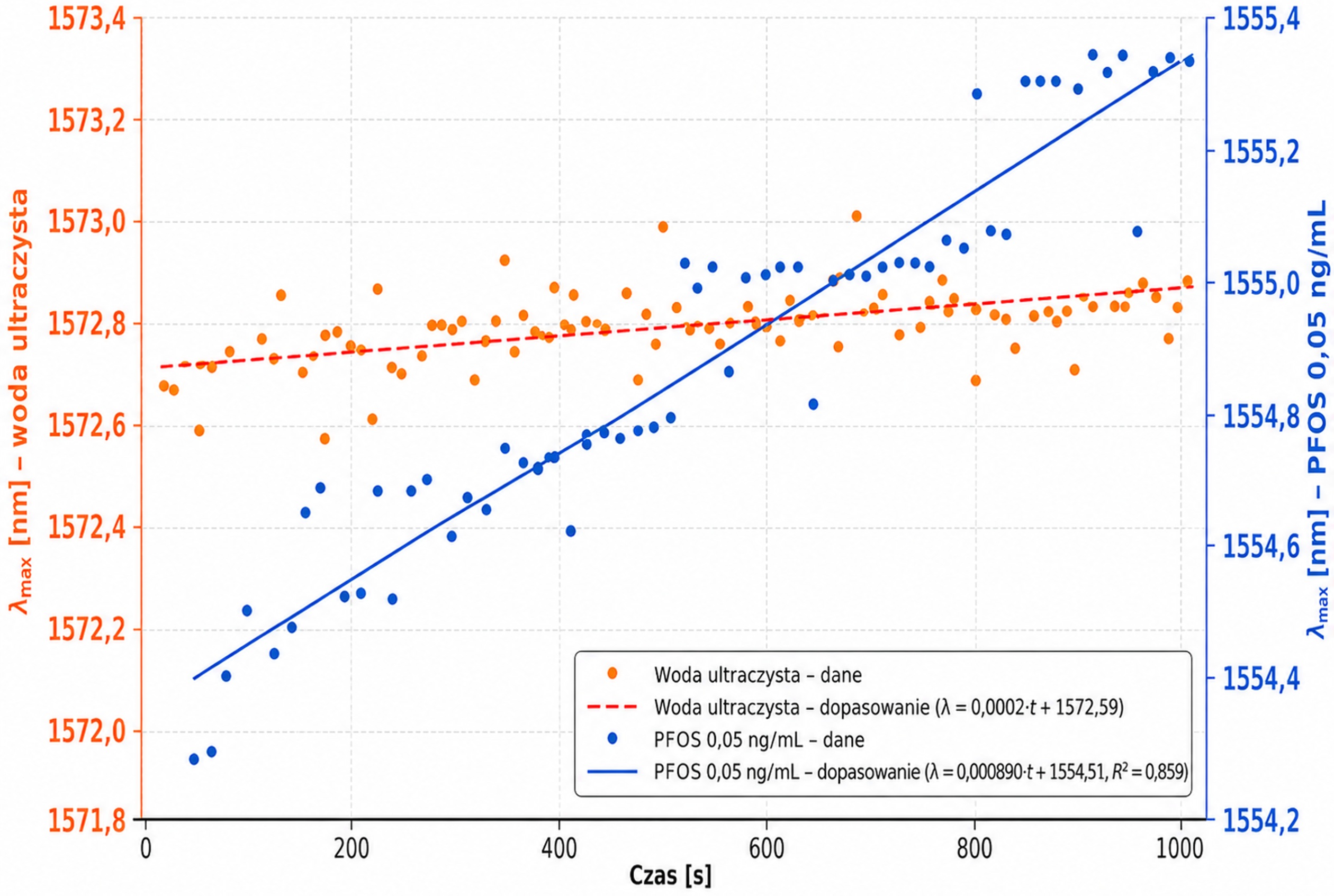
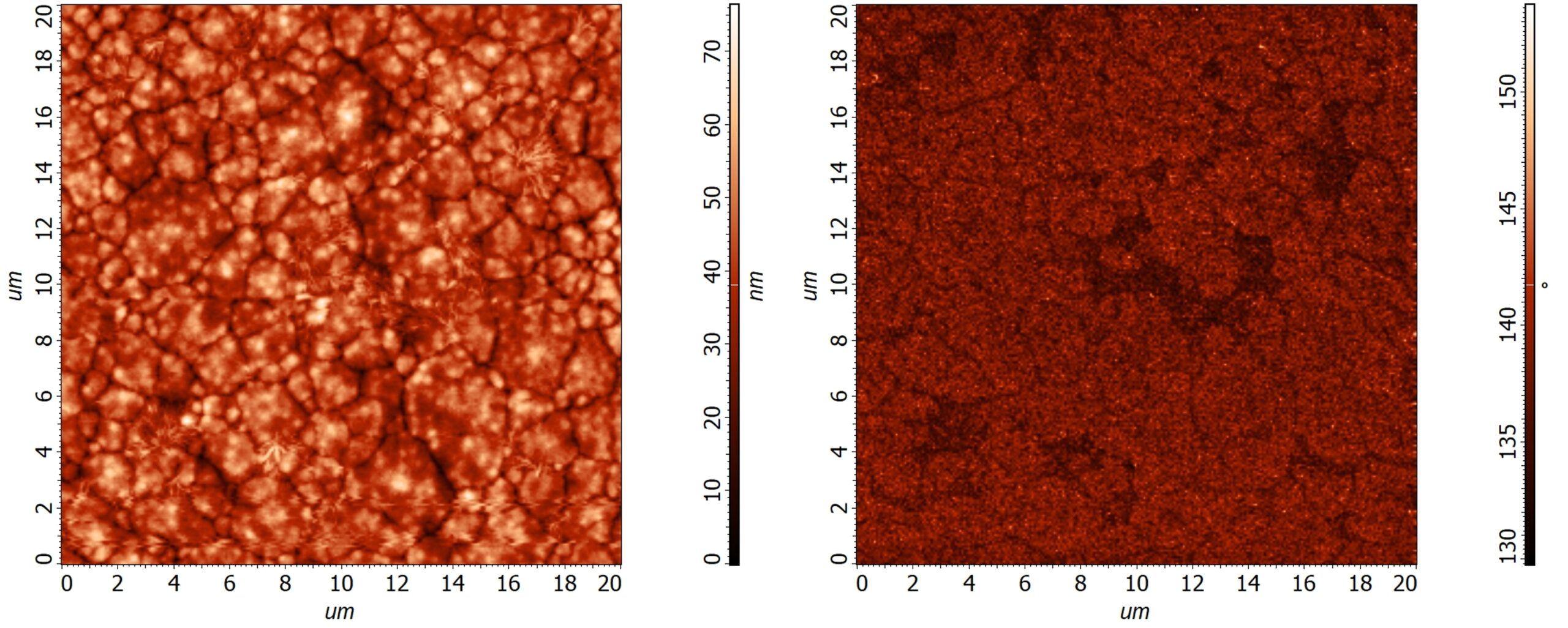
The presentation also covered the preparation of the PVDF coating using the dip-coating method, microscopic observations of the layer, SEM and AFM characterization, and the measurement setup used during the experiments. The obtained results demonstrated that the sensor responds to both pure water and PFOS solutions at very low concentrations, while the observed shifts of λmax indicate the interaction of the analyte with the PVDF layer.
These studies constitute a promising starting point for the development of a compact optical sensor for PFAS monitoring in water. Further research will focus on improving the sensor’s selectivity, sensitivity, and long-term stability, as well as determining its limit of detection.