Start - Wydarzenia - About science in Silesian language
About science in Silesian language
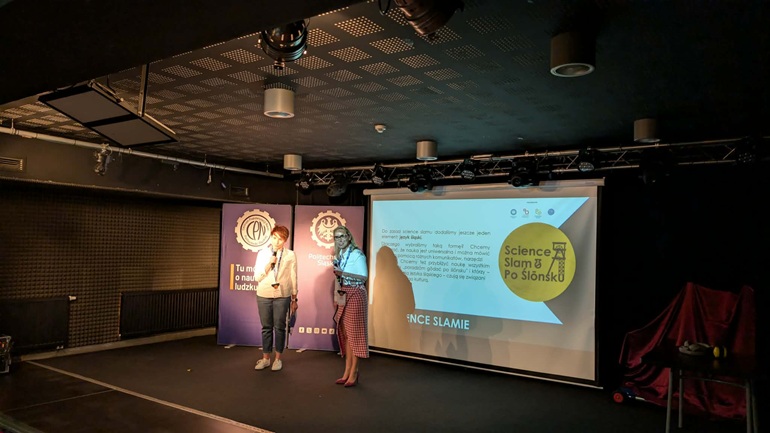
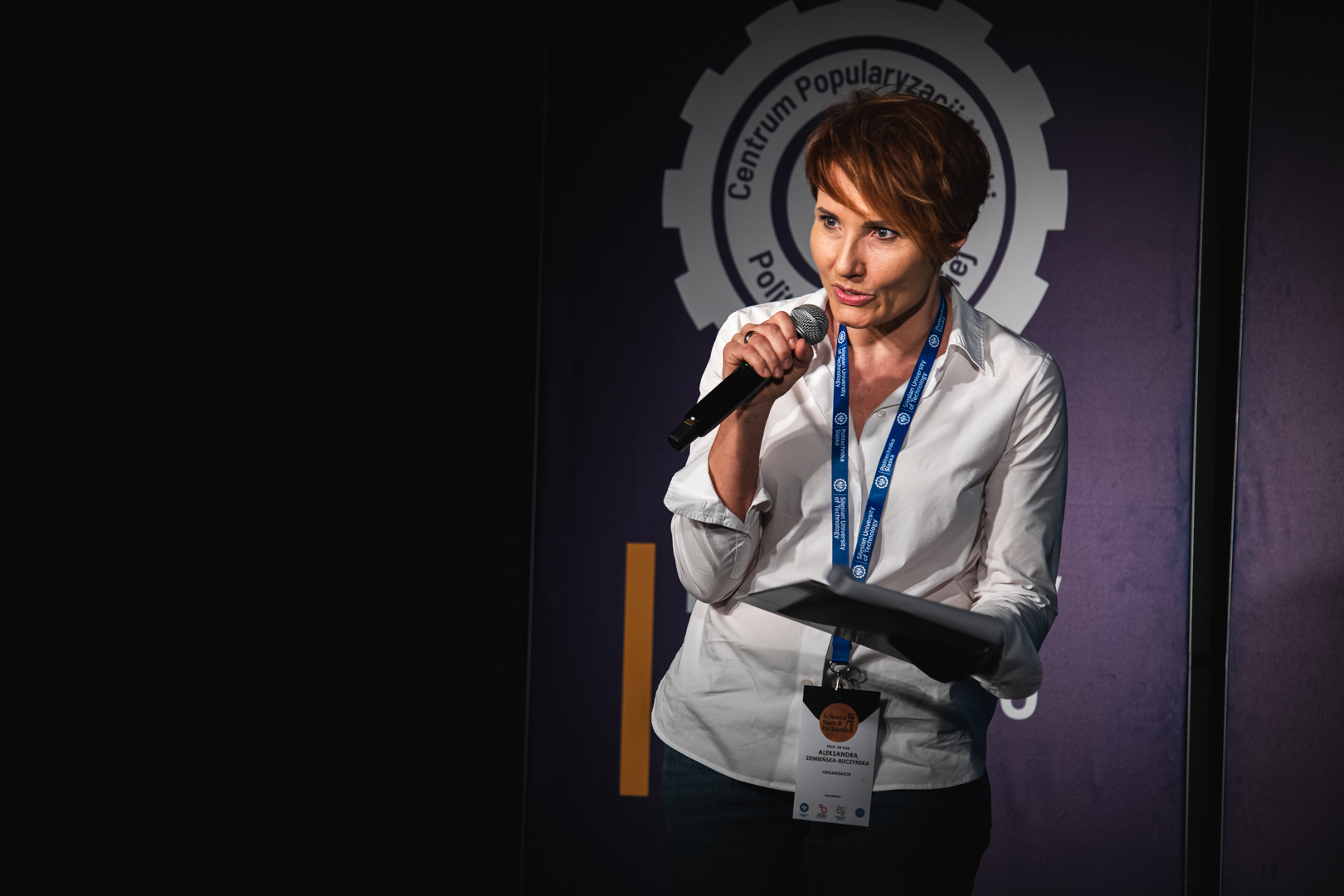
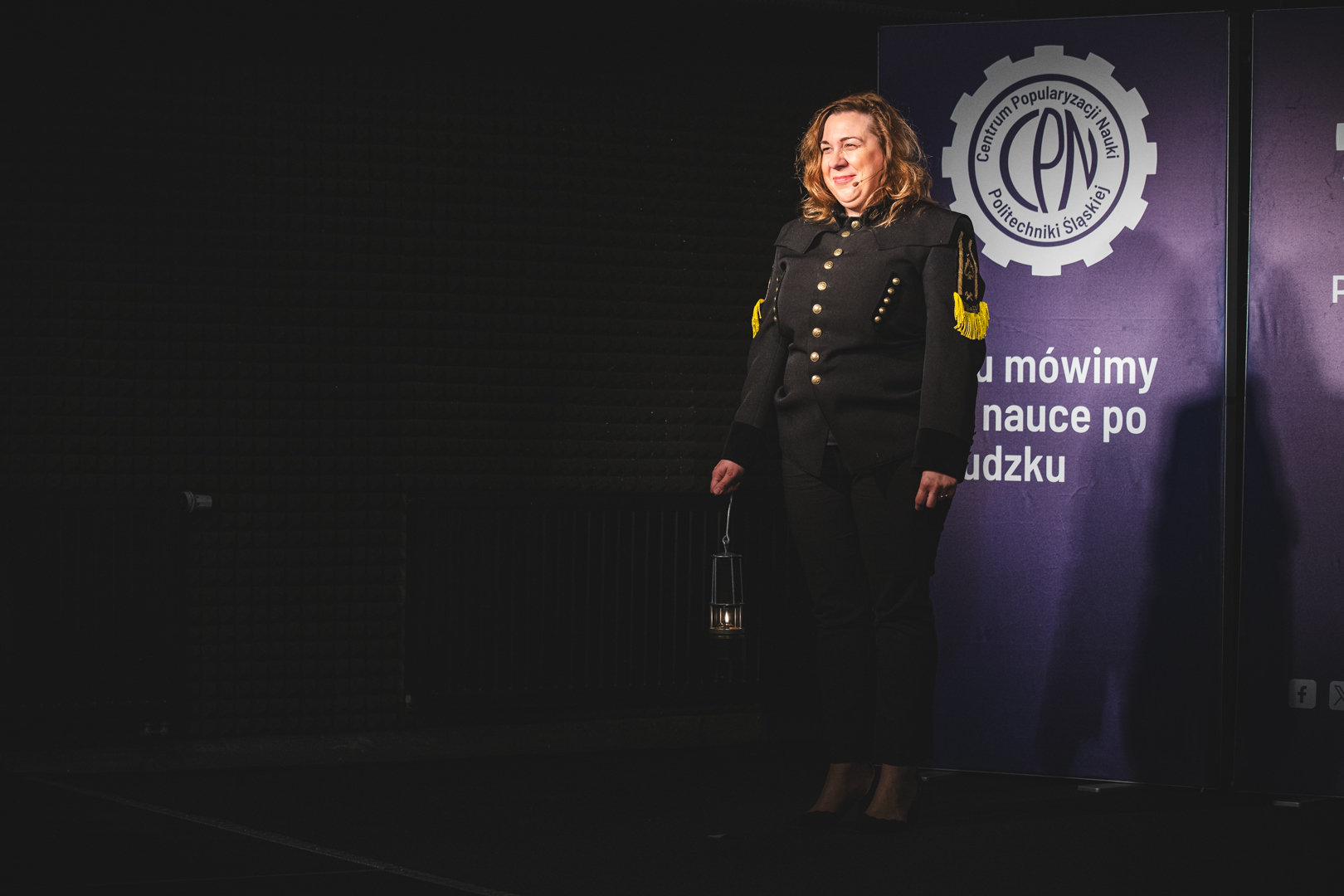
Scientists “poradzōm gŏdać” about science! The first in Poland Science Slam “Po Ślōnsku” (in Silesian language) took place at the Silesian University of Technology. During the event, ten scientists and PhD students talked about their research in Silesian language. The participants could listen to the researchers talk in Silesian about active reduction of noise, palaeontology, why we grit our teeth when angry, and the light pollution in Silesia or where the stars are gone.
Science Slam is a modern form of popularizing science, which moves away from traditional, academic schemes to short, dynamic, and engaging speeches. At the Silesian University of Technology, the initiative is implemented by the Science Popularization Centre. This time, during the event, which took place in the student club “Spiral,” scientists talked about science in Silesian.
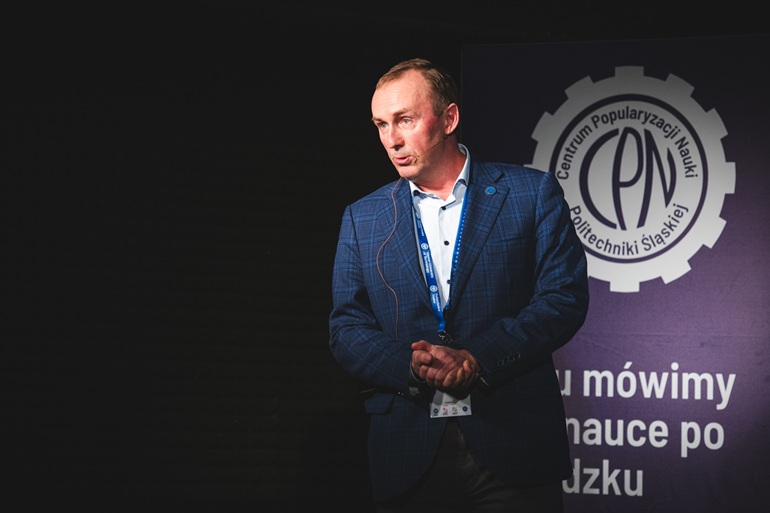
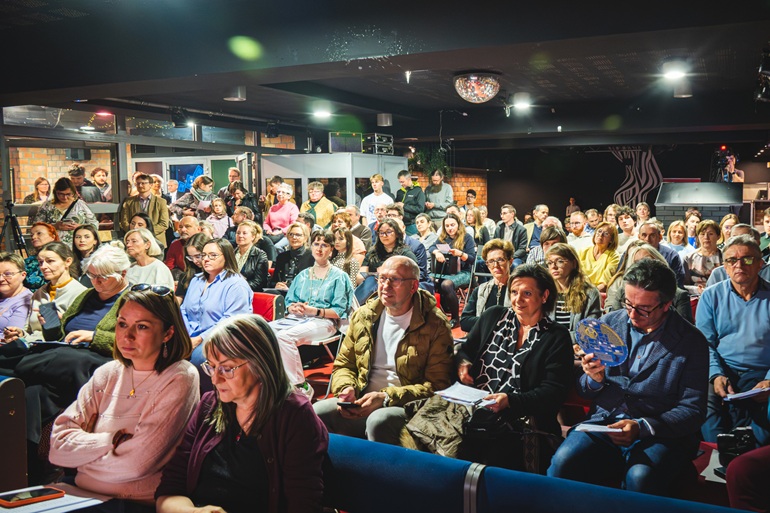
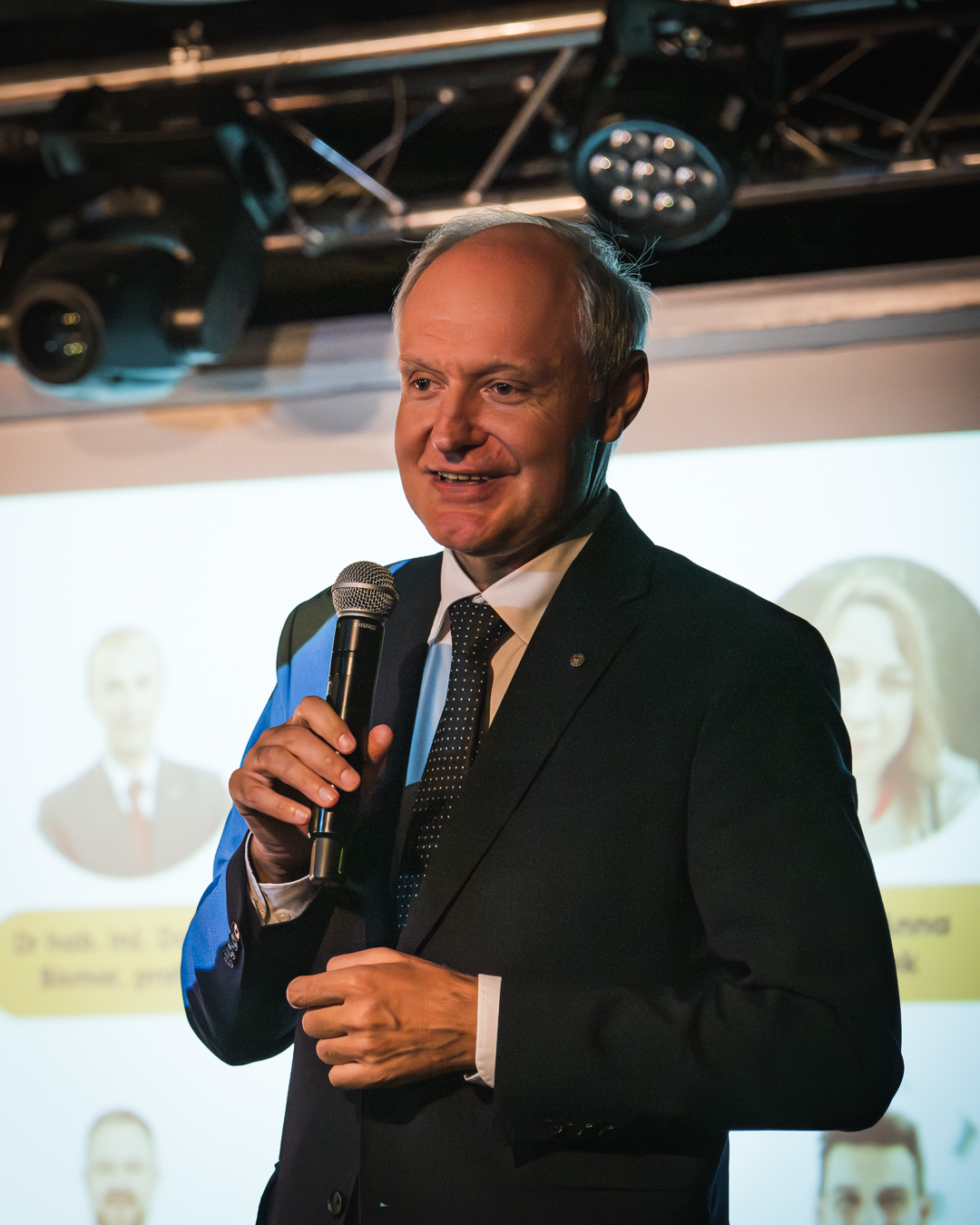
- “Science Slam Po Ślōnsku” uniquely combines the promotion of science with the cultivation of Silesian identity. This is proof that the Silesian language, present on a daily basis in our culture and environment, also works perfectly in the academic space. The event attracted many guests and listeners, and the lively reactions of the audience confirm how much it was needed - said the Rector of the Silesian University of Technology Prof. Marek Pawełczyk.
As the Vice-Rector for General Affairs Prof. Bożena Skołud said, Silesian University of Technology as the first university in Poland decided to promote Silesian language in the academic space in such a distinctive way. This is an important step in breaking stereotypes, according to which the Silesian language only functions in everyday communication. The Vice-Rector emphasized that the Silesian language is close to her.
- I am from here, so of course I speak Silesian. I think it’s all about having the courage to speak your own way and not be afraid, - she said.
The Vice-Rector very highly appreciated the level of speeches. The presentations were not only interesting in terms of content, but also an important message - showing that learning can be communicated in an accessible and engaging way, regardless of the language used.
“Science Slam Po Ślōnsku” was addressed both to people who speak the Silesian language on a daily basis and to those who – even without knowing the language – feel a strong connection with Silesia. The idea of the event came from Prof. Aleksandra Ziembińska-Buczyńska.
- The concept of organizing this event has been with me for a very long time - said the Professor. – At the Silesian University of Technology, we implement many modern forms of popularization of science, but I was also very interested in showing that we are close to the tradition and culture of Silesia. After all, we are the Silesian University of Technology and I think it worked – she noted.
The competition presented very diverse fields of science, from physiotherapy through materials engineering, palaeontology to architecture and social topics.
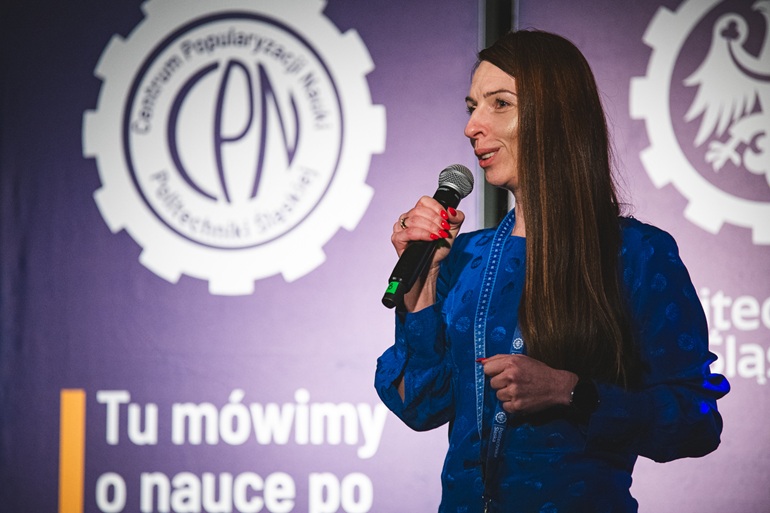
- The research was presented not only by scientists from the Silesian University of Technology, but also those from Katowice, Opole, Wrocław or Warsaw - emphasizes the director of the Science Popularization Centre, Dr Hab. Eng. Sandra Grabowska, Prof SUT.
Substantive support in the field of Silesian language was provided to the participants by Prof. Jolanta Tambor, President of the Silesian Language Council, who listened carefully to the speeches.
- This event shows that the Silesian language is a fully-fledged language that can function in all spheres of life - she said.
Professor Tambor emphasized that although some critics say that the Silesian language is incomplete and lacks words to express all the content, it turns out that in practice it works great in various contexts: in the kitchen, on the street, in literature or Bible translations, one can also create scientific texts in Silesian.
It is the language as any other and also needs neologisms to name new facts and discoveries – which is especially well understood by the participants from the Silesian University of Technology, who create something new every day. In this way, the Silesian language develops in the same way as other languages and can be used to talk about science, the world and literature - said Prof. Jolanta Tambor.
The researcher emphasized that all participants used the Silesian language beautifully, which made the choice of the awarded person very difficult.
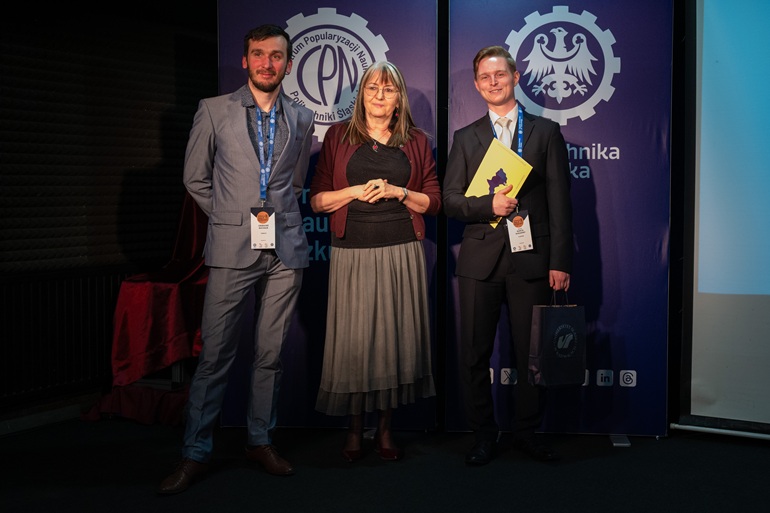
However, the undisputed winner was the M.Sc. Eng. Marcel Barzantny from the Department of Thermal Technology of the Faculty of Energy and Environmental Engineering at the Silesian University of Technology. The PhD student, who presented the lecture entitled “Niy każdŏ H3XA musi be złŏ!” (Not every hag is a bad person), received the Audience Award and the distinction of the Silesian Language Council.
- Such events show that the Silesian language is not only used to tell jokes, but can also be used to express serious, complex content, - he said.
- I think that this linguistic symbiosis is also very important in our region. The fact that we speak Silesian does not mean that we give up Polish. We can combine different languages – Polish, Silesian, as well as the influence of other languages, for example German. This diversity is beautiful, it distinguishes our region and it is worth emphasizing and enjoying it – said Marcel Barzantny.
The audience gathered in the “Spirala” Club could benefit from simultaneous translation by Grzegorz Buchalik – an ethnologist, historian, translator of books, novels, and French comics into Silesian.
Participants of the event
M.A. Paweł Hadzik, Opole University of Technology
title: Bruxism – you clench your teeth when you get angry
Bruksizm – zaciskosz zymby, kej sie nerwujesz.
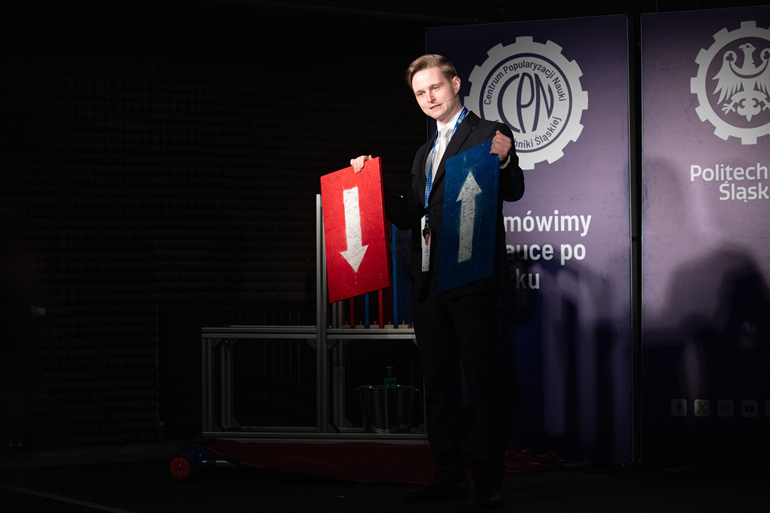
Dr Hab. Eng. Dariusz Bismor, Prof. of the Silesian University of Technology
title: Active noise reduction
Aktywno redukcyjo larma
Dr Natalia Klimaschka, University of Information Technology in Katowice
title: Germans or Poles? Attitude toward Silesians in post-war Polish newspapers (1954-1949)
Nimce or Poloki? Sztelonek do Ślonzoków we cajtungach powojynne Polski (1945-1949)
Dr Hab. Eng. Jacek Pieprzyca, Prof. of the Silesian University of Technology
title: Pouring water can also be a science
Lōnie wōdy tyż może być naukōm.
Dr Eng. Anna Glodek, Silesian University of Technology
title: Where are the stars? Or about the light glow over living estates
Kaj sie podzioły gwiozdy?
Dr Tomasz Hutsch, Warsaw University of Life Sciences
title: The journey of bacteria through the liver to the heart – when you feel attracted to medicine and Silesia
Rajza bakteryji bez wōntroba do syrca – kej mŏsz chymiŏ do mediciny a Ślōnska.
Dr Eng. Arch. Elżbieta Rdzawska-Augustin, Silesian University of Technology
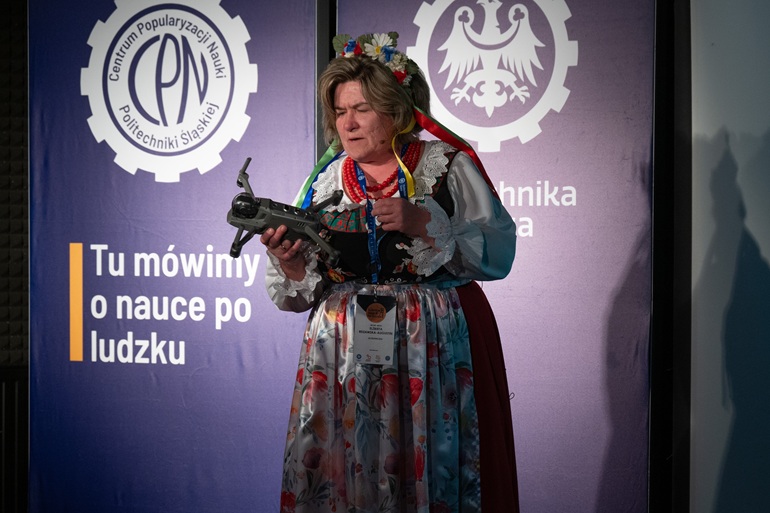
title: Tradition and modernity. Villages in the vicinity of Racibórz from a bird's eye view
Tradycjo a nowoczesność. Wioski kole Raciborzu z lotu ptoka
MSc. Eng. Marcel Barzantny, Silesian University of Technology
title: Not every hag must me a bad person!
Niy każdŏ H3XA must be złŏ!
Katarzyna Siwczyk (University of Silesia in Katowice)
title: Who is not afraid to make a fuss about Silesian identity?
Komu niy ma gańba robić ślonskie larmo.
Dr Elżbieta M. Teschner, University of Wrocław
title: Palaeontology is not only burying in the ground
Paleontologia to niy yno babranie sie w ziymi, abo?