



Start - Aktualności - The EURAXESS Silesian Network has been inaugurated at the Silesian University of Technology
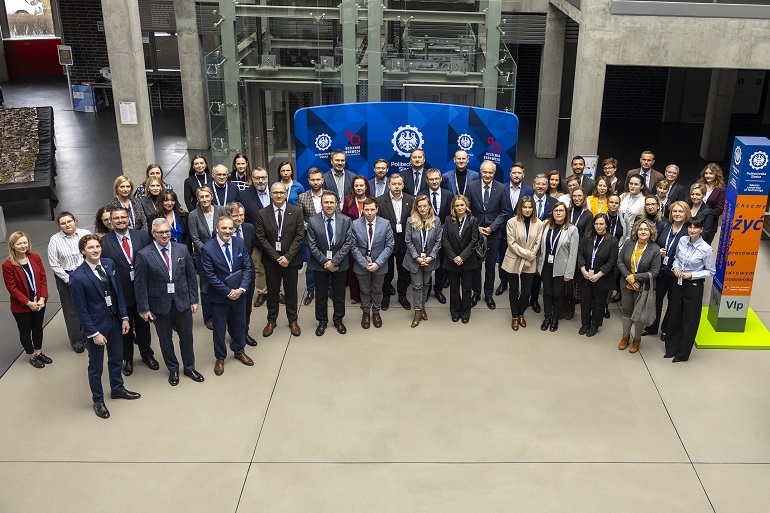
The EURAXESS Silesian Network has been inaugurated at the Silesian University of Technology
Comprehensive support for researchers in career development and mobility, efficient service for foreign researchers, increased internationalization of Polish science, development of qualified staff in the region – all thanks to the cooperation of universities, local governments, and institutions. These are the overarching goals of the Silesian Euraxess Network, which has been part of a European and global network supporting scientists for over 20 years On March 17th, the Centre for New Technologies of the Silesian University of Technology officially inaugurated its activity.
The EURAXESS Silesian Network is a regional structure that operates within the national NAWA-EURAXESS network and is part of the European Commission’s pan-European initiative supporting the mobility and career development of researchers. EURAXESS is the largest platform of its kind in Europe, comprising more than 700 institutions and organizations. In Poland, the network includes 22 institutions, including the Silesian University of Technology, which as a leader, in cooperation with the University of Silesia and University of Economics in Katowice creates the Silesian Euraxess Network. The inaugural meeting was an opportunity to present the idea of the project, which focuses on increasing the internationalization and competitiveness of Polish universities.
– Internationalization means opening Poland to cooperation in the European and global dimension. Access to joint research consortia and Western laboratories accelerates the development of our scientific staff. Although we still have a lot to do, this process has been systematically progressing since Poland joined the European Union – said Prof. Marek Gzik, Deputy Minister of Science and Higher Education, present at the official opening. The minister also referred to historical barriers, reminding that Poland is still catching up with limitations imposed by the 40 years of the Iron Curtain, when international exchange was very limited. – The Ministry runs a number of programs financing academic exchanges and joint projects. We are also looking forward to a new financial perspective of the European Union, in which we want to mark a strong presence. Next week in Brussels, we will talk about the possibilities of supporting the process of internationalization of Polish science in a new EU perspective.
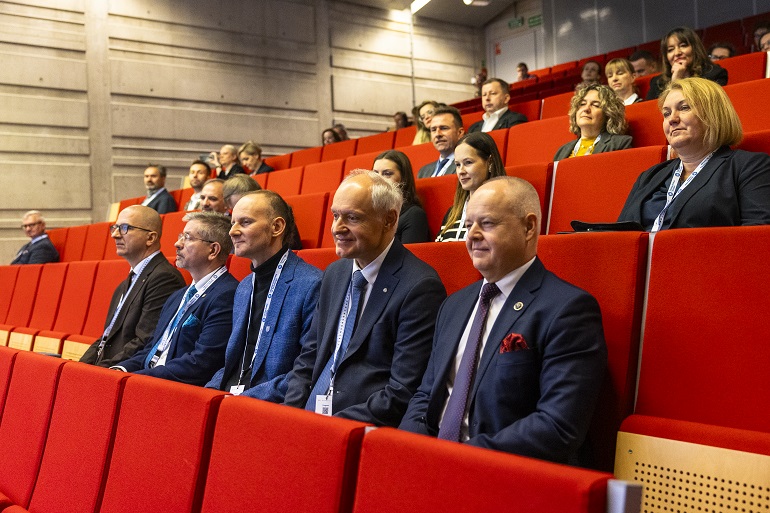
There are about 2 and a half thousand foreign scientists in Poland, which is about 3% of people connected with science.
– Silesian University of Technology has made great progress in the field of internationalization. Six years ago, the proportion of foreign scientists was almost eight times lower than today. Today, it exceeds 3%, and our goal is to achieve at least 5%,” said Professor Marek Pawełczyk, the Rector of the Silesian University of Technology, adding that every fourth doctoral student of the University comes from abroad, which definitely exceeds the level of internationalization among doctoral students in the country, which averages about 10-12%. - We want foreign scientists to get involved in the life of universities, conduct research at the highest level and support the development of our employees. It is crucial to provide them with full support from the preparation of visa documents, through assistance on arrival, familiarization with the campus, procedures applicable at the university and in the country, to support in the process of legalization of stay.
This is what the Euraxess network will do.
- It will be one of 16 regional networks that co-create Euraxess Poland. We want to support the process of internationalization both by developing academic careers and by providing services to foreigners - both those who come to us, as well as those who already live in Poland and want to develop their international scientific paths - said Dr Eng. Grzegorz Kłapyta, the head of the International Relations Office of the Silesian University of Technology. - International mobility has many barriers ranging from visa issues and legalization of stay to everyday matters such as access to kindergartens, nurseries, health care, and insurance. We want to limit them as much as possible, - he added.
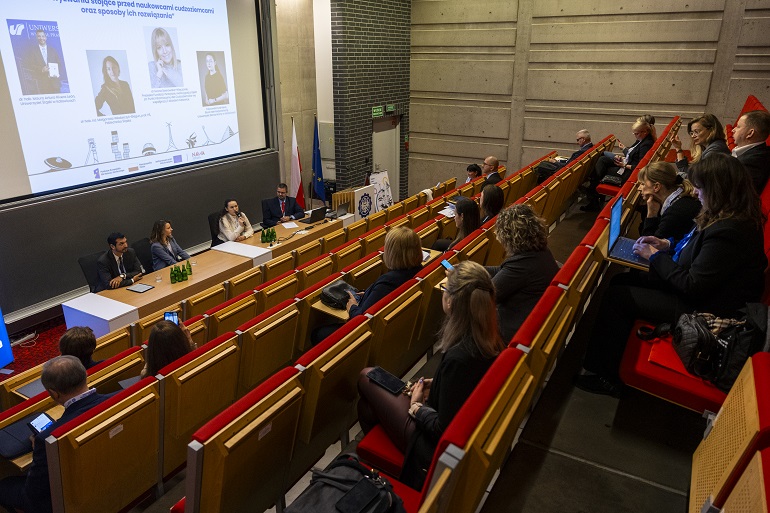
During the meeting there was also an opportunity to discuss the challenges faced by foreign scientists and how they can be solved. Dr Hab. Eng. Małgorzata Włodarczyk-Biegun Prof. SUT, who runs an international research group at the University also shared her experiences. The researcher has completed many internships abroad and cooperates with universities in many countries.
- One of my problems that I encountered in both the Netherlands and Germany was renting an apartment. To be able to do this, you need to have a local bank account, but to set up an account you need an address, and to have one, you need to rent an apartment and the circle closes - said Professor Włodarczyk-Biegun. – That is why it is so important that at the level of the institution there are people to whom you can turn for help, who have a lot of patience and empathy. In my research group, tandems work well if someone from abroad joins the team, I assign to them a person who works with us longer and can help in the first weeks.
Comprehensive support for foreign scientists, who often come to work or for internships with their families, cannot be limited to universities or scientific institutions.
– People who co-create the academic environment live in Gliwice, we need to provide them with the best infrastructure possible, from housing, through various types of social services, education, crèche care, to medical care. This initiative is another element that in a good way strengthens the potential of both the Silesian University of Technology and Gliwice – said Łukasz Gorczyński, deputy president of Gliwice, stressing the importance of cooperation between the University and the city within the framework of the Silesian Euraxess Network.
The activities of the Euraxess network in Poland are managed by the National Agency for Academic Exchange.
– Paradoxically, today we do not lack financial resources for activities related to internationalization. A much bigger challenge is the preparation and organization of universities and let me remind you that we have over 350 of them in Poland, to effectively use these funds. The NAWA-Euraxess points, which are created, are to provide scientists with comprehensive, professional service, but also to facilitate obtaining information about available tools or opportunities to apply for grants – said Dr Łukasz Gołota, Deputy Director of the National Agency for Academic Exchange.
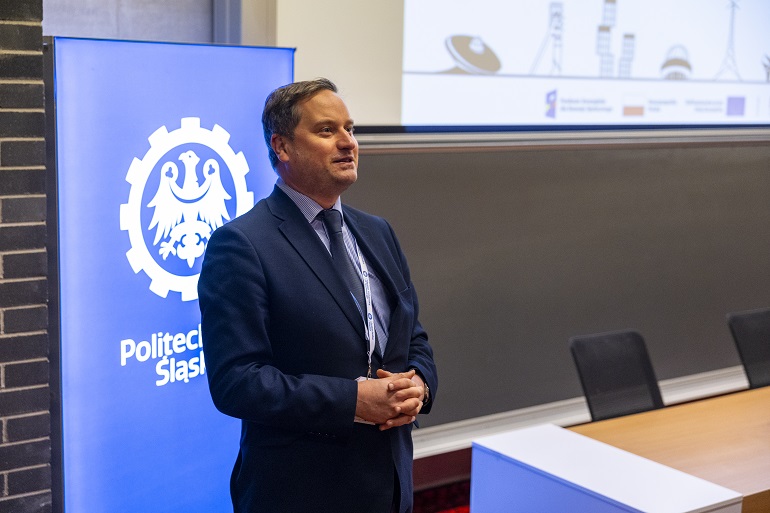
“Silesia develops science. Science develops Silesia” – this is the slogan of the network, which was jointly chosen during the inaugural meeting. Institutions interested in joining the Silesian EURAXESS network may express their willingness to cooperate by submitting a declaration available on the project website. The network is open to scientific institutions, public administration, non-governmental organizations, and entities supporting the development of the region.