


Start - Aktualności - EPAE 2025 is an international platform for dialog, science and cooperation
EPAE 2025 is an international platform for dialog, science and cooperation
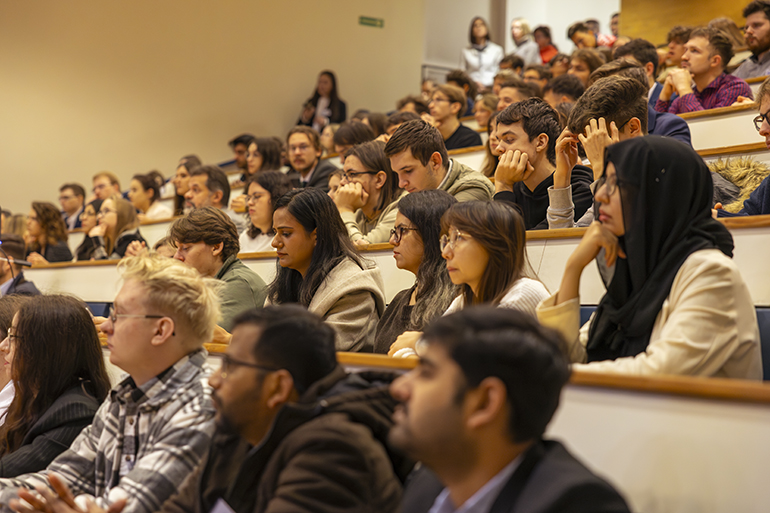
On the 5th of December, the Environmental Protection and Energy (EPAE) Conference was held at the Faculty of Energy and Environmental Engineering, which gathered nearly 600 participants from Poland and abroad. Representatives of China, Japan, Ukraine, Spain, Portugal, India, Kazakhstan, Ethiopia, and Nigeria were among the guests.
The EPAE conference has been held for 13 years Year after year it is gaining importance, as evidenced by the huge number of participants from all over the world.
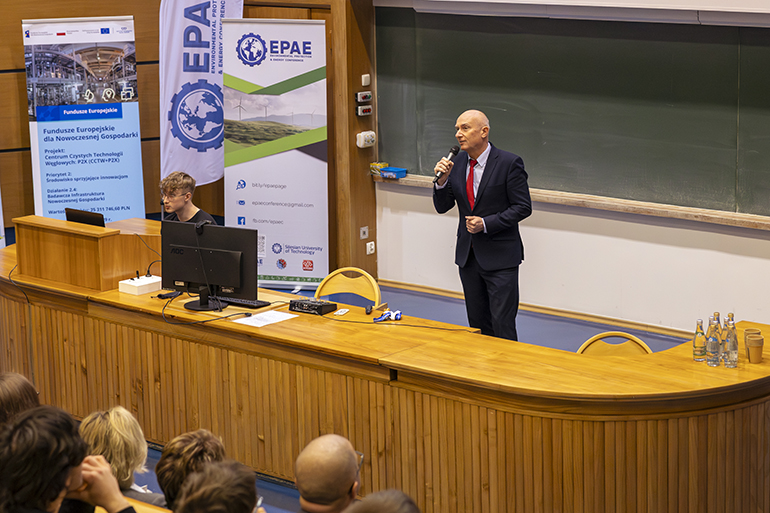
- EPAE is growing year by year, both in terms of the number of participants and the range of topics covered. We are pleased that the event has become an international space for dialog, where young researchers meet with experienced scientists and representatives of institutions and practice. It is this exchange of perspectives that gives the conference a unique character – confirmed Prof. Dr Hab. Eng. Krzysztof Pikoń, Vice-Dean for Infrastructure and Organization of the Faculty of Energy and Environmental Engineering - the organizer of the conference.
This exceptionally wide and diverse group of participants – almost 600 people – best shows how fast this event is developing. A few years ago, EPAE was a regional entity, but today it is an international platform for the exchange of knowledge and experience.
This year’s edition was also held in a new formula – apart from young scientists, we also invited experienced researchers, which allowed to create a space for a more in-depth exchange of perspectives. The participants also had the opportunity to publish their speeches in high-scoring journals, which further increased the rank of the conference and increased its scientific significance.
Important topics
EPAE 2025 focused on key environmental and energy transition challenges.
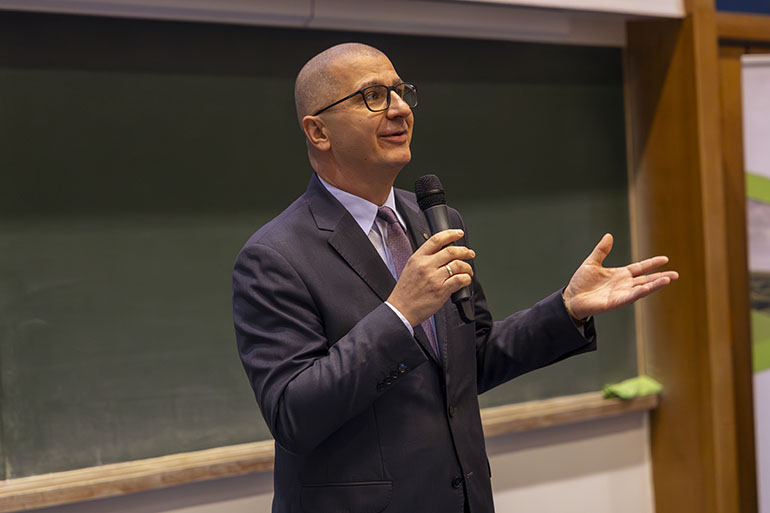
- These are hot topics about the most important and greatest challenges in the world. Climate change, new energy systems, environmental protection, environmental engineering, circular economy, etc. These are the topics that are discussed in various fields, and this conference fits perfectly into all that is discussed in the salons – said Prof. Dr Hab. Eng. Sebastian Werle, Vice-Rector for Science and international Cooperation at the Silesian University of Technology.
The focus was on climate change, air quality, water and soil protection, post-industrial land restoration, and biodiversity. Participants were eager to discuss circular economy, green civil engineering, innovations in recycling and the use of renewable energy sources and improvement of energy efficiency. The conference, in accordance with its mission, became a meeting place for scientists, engineers and experts who share knowledge and experience, working together on solutions for sustainable development.
The voice of young people
The main objective of the conference from the beginning of its organization is to support young researchers. Young scientists, PhD students, and students bring freshness, enthusiasm, and readiness to take up new topics to the conference. Participation in the conference allows them not only to present research results, but also to develop presentation competences and build a network of contacts. It is an important stage of their scientific and professional development, and at the same time an investment in future staff, which in the coming years will co-create the directions of energy and environmental transformation. The extension of this year’s edition with the speeches of experienced researchers further emphasized the importance of generational cooperation in science.
The prospects for young people in the region were discussed in a special way during the debates, which were an extremely important element of the program.
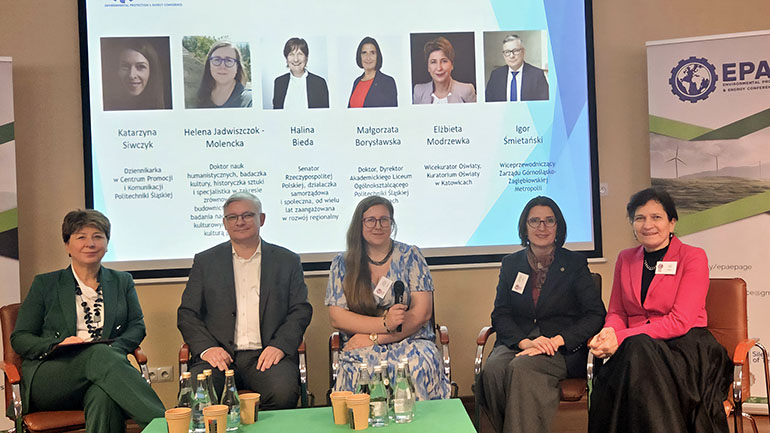
Special attention was paid to the panel “Silesia of tomorrow – young people, innovation, development” organized by Dr Hab Ewa Brągoszewska, Prof SUT. The discussion was attended by: Halina Bieda - Senator of the Republic of Poland, Dr Małgorzata Borysławska - Director of ALO ( Academic Secondary Comprehensive School) in Gliwice, Elżbieta Modrzewska - Deputy Curator of Education from the Board of Education in Katowice, Igor Śmietański - Vice-Chairman of the Board of the GZM and Dr Helena Jadwiszczok-Molencka representing the Marshal's Office of the Silesian Voivodeship, as well as representatives of the academic community and media. There were many young people present in the room – pupils and students – who actively participated in the discussion, asking questions and presenting their own reflections. The aim of the panel was to create a space for dialog in which the voice of young people connects with the experience of decision-makers and practitioners, leading to reflection on the directions of development of the region.
- The debate on the future of the region has shown how important it is to combine the perspectives of young people, scientists, and decision-makers. Pupils and students brought a fresh perspective to the conversation, and representatives of public institutions emphasized their willingness to cooperate. Such moments build bridges between education, science and practice and show how important it is to think together about the future of the region - summed up Prof. Ewa Brągoszewska.
The role of artificial intelligence
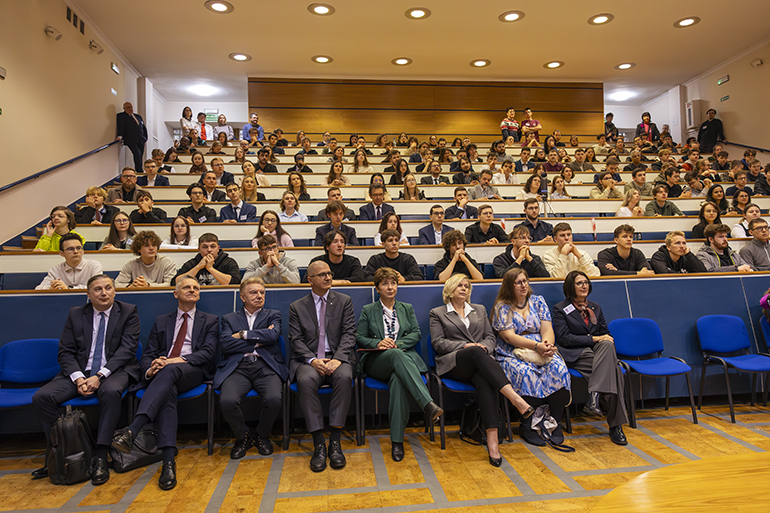
The panel “Future of Science in the Age of AI,” devoted to the role of artificial intelligence in modern science was equally popular. The discussion was moderated by Prof. Krzysztof Pikoń, and among the invited experts were Prof Wojciech Nowak, Prof. Jarosław Zuwała and Col. res. Dr Hab. Eng. Tomasz Smal. The panellists presented a wide range of possibilities resulting from the use of AI, indicating that artificial intelligence accelerates data analysis, facilitates modelling of complex processes, supports laboratory automation, and enables interdisciplinary cooperation. At the same time, they drew attention to the challenges of ethics, data quality, and research responsibility. The high turnout of young participants shows that the future of science in the context of AI is a particularly inspiring topic for them.
Cooperation is the key to success
However, the debate itself did not end there. Conclusions and recommendations developed during the panels have real implementation potential. This is due to the presence of people who co-create regional strategies, public policies, and educational projects. The discussions concerned the issues of education, the labour market, the directions of the energy transition and the future of young people in the region. Thanks to this, they can become an impulse for new initiatives, research projects and activities carried out in cooperation with local government units and public institutions. The conference showed that interdisciplinary dialog not only inspires but also leads to concrete results.
This is to be confirmed by the activity of the Faculty of Energy and Environmental Engineering outside the university. The Faculty conducts extensive cooperation with local governments, enterprises, research units, non-governmental organizations, and public institutions. It includes joint research and development projects, technological expertise, energy consultations, implementation projects, and educational initiatives. Thanks to this, the university acts as an active partner of the region, supporting activities for energy transformation, adaptation to climate change and sustainable development. Students and young scientists have the opportunity to work on the real challenges of the region, and the EPAE conference is a natural extension of these activities, building a sustainable space of cooperation between academia, institutions, and society.
fot. Maciej Mutwil