


Start - Aktualności - Elsevier Pure platform at the Silesian University of Technology. First implementation in Poland
Elsevier Pure platform at the Silesian University of Technology. First implementation in Poland
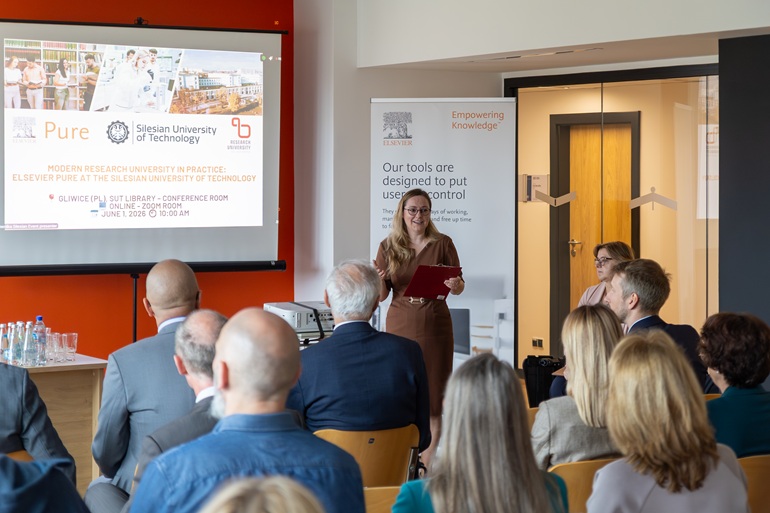
At the Silesian University of Technology, the Elsevier Pure research platform has been officially launched - an international system of presentation of scientific achievements, research potential, and the University's infrastructure. This is the first such implementation at a Polish university.
The launch of the Pure system is one of the most important projects related to the promotion of the scientific and research potential of the Silesian University of Technology. Our University is the first in Poland to join the international community using this system, bringing together almost 600 universities and scientific institutions in the world.
The implementation of the platform is a multi-stage process, involving both commissioning the system and supplying it with data from various sources.
– It is a very large system, and the implementation itself is a big undertaking. The first data was downloaded from the Omega database, thanks to which the complete information about publications is already available in the system. However, the possibilities of the platform are much wider – we can present projects, research infrastructure, and many other elements of the University’s activity – explains the Rector of the Silesian University of Technology Prof. Marek Pawełczyk.
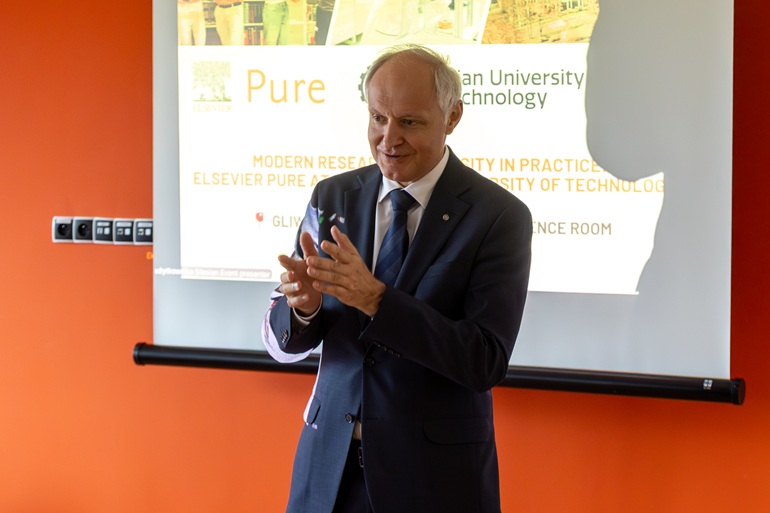
The main objective of the implementation is to increase the visibility of the University and to create a modern tool for presenting its achievements.
– We strive to make it a system that will allow to effectively promote what the University deals with. Companies, media, and people interested in scientific and research achievements of our community will be able to benefit from it - he points out.
The University authorities hope that the new solution will translate into the development of international cooperation and relations with industry.
– Access to comprehensive information about academic staff, research topics, achievements, infrastructure, publications, and projects in one place creates new opportunities for cooperation. This is important both for scientific partners and for companies looking for competent research teams – emphasizes the Rector.
In the opinion of Vice-Rector for Science and international Cooperation Prof. Sebastian Werle, the implementation of the Pure platform should be seen primarily as an investment in building the recognition of the University and its researchers.
- Any solution that allows you to reach a wider audience is extremely important today. The Pure system is designed to help us present our competences, achievements, and research areas in a clear and easily accessible way – he says.
The Vice-Rector also points out that building recognition should take place on many levels – from local to international.
- We start with activities for the region and its transformation, but the effects of these activities should also be seen beyond its borders. The transition from local visibility to global recognition is extremely important today, and the Pure system can play an important role in this process – emphasizes Prof. Werle.
The researchers themselves may benefit from the implementation of the system. The condition, however, is to actively and systematically supplement information about their activities.
– We hope that researchers will develop and update their research profiles. The more complete and more up-to-date the data is, the easier it will be to find experts dealing with specific research topics – he explains.
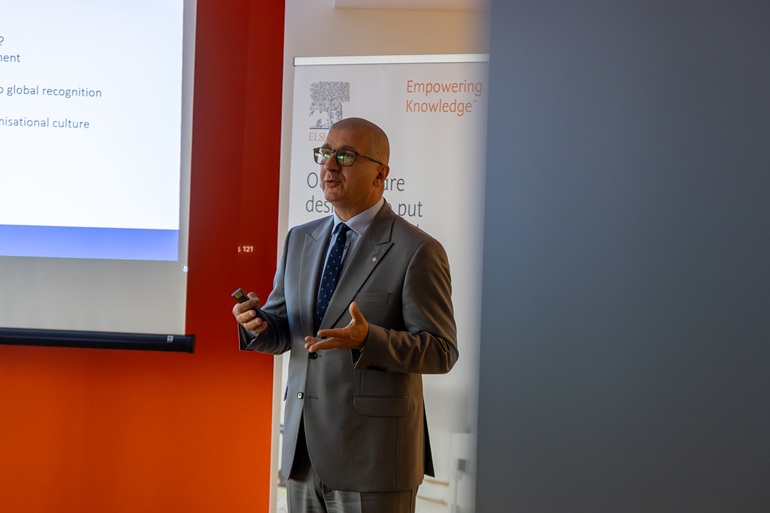
According to Director Software Solutions EMEA Dr. Richard van Haaren, the platform supports not only institutional science management processes, but also the daily work of researchers and the development of their scientific careers.
- Researchers need tools that help them present their competences, develop projects that correspond to their specializations and build cooperation networks. The platform supports them in establishing contacts both with national partners and with scientists from other universities around the world - he emphasises.
Elsevier currently works with hundreds of scientific institutions using the Pure system.

– In Europe, it is used by about 250 institutions, and in the world by over 550. The Silesian University of Technology is our first client in Poland, which is a reason for our satisfaction. From our perspective, every university and research institute today needs a platform that allows not only to manage scientific achievements, but also to effectively develop cooperation and build relationships on the international arena, - says Richard von Haaren.
In turn, the Director of the Silesian University of Technology Library Dr Hab. Renata Frączek points out that one of the most important effects of the implementation will also be the organization of data on the University’s scientific activities.
– So far, information about projects, publications, apparatus, or research teams has been available in various sources. The Pure system is designed to integrate this data, creating one coherent information environment that will facilitate knowledge management and reduce duplication of information.
An important element of the system is also the care for the quality of the presented data.
- Our goal is to ensure that the information provided through the platform is verified and up-to-date, - said Director Frączek.
Importantly, access to the information collected in the system does not require special permissions or login.
- We do not have any logins; this is a publicly available portal. Everyone can look in and find the necessary information, contacts, check what the institution does, what laboratories it has, what equipment one can use and who is the contact person – explains Paulina Milewska from Elsevier Polska.
As Katarzyna Śnitek from the Silesian University of Technology Library emphasizes, the implementation of the system required earlier ordering of many processes and answering the question of what information the University wants to share with external recipients.
– We started with a thorough analysis of the needs of our University and making strategic decisions about which areas of activity we want to present outside. Only later did we move to identifying data sources, mapping, and integrating them - she explains.

The next stage were technical tests, data migration, and preparation of the portal itself. An additional challenge turned out to be the fact that this is the first implementation of the Pure system in Poland.
– In connection with this, an additional work was to refine the Polish version of the portal – says Katarzyna Śnitek.
Currently, in the Pure system, scientists’ profiles related to the Omega knowledge base are already available, and information about publications is synchronized with the Scopus database.
In the next stages, information about doctoral dissertations and the resources of the Digital Repository of the Silesian University of Technology RePolis will also be uploaded to the system. At the same time, one of the most demanding stages of the project is taking place – organizing data on the University’s research offer.
The launch of the Pure system at the Silesian University of Technology is another step toward the internationalization of the University's activities and more effective promotion of its scientific, research and technological achievements.
Text: Jolanta Skwaradowska
Photos: Martin Huć