


Start - Aktualności - Corrosion: a silent enemy that costs billions and affects all of us
Corrosion: a silent enemy that costs billions and affects all of us
It is for the fourth time that at the Silesian University of Technology, CorrDay2026 - Corrosion Awareness Day was held. The aim of the event is to draw attention to the dangers and problems resulting from corrosion of materials and to the huge losses that this phenomenon causes.
At our University, the event was organized by the Corrosion Research Laboratory at the Faculty of Chemistry.
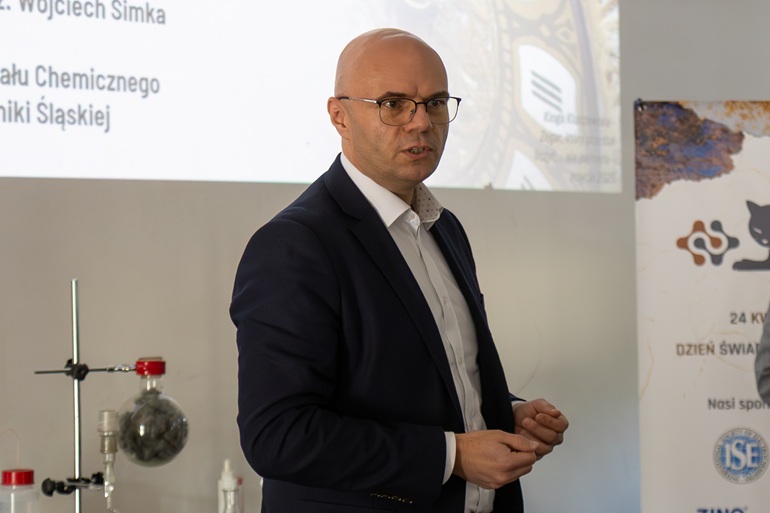
Corrosion is a phenomenon that, although often underestimated, has a real impact on our daily lives and safety. During the opening of the event, the Dean of the Faculty of Chemistry Prof. Wojciech Simka, pointed out that this problem is not abstract or distant.
- We deal with corrosion everywhere, all the time – it is not only a rusty padlock or a piece of sheet metal, but a phenomenon that can make life very difficult, - he stressed. As an example, he pointed to the flyover in Chorzów, whose temporary closure showed how serious effects of material degradation can be.
The Dean noted that the role of scientists is not only to diagnose problems. – It is primarily to prevent these problems – through the development of new materials, protective coatings, and security systems – he said.
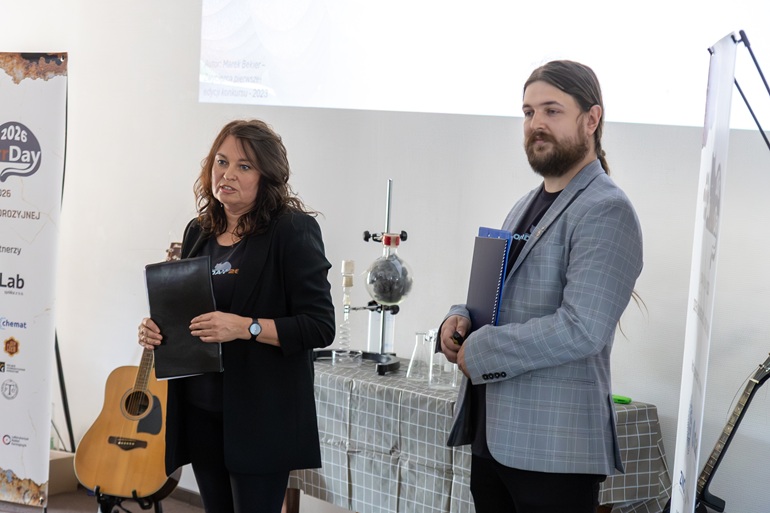
As emphasized by the head of the Corrosion Research Laboratory, Dr Hab. Eng. Joanna Michalska-Serwin, Prof. SUT, the aim of the event is also to make the public aware of how serious this problem is.
- Popularizing knowledge is crucial, because many people still treat this topic as something distant and reserved for specialists. Moreover, corrosion does not only concern metals or infrastructure. Aging of the body or some diseases are also a kind of corrosion in the human body - she adds.
The scale of the problem is huge. The cost of corrosion is estimated to be as high as 2-3% of global GDP. These are funds for repairs, replacement of components and prevention of damage.
- This is a very big problem, of which we are often unaware - emphasizes Prof. Michalska-Serwin. Lack of knowledge makes us react only when the effects are already serious and costly.
Corrosion is also an extremely interdisciplinary field. - It is not only dealt with by chemists, but also material scientists, mechanics, and biologists - explains the expert. It turns out that microorganisms can have a significant impact on corrosion processes. In practice, scientists design new materials resistant to damage, study their durability, analyse the causes of failure, and help industry choose the right solutions. - The point is that the materials should work for many years and not to undergo premature degradation - she emphasizes.
There is no industry that is free of corrosion.
In the chemical industry, aggressive environments are a problem, in mining – difficult operating conditions of installations, and in aviation – the need for continuous inspections and high safety requirements. Corrosion also applies to medicine, for example in the case of implants. Its presence can also be seen in everyday life – our fittings, clothing elements, such as zippers, are also affected by corrosion – she notes.
The most dangerous are those forms of corrosion that cannot be seen with the naked eye.
- There are types of corrosion that do not give any external symptoms and end in sudden failures or even disasters, - warns Professor Michalska-Serwin. Processes inside the material can significantly weaken its structure, making it brittle and susceptible to destruction. This is why corrosion can pose a real threat to human safety.
The work of scientists in this field has a very practical dimension. It often involves solving specific problems reported by industry or institutions.
- We help to find the cause and choose the right solution - this gives great satisfaction - says the researcher. Such actions may have a direct impact on the functioning of the infrastructure and the safety of users.
Silesian University of Technology is one of the leading centres of corrosion research in Poland.
- We can say that we are one of the best centres in the country - emphasizes Prof. Michalska-Serwin. The tradition of research here dates back to the post-war years and is based on the achievements of outstanding scientists, whose work is still the foundation of knowledge in this field.
Corrosion often works slowly and imperceptibly, but its effects are very real – both on a global scale and in everyday life. Therefore, as the researchers emphasize, the most important step in the fight against it is awareness and understanding of its mechanisms.
Silesian University of Technology has joined the celebrations of Corrosion Awareness Day for the fourth time. The event is growing year by year. - Initially, it was a small photo contest, the aim of which was to capture corrosion in everyday surroundings. Today, it is an extensive initiative including artistic competitions, workshops, and practical activities. In this year’s edition, a record was set – over 200 works were received by the organizers – said the MSc Eng. Aleksander Olesiński from the Faculty of Chemistry.
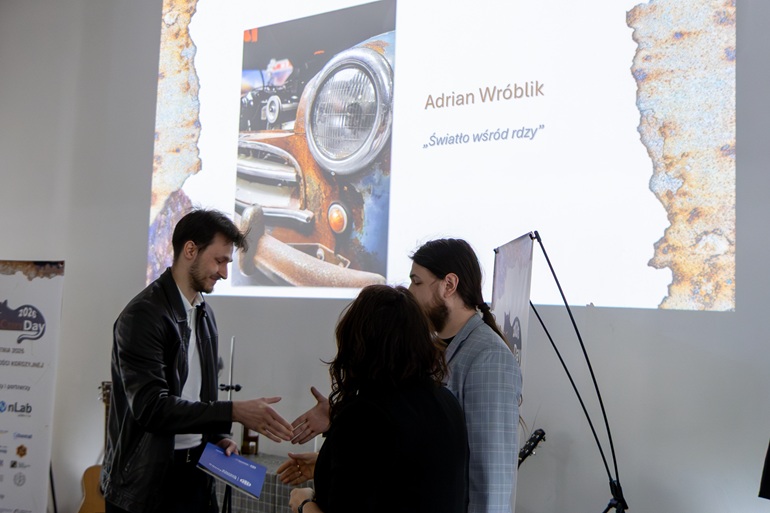
One of the winners of the photo competition was Adrian Wróblik, a second-degree student of security engineering at the Silesian University of Technology. As he admits, participation in the initiative was a natural combination of his technical interests and passion for photography.
- Photography has always been my hobby. I like to capture places and things that seem interesting to me, - he says. The inspiration for the award-winning photo came during a visit to the Museum of the Automotive Industry.
- I saw two vehicles – one of them was heavily corroded, and one fragment, - the lamp remained intact. It was amazing for me, hence the title of the photo “Light among rust” – he explains.
CorrDays, however, is not only about competitions and learning, but also about concrete actions for the environment. Last year, the bench was renovated in front of the Faculty of Chemistry building, protecting it from corrosion and restoring its functionality. The event also included a competition for “golden thoughts that do not corrode.”
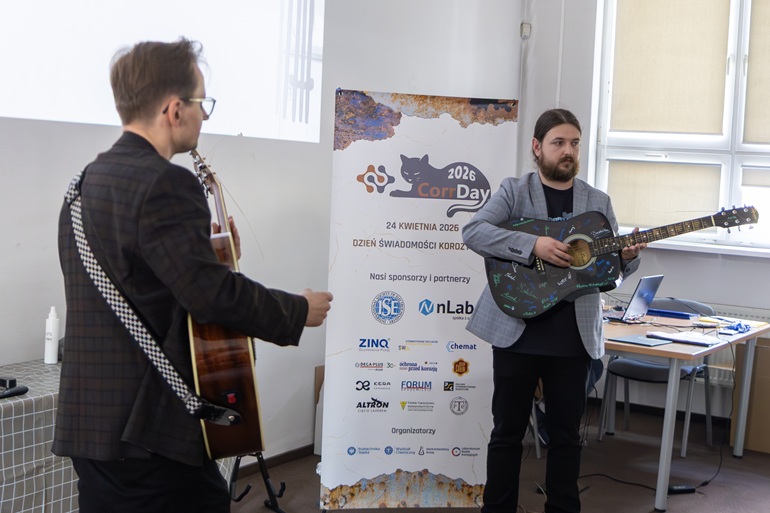
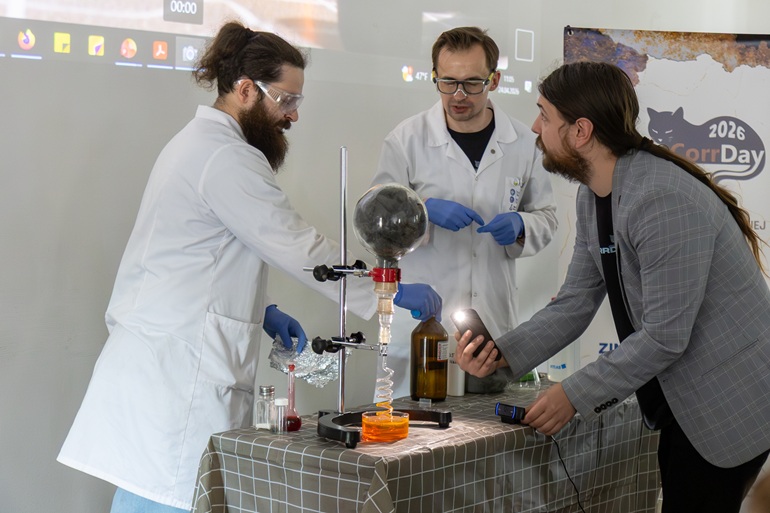
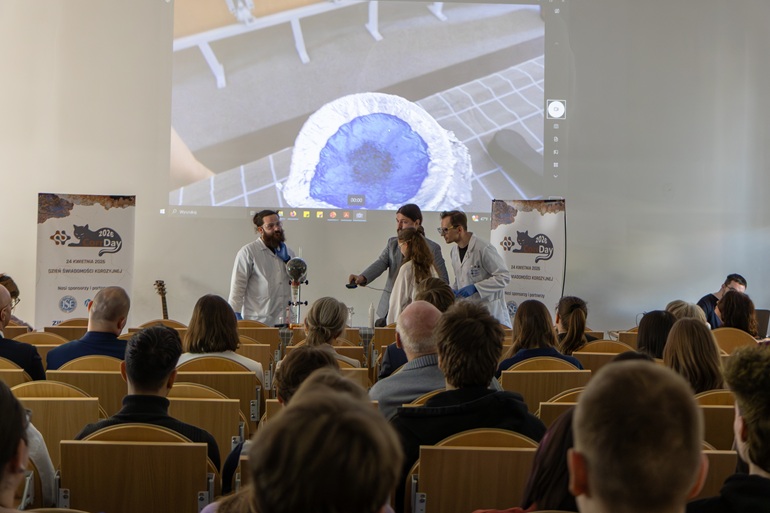
The Corrosion Awareness Day at the Silesian University of Technology ended with chemical presentation, which – as the organizers emphasized – are to present the issues related to corrosion and its prevention in an accessible and spectacular way to the participants. The researchers also prepared an unusual, and at the same time very visual, corrosion experiment with the use of guitars. One of them was equipped with corroded strings, which allowed the participants to see for themselves how the corrosion process affects not only the appearance of the material, but also the quality and length of the sound.