

Start - Aktualności - Students from several countries worked on the concept of revitalizing the former Wire Factory in Gliwice
Students from several countries worked on the concept of revitalizing the former Wire Factory in Gliwice
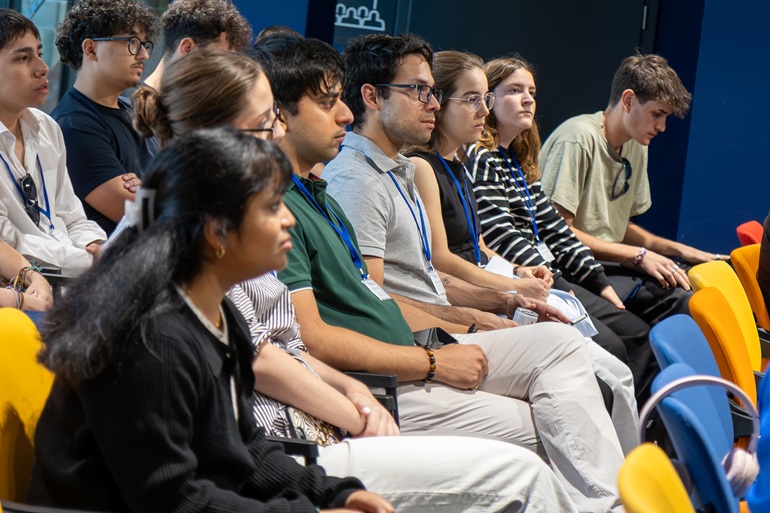
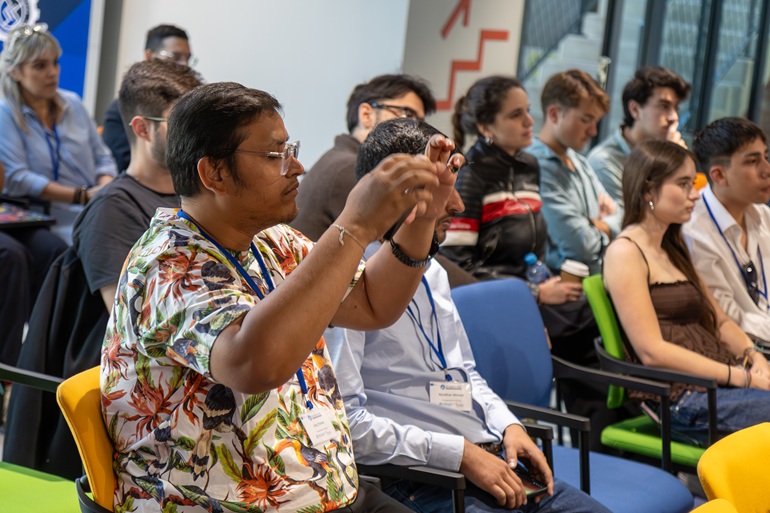
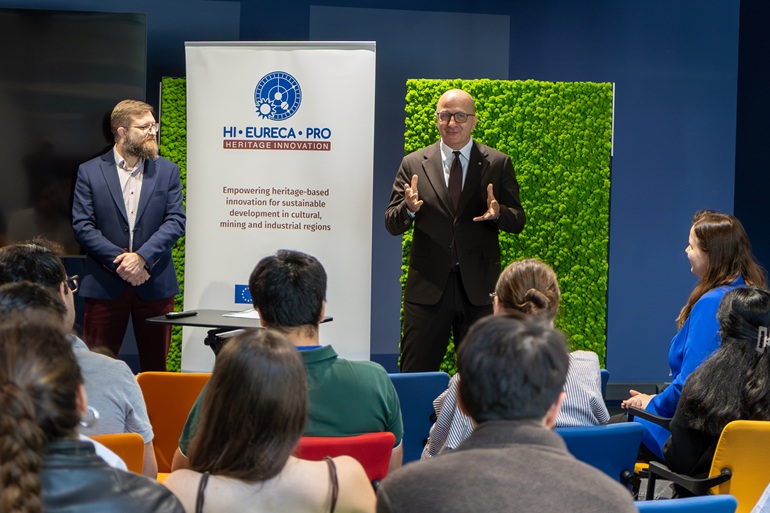
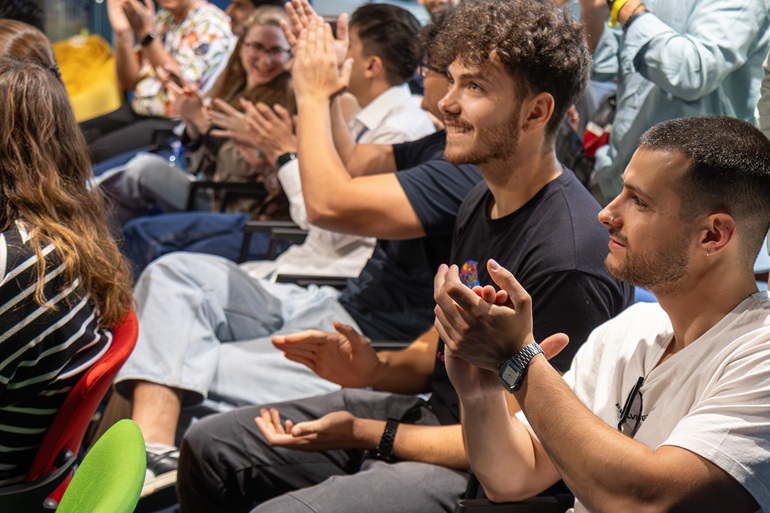
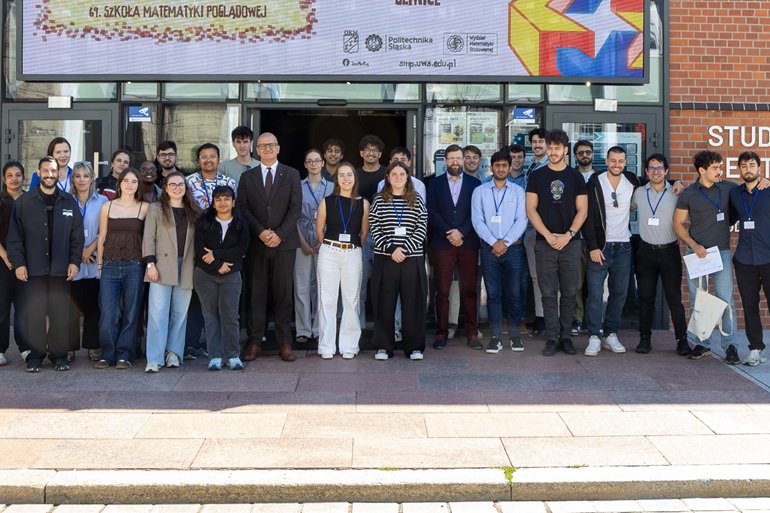
An international hackathon was held at the Silesian University of Technology as part of the HI-EURECA-PRO project. For several days, over 30 students from Poland, Germany, Greece and Spain worked on concepts for the revitalization of the former Wire Factory buildings in Gliwice. The finale of the event took place on June 12th at the Student Activity Centre of the Silesian University of Technology.
The hackathon was attended by students of the Silesian University of Technology and partner universities involved in the implementation of the HI-EURECA-PRO project: Universidad de León (Spain), Technical University of Crete (Greece) and TU Bergakademie Freiberg (Germany). Working in seven-person international teams, students developed concepts for the revitalization of the former Wire Factory buildings in Gliwice. The task was to propose new functions for them, taking into account the needs of the local community, the principles of sustainable development and the protection of industrial heritage.
- This is a great initiative that engages our students in cooperation with students from abroad, especially since it takes place as part of the HI-EURECA-PRO project, which focuses on the protection and use of the industrial heritage of our regions. I say “ours” because the participants come from areas facing similar transformation challenges. I hope that the solutions developed during such project activities, implemented on a local scale, will also be able to be applied much more broadly - emphasizes the Vice-Rector for Science and International Cooperation, Prof. Sebastian Werle.
As the scientist points out, an equally important element of the event is the exchange of experiences and looking at problems from different cultural perspectives.
- These types of meetings are also very important in terms of student integration. The exchange of experiences and a different perspective on education is a value that should be cultivated, he adds.
As emphasized by Dr Hab. Eng. Szymon Ogonowski, prof. SUT from the Faculty of Automatic Control, Electronics and Computer Science of the Silesian University of Technology, the hackathon consisted of two parts. The first one took place online and included training on the use of LCA (Life Cycle Assessment) methods, i.e. the assessment of the entire life cycle of a product and solutions. This knowledge was intended to help participants develop proposals related to the protection of cultural, industrial and mining heritage. Next, students from EURECA-PRO partner universities from Germany, Greece and Spain came to Gliwice to work in four international teams.
The participants' task was to prepare a concept for selected buildings of the former Wire Factory in Gliwice. The organizers did not impose specific methods of developing the facilities, only pointing out the need to take into account the protection of the industrial and cultural heritage associated with the revitalized building.
As he points out, the participants first familiarized themselves with the facilities during a field visit and also received documentation materials.
– In the concepts proposed by the students, the revitalized facilities were intended to serve the local community, for example, so that older generations could pass on their heritage to younger generations, including unwritten ones, such as local culinary recipes. There were also ideas for creating workshop spaces, meeting places and spaces supporting the development of entrepreneurship, says Prof. Ogonowski.
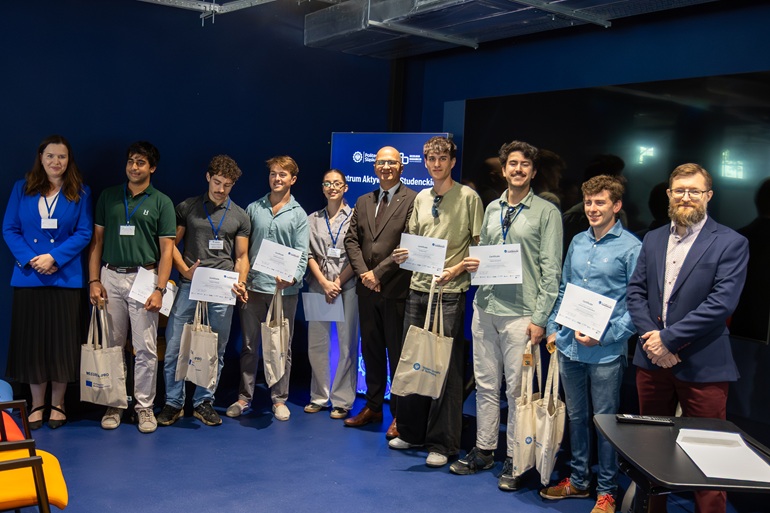
The international hackathon was won by the group that proposed combining a data centre, a place where IT infrastructure is stored, with a space designated for startups.
– We came up with the idea of combining a data centre with a space for startups. We also learned that a significant portion of the city's heating relies on burning fuels, so we proposed using the data centre’s cooling system to transfer heat to the district heating network. Such a solution could increase energy efficiency, reduce the use of fossil fuels and support decarbonization, says project participant Gillermo Alba Buitron from the University of León in Spain.
- My group focused on trying to transform the buildings into a social centre, says Faith Natalie Waringa from the Technical University of Crete.
- We proposed that one of the buildings should have meeting and educational rooms. Children could learn coding, programming and artificial intelligence there, while older residents could get help using new technologies, such as email. In a larger building, we proposed a space for exchanging skills, explains Faith Natalie Waringa.
The prepared projects will be presented and promoted; the University wants to use the results of the work of students and scientists in activities carried out for the benefit of the socio-economic environment.
– We will follow the developments of these projects. I hope that some of them will be implemented – summarizes the Vice-Rector for Science and International Cooperation, Prof. Sebastian Werle.