


Start - Aktualności - How to effectively communicate science – workshops at the Silesian University of Technology
How to effectively communicate science – workshops at the Silesian University of Technology
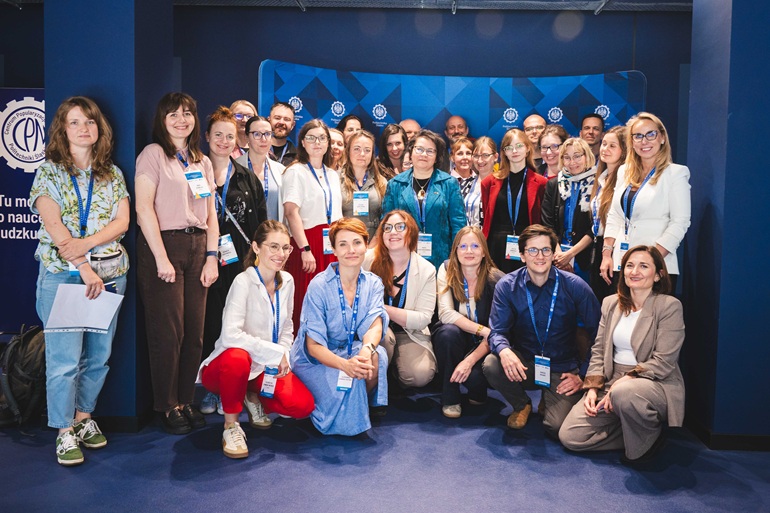
The Student Activity Centre of the Silesian University of Technology hosted the third edition of the workshop “Popularization and communication of science in Poland – opportunities and challenges,” devoted to the role of scientific communication and counteracting disinformation. The event brought together experts, scientists and people involved in scientific communication from different parts of Poland. The participants discussed together how to reach audiences of different ages and how to build trust in science in times of disinformation.
The workshop participants were welcomed by the Minister of Science and Higher Education Prof. Marek Gzik, who emphasized the importance of popularizing science as one of the foundations of further development of the country. Prof. Gzik pointed out that the event gathering speakers and participants from all over Poland can inspire society to become more involved in scientific and educational development.
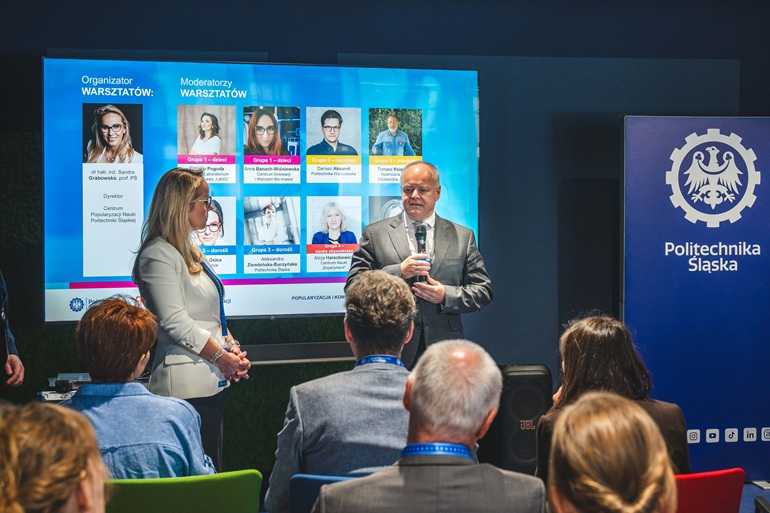
- We are a country that has achieved great success. In recent years, we have become the 20th largest economy in the world, and we are one of the leaders in development. But we need to give a boost to society that in order to sustain this ambitious trend, we need the involvement of the whole of society. This is not the time to let go, because the challenges facing the world are really huge.
The Deputy Minister also drew attention to the role of education from an early age. As he said, the popularization of science cannot be limited only to academic circles but should reach children and young people at every stage of education.
– It is very important that young people want to associate their career path also with intellectual development. The popularization of science in society is the foundation of both economic development and solving social problems. It is important that from kindergarten, through primary school and secondary school, children and young people be encouraged to be interested in science - emphasized Prof. Gzik.
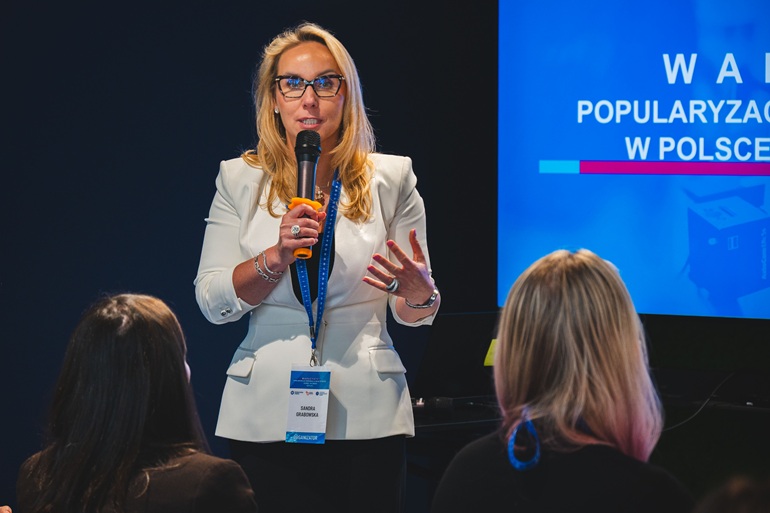
The workshop “Popularization and communication of science in Poland – opportunities and challenges” was organized by the Science Popularization Centre, which once again created a space to talk about how to effectively and responsibly talk about science to contemporary society.
- Today we have a lot of fake news and disinformation, which is why it is so important for scientists to be able to talk about their research in a reliable way, but at the same time accessible to everyone. The workshops focused not only on theory, but above all on practical methods of communicating science to children, young people, and adults – said the Director of the Science Popularization Centre, Dr Hab. Eng. Sandra Grabowska, Prof SUT.
The program of the event also included a workshop dedicated to civic education, which is developing more and more dynamically in Poland.
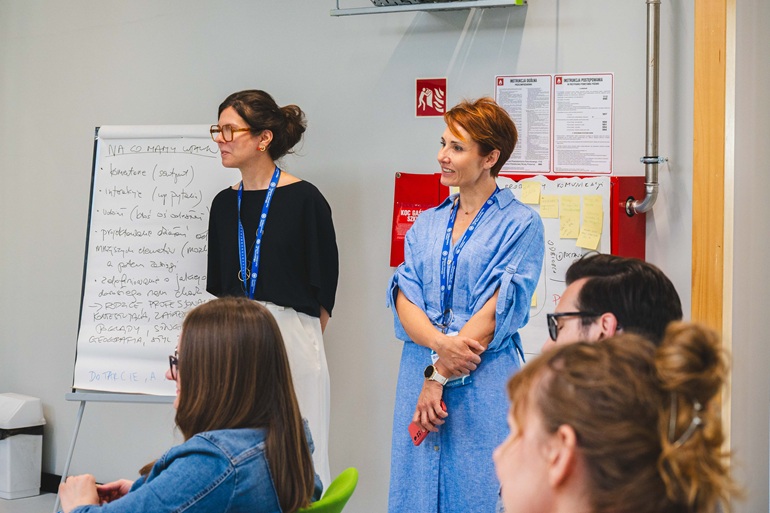
- The popularization of science is not only about the transmission of knowledge. Today, the most important thing is to teach people to think critically and distinguish facts from opinions or anecdotal knowledge - emphasized Natalia Osica, founder of Pro science, drawing attention to the growing need to consciously receive information in times of disinformation.
The expert pointed out that the recipients are not looking for knowledge for the sake of knowledge, but for answers to questions and problems that concern their daily life.
- Therefore, modern scientific communication should first of all engage, arouse curiosity, and encourage to ask questions. The most important thing is for the recipient to be able to ask: How do you know this? Is it just an opinion or is it knowledge confirmed by research? – she said.
During the meeting, a lot of space was also devoted to the role of the academic community in building trust in science. Universities and researchers must seek new ways of reaching out to society and a language that is understandable to audiences outside the academic world.
Professor Aleksandra Ziembińska-Buczyńska emphasized that the idea of the workshop goes beyond the lectures and presentations themselves.
- We want to create a space for exchanging experiences and jointly developing tools for scientific communication. It is not just a meeting of experts but building a nationwide environment of people who want to talk effectively about science.
As the professor explained, the participants represent very different environments – from scientists and popularisers to science centres, university administration and institutions supporting the development of research. It is this diversity of experiences that will allow us to create more effective strategies for communicating science in Poland.
- Science is not art for art’s sake. It is supposed to help people and respond to real social needs - emphasized Aleksandra Ziembińska-Buczyńska, speaking about the need to build partnership relations between scientists and society. In her opinion, it is especially important today to reach adults who, despite their enormous potential, are often outside the popularization activities due to everyday rush and excess of duties.
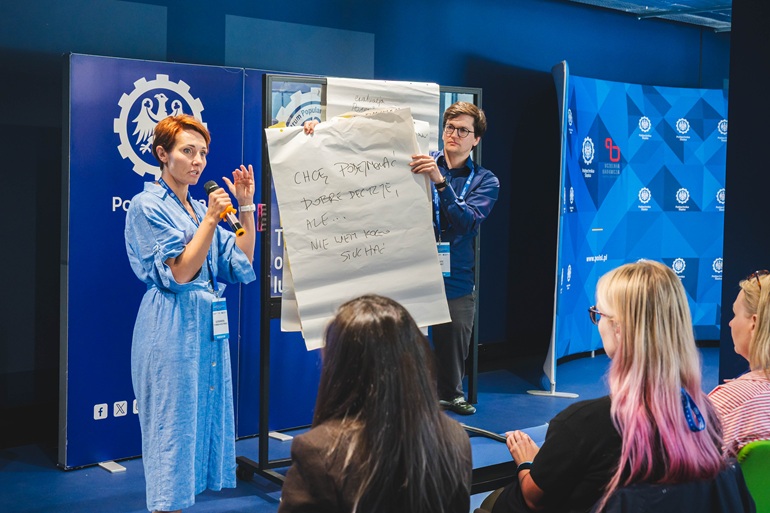
As pointed out by Dariusz Aksamit from the Warsaw University of Technology, who led workshops for people popularizing science among young people, it is at this stage of life that the way of perceiving the world and attitude to science are shaped. - We cannot postpone the popularization of science until later. What young people experience in, and outside school affects how they understand the world and how they will make decisions in the future.
The expert pointed out that young people have a natural curiosity about the world, which should be developed, not limited. - Children are not afraid of science. It is adults who often tell them that something is too hard or not for them. Meanwhile, science is a part of our everyday life, and it is worth showing it in an understandable way – he said.
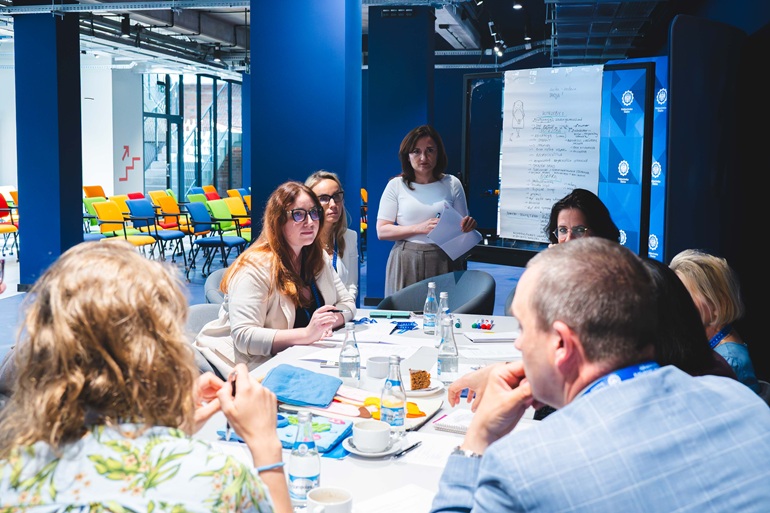
Elżbieta Pogoda, a biologist, and educator who has been involved in popularizing science among children, also spoke about the importance of working with the youngest participants of the workshops. As she emphasized, the youngest are the most demanding, but at the same time the most open recipients of scientific content.
- Children have a natural curiosity about the world. Our task is not to spoil it, not to stifle it and create a safe space for asking questions.
The expert pointed out that children already several years old can be interested in even difficult issues, if they are properly presented. - I’m already talking about molecular biology with kids in kindergarten. One just needs to adjust the language, add visual and sensory elements - she said.
As Elżbieta Pogoda emphasized, contact with science from an early age may have a huge impact on the further development of children, their way of thinking and future educational choices.
This year’s Workshop “Popularization and communication of science in Poland” gathered over 50 speakers and participants from different parts of the country.
The organizer of the event was the Science Popularization Centre of the Silesian University of Technology. Media patronage over the event was taken by the “Science in Poland” service. The patron of the event was the Council for the Promotion of the Public Understanding of Science PAS.
Text Jolanta Skwaradowska
Photos Aleksandra Wojaczek
More photos from the event at: Silesian University of Technology | 3rd edition of the Workshop popularization and communication of science in Poland.