


Seminar: Sara Pini
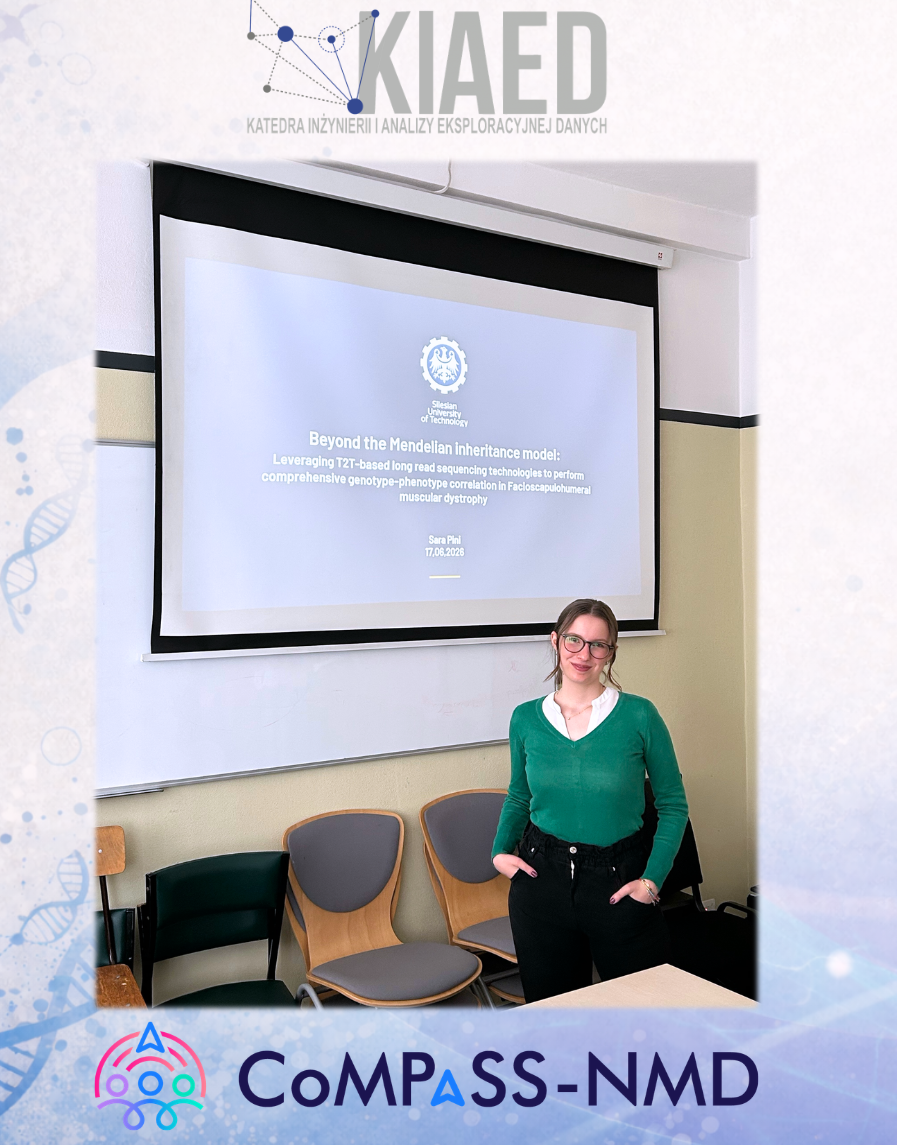
Long-read sequencing offers new opportunities to explore the genetic complexity of rare muscular dystrophies. During a recent departmental seminar, Sara Pini, a visiting PhD student from the University of Modena and Reggio Emilia, presented her research titled “Beyond the Mendelian inheritance model: leveraging T2T-based long-read sequencing technologies to perform comprehensive genotype-phenotype correlation in Facioscapulohumeral muscular dystrophy (FSHD).”
The seminar featured results from her doctoral work at UNIMORE, as well as findings developed during her visit to the KIAED department at Silesian University of Technology. The research focuses on facioscapulohumeral muscular dystrophy, one of the most common inherited muscular dystrophies, whose complex genetic background continues to challenge conventional diagnostic and analytical approaches.
By combining Telomere-to-Telomere genome assembly with long-read sequencing technologies, the study addresses important limitations of standard short-read methods and supports more comprehensive genotype-phenotype analyses. This approach may contribute to a better understanding of the molecular mechanisms underlying FSHD and, in the future, to improved patient stratification and clinical management.
The work also highlights the value of international and interdisciplinary collaboration, bringing together biotechnology and bioinformatics to advance research on rare genetic diseases.