




I PRIZE
Agata Czekaj - Czas Korozji wokół Nas (The Time of Corrosion Around Us)
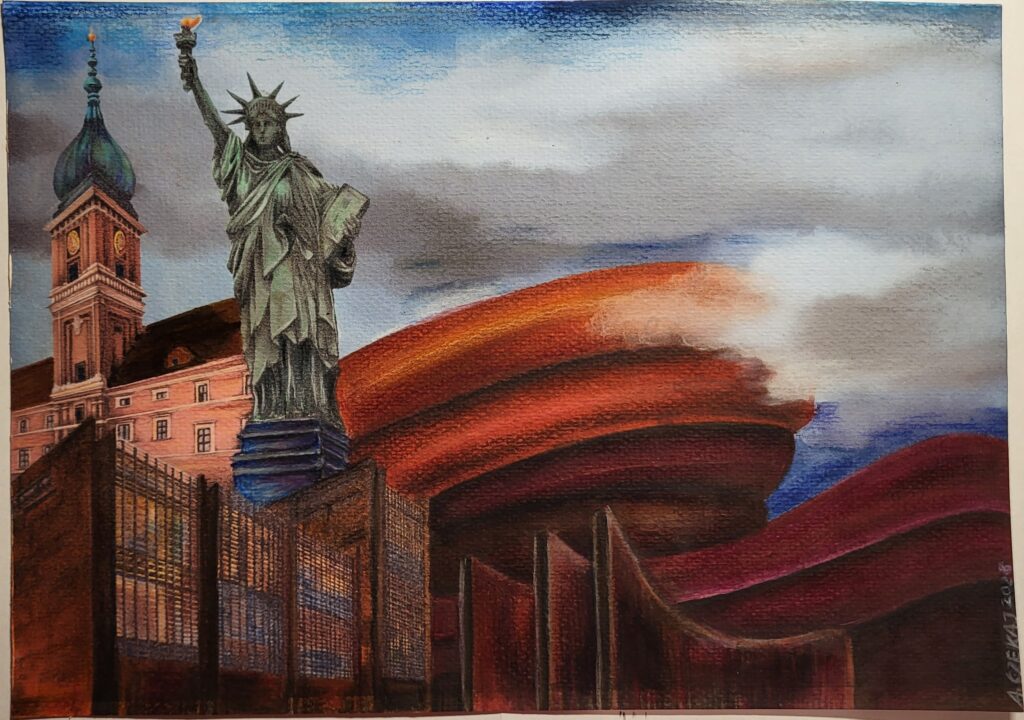
In my work, I wanted to present five architectural gems that, in their own way, demonstrate how corrosion processes can be used to reflect the uniqueness of events situated in time. Corrosion is a process involving the degradation, most often of metal, through cascades of chemical reactions. Metal oxidation occurring over many years results not only in the weakening of these materials, but also in the formation of numerous colorful by-products. These reactions lead to a variety of transformations that have inspired many artists and architects, who use corrosion as a destructive process for creative expression.
Rust, in particular, is often associated with a brown deposit synonymous with the loss of functionality of objects containing iron or its alloys. However, many painters, sculptors, and other artists have shown that rust is also a material that resonates with our past. Based on corrosion and rust, distinct architectural styles and painterly or design motifs have emerged, such as the industrial style. In many cases, achieving an effect resembling these phenomena is even desirable, accomplished through the use of special artistic techniques.
Starting from the left side of my drawing, I placed the Royal Castle in Warsaw, whose dome stands out with the characteristic turquoise color of patina formed through the process of so‑called noble corrosion. This patina layer forms on the surface of copper, providing the structure with durable protection against further degradation.
Next, in the lower corner, there is the European Solidarity Centre in Gdańsk, whose façade was intentionally designed to resemble a rusty surface. This has significant historical and cultural importance for the local community. Thanks to the use of a special material (Cor‑Ten steel) the building is covered with realistic rust‑like hues on the exterior, while maintaining its structural integrity.
Moving further to the right, one can see one of the most recognizable sculptures in the world — the Statue of Liberty. Covered with a thin layer of copper, it underwent oxidation over time, which gradually changed its color from brown to green‑turquoise.
The next example is the intriguing façade of the museum in Holon, created from various types of metals that change color over time, forming bands of rust in many shades. Thanks to the use of a wavy surface and Cor‑Ten steel with varying tones (resulting from different levels of exposure to environmental factors), the building gains a striking sense of monumentality and dynamism.
The final structure presented is a sculpture at the museum in Bilbao, created by sculptor Richard Serra. Made of weathering steel, it is influenced not only by time, but also by air and even human touch. This is a deliberate artistic technique that helps capture the meaning of artistic works, summarized in the title of this sculpture: “The Matter of Time.”
Architecture and art most beautifully demonstrate how corrosive forces can be harnessed to create spectacular, world‑class works. The process of corrosion reveals the power of time and evolution unfolding before our eyes. Artists frequently turn to rust as an inspiring and fascinating material, while also using corrosion to create unique objects that change under the influence of environmental factors.